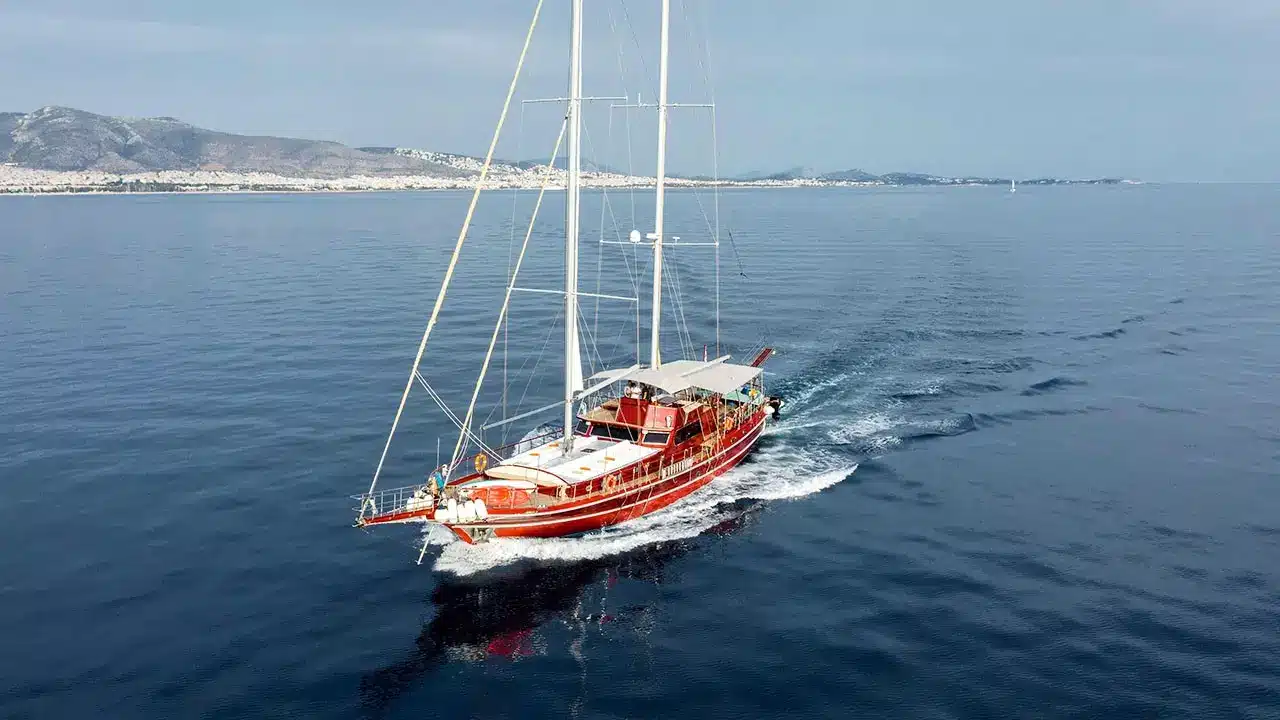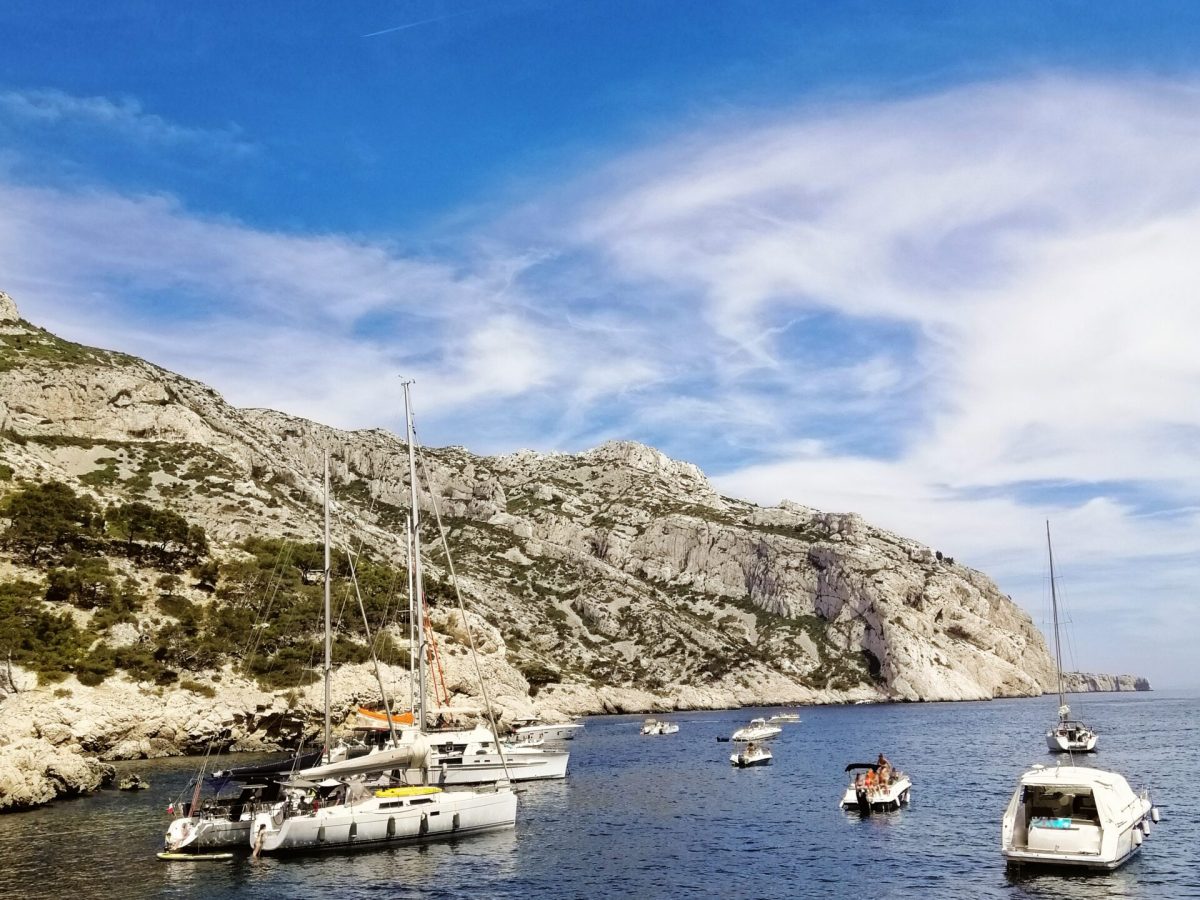
Corfu Sailing Guide: Anchorages, Highlights & Island Hopping

Corfu is Greece’s most popular Ionian island and the main departure point for sailing holidays exploring the Northern Ionian Islands. The island combines a UNESCO World Heritage-listed Old Town with some of the Ionian Sea’s most sheltered anchorages, clear turquoise waters, and lush green landscapes that set it apart from the typical dry, rocky Greek island aesthetic.

Why Corfu?

Corfu has been a favorite destination for travelers for centuries, and it’s easy to see why. The island sits at the crossroads of Italian, Venetian, French, and British influences, giving it a character unlike anywhere else in Greece. Elegant architecture, tree-lined boulevards, and a relaxed Mediterranean pace of life make it feel more like a slice of the Adriatic than a typical Greek island.

For sailors, Corfu is the natural starting point for a very simple reason: geography. The island sits at the top of the Ionian Sea, close to mainland Greece and within easy striking distance of Paxos, Antipaxos, and the mainland coastline around Sivota and Parga. This means charter fleets are well established here, marina infrastructure is reliable, and the sailing routes fan out in almost every direction without requiring long overnight passages.

What makes Corfu different from the Cyclades or the Dodecanese is its landscape. Instead of whitewashed villages on bare, sun-baked hillsides, Corfu is green year-round. Olive groves, cypress trees, and dense forest run right down to the shoreline, and the water along the east coast is famously calm, sheltered by the mainland just across the strait. It’s a gentler, more forgiving cruising ground, which is one reason it attracts both experienced skippers and first-time charterers.

Corfu Old Town

Corfu Town, the island’s capital, is a UNESCO World Heritage Site, and walking through it feels like stepping into a different country entirely. The town was shaped by more than four centuries of Venetian rule, followed by periods of French and British administration, and each left its mark on the architecture, street layout, and local customs.

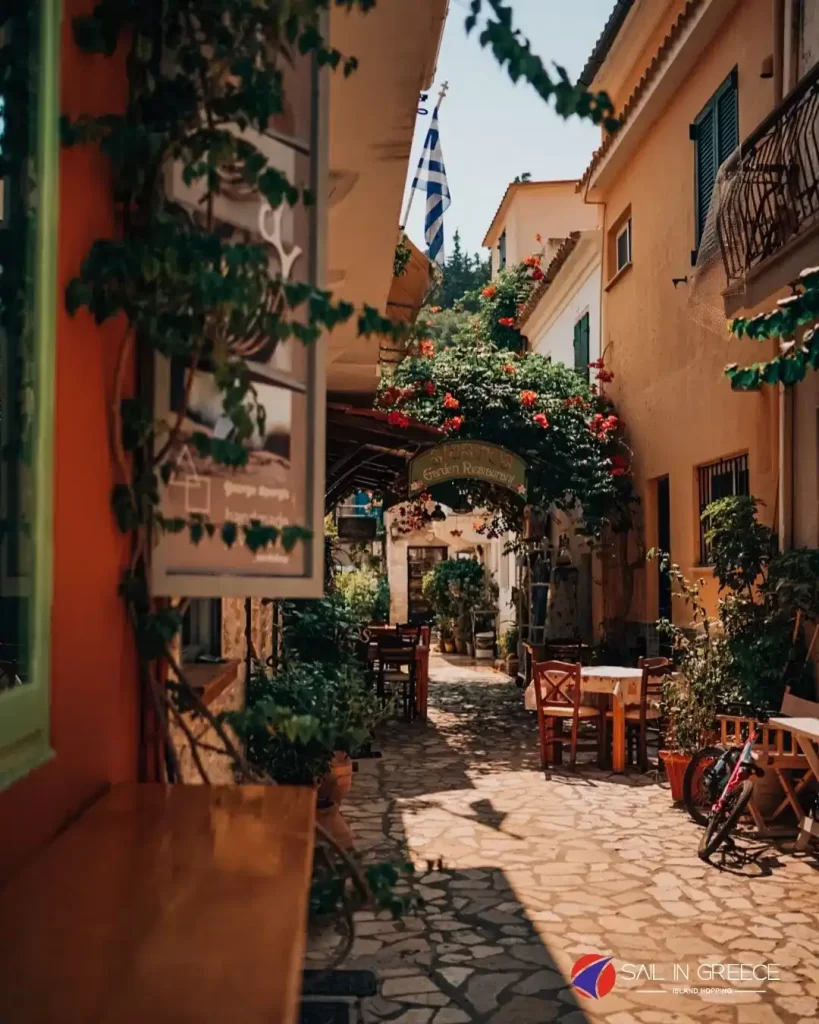
The Venetian old quarter is a maze of narrow lanes, known locally as kantounia, lined with tall shuttered buildings, hidden courtyards, and laundry strung between balconies. It’s a wonderful place to wander without a fixed plan, since almost every turn reveals a quiet church, a small square, or a view down to the sea.

Dominating the eastern side of town is the Old Fortress, a Venetian-built stronghold set on a rocky promontory that has guarded the town for centuries. Climbing to the top rewards you with sweeping views over the town, the marina, and across the strait to the Albanian coastline. The nearby Spianada, one of the largest squares in the Balkans, is bordered by the arcaded Liston, built in the style of Parisian arcades and lined with cafes.

Speaking of cafes, Corfu Town has a genuine coffee culture. Sitting under the Liston’s arches with a coffee and watching cricket on the Spianada (a leftover tradition from British rule) is one of the town’s small pleasures. For shopping, the streets around Nikiforou Theotoki and the market lanes are packed with everything from local olive oil, kumquat liqueur, and handmade sandals to jewelry, ceramics, and boutique fashion. It’s an easy town to lose an afternoon in before or after a day out on the water.

Best Anchorages & Swimming Spots

Vidos Island Just a short hop from Corfu Town’s harbor, Vidos is a small, forested island that makes an excellent first anchorage or a quiet spot to cool off before heading further afield. It’s sheltered, close enough for a quick overnight stop, and offers calm, clear water for swimming with the skyline of Corfu Town visible in the background.

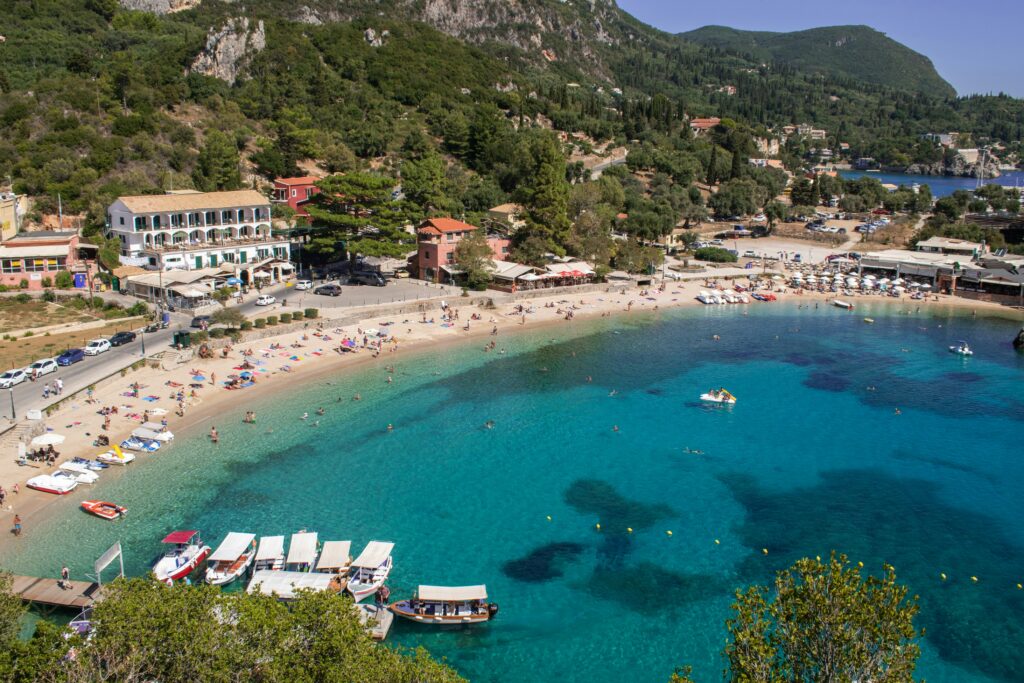
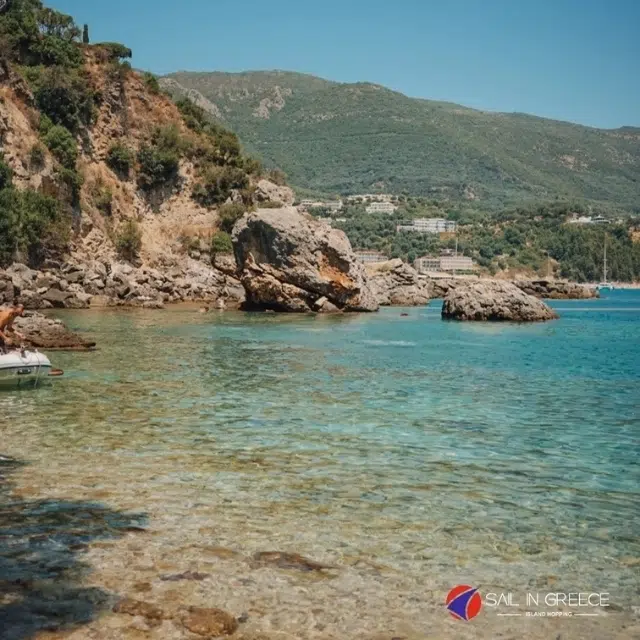
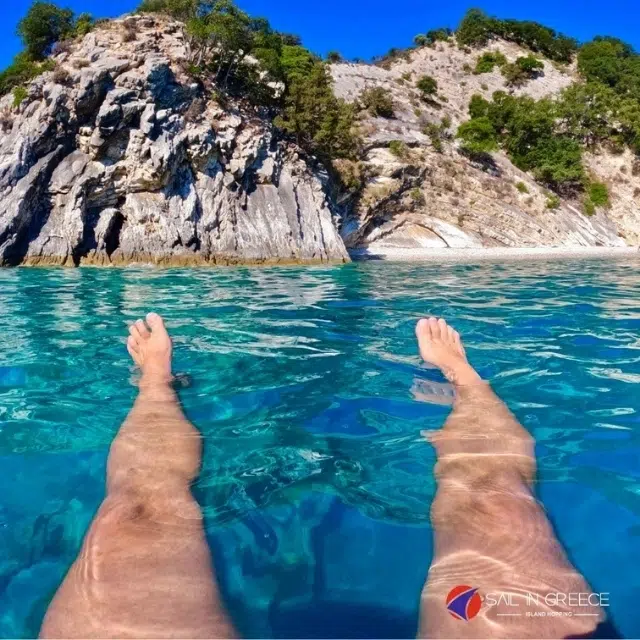
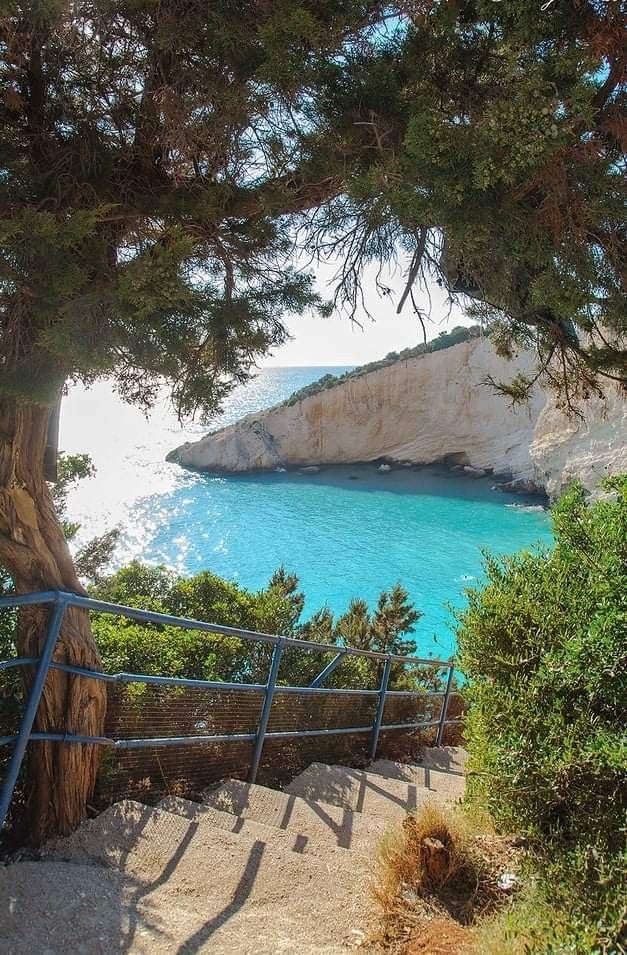
Paleokastritsa On the island’s west coast, Paleokastritsa is often described as one of the most beautiful bays in Greece. A series of small coves cut into dramatic cliffs, with sea caves to explore by dinghy or kayak and water so clear it looks almost artificial. The bay is more exposed to the meltemi and westerly swell than the sheltered east coast, so it’s best visited in settled conditions, but the scenery makes it worth the detour.

Nissaki On the northeast coast, Nissaki is a peaceful anchorage backed by steep, green hillsides and olive terraces. It’s more sheltered than the west coast spots and popular for its clear water and relaxed taverna scene right on the pebble beach. It’s a good stop for swimming and a slower pace, especially in the early or late season when the anchorage is quieter.

Each of these spots offers something different: Vidos for convenience and calm water close to town, Paleokastritsa for dramatic scenery and adventure, and Nissaki for a laid-back, sheltered stop along the greener northeast coast.

Sailing From Corfu

One of the biggest advantages of joining an Ionian cruise from Corfu is the range of destinations reachable within a short sail.. Heading south along the coast, sailors can reach the mainland town of Sivota, tucked into a well-protected bay on the Greek mainland, known for its lively harborside restaurants and calm anchorage.

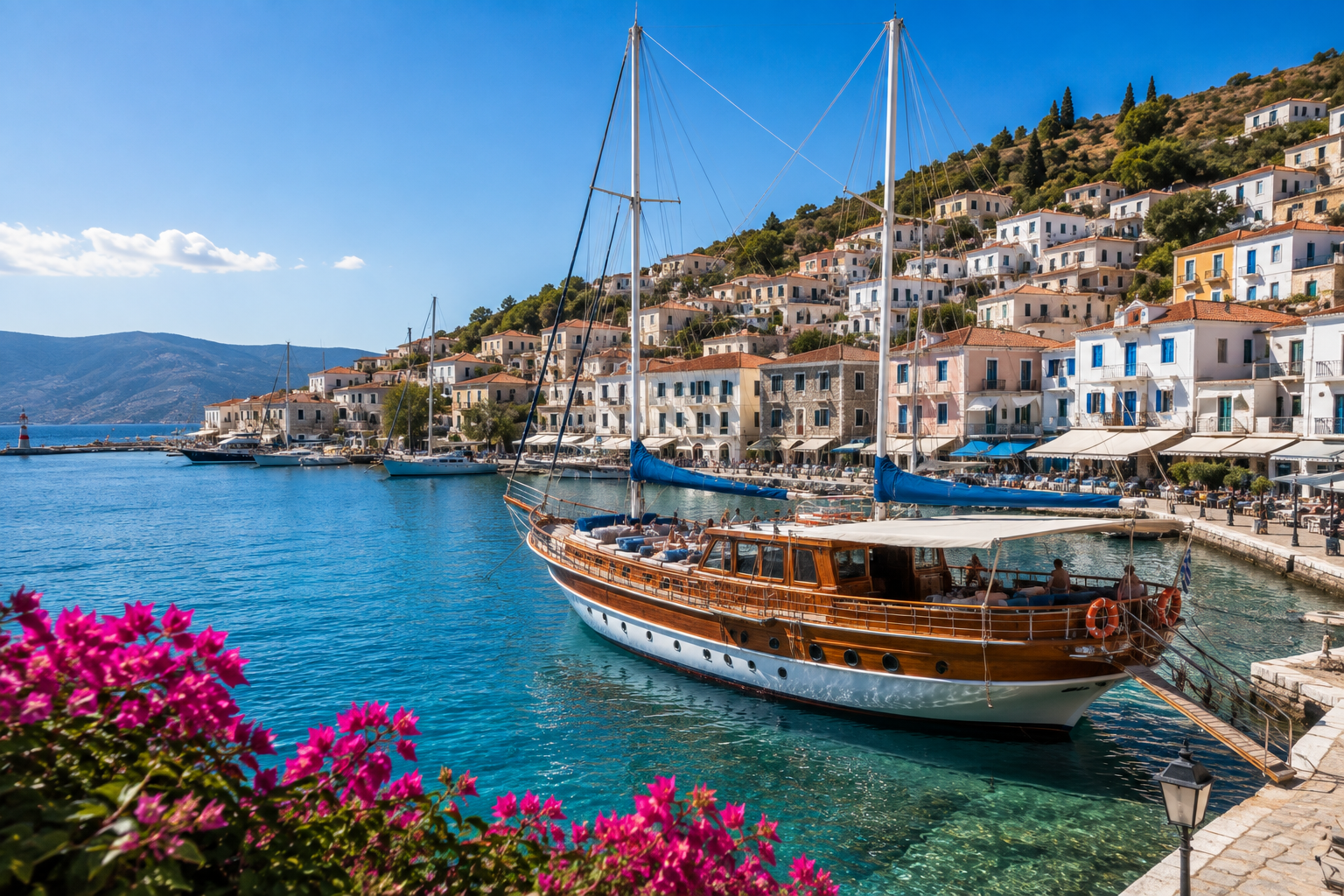
Further south again are Paxos and Antipaxos, two of the most photographed islands in the Ionian. Paxos is about 2.5 hours away by boat from Corfu, making it a comfortable day sail or the first overnight stop of a longer itinerary. The island’s main harbor towns, Gaios, Lakka, and Longos, are full of character, with pastel buildings, waterfront tavernas, and sheltered anchorages.

Just south of Paxos, tiny Antipaxos is famous for two beaches, Voutoumi and Vrika, with turquoise water that rivals anywhere in the Caribbean. It has no real town to speak of, just a scattering of seasonal tavernas, which makes it feel wonderfully untouched compared to busier islands.

Together, Corfu, Sivota, Paxos, and Antipaxos form a classic Northern Ionian sailing route: short hops, sheltered water, and a mix of lively harbor towns and quiet, beautiful anchorages.

Corfu is one of the best destinations for island hopping, with easy access to Paxos, Antipaxos, and Sivota.

Corfu Old Port

Corfu’s Old Port sits right at the edge of Corfu Town and is the main departure point for charter yachts, ferries, and cruise ships alike. For sailors starting a charter here, check-in is usually straightforward: most charter companies operate from bases either directly at the Old Port or a short drive away, and briefings typically cover the boat, safety equipment, and local sailing conditions before handover.

Parking near the Old Port is available but can fill up quickly in peak season, so it’s worth arriving with some buffer time, especially if you’re bringing a car full of provisions or luggage. For those flying in, a taxi from Corfu International Airport to the Old Port takes only about 10–15 minutes, making it one of the more convenient charter starting points in Greece, since there’s no need for a long transfer after a flight.

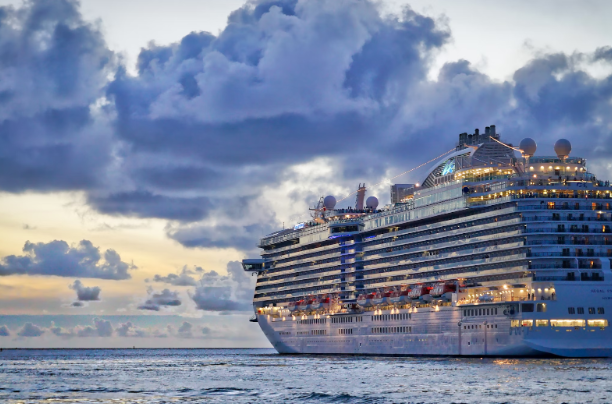
The Old Port is also a major departure point for cruise ships and inter-island ferries, so expect some traffic and activity around the harbor, particularly during the morning and early evening. It’s a working port as much as a charter base, which adds to the atmosphere but also means it pays to keep an eye on larger vessel movements when maneuvering in and out.

Best Restaurants & Bars

Corfu Town has no shortage of good places to eat and drink before or after a day on the water. For a classic taverna experience, head into the old quarter for traditional Corfiot dishes like sofrito, pastitsada, and bourdeto, all specialties that reflect the island’s Venetian-influenced cuisine.

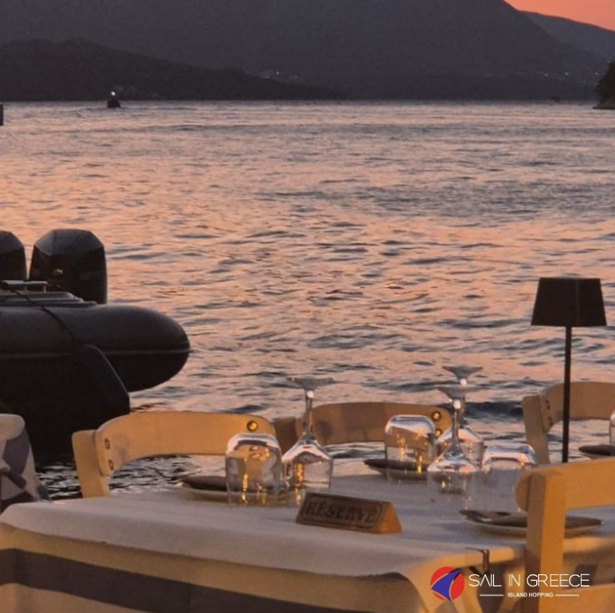
Around the Liston, the cafes are ideal for a relaxed coffee or an evening drink while people-watching on the Spianada. For something closer to the water, the streets near the Old Port and the Old Fortress have several seafood tavernas serving fresh catch with harbor views. In the evening, the old town’s narrow streets come alive with small wine bars and cocktail spots tucked into converted historic buildings, offering a more low-key alternative to the busier tourist strips found elsewhere on the island.

Weather & Best Time

Corfu enjoys a Mediterranean climate with mild winters and warm, dry summers, but sailing conditions vary noticeably by season.

Spring (April-May) brings mild temperatures, green landscapes at their most lush, and generally light and manageable winds, making it a pleasant time to sail before the summer crowds arrive.

Summer (June-August) is peak season, with hot, sunny days and the most reliable winds for sailing, though the west coast can see stronger afternoon breezes. This is also when the island, marinas, and popular anchorages are at their busiest.

Autumn (September-October) offers warm sea temperatures, thinner crowds, and generally settled weather, making it a favorite among experienced sailors looking for a quieter cruising experience.

Overall, the best sailing conditions in the Northern Ionian tend to fall in June, July, September, and early October, when winds are consistent but not extreme, and daytime temperatures are comfortable both on and off the water.

If you’re wondering about the best time to sail Greece, Corfu offers excellent conditions from June to early October.

Practical Information

Fuel stations: Fuel docks are available at the main marinas around Corfu Town and at some larger harbors along the coast, though it’s wise to top up whenever convenient rather than waiting until the tank runs low, since not every anchorage has fuel access.

Grocery stores: Corfu Town has supermarkets and smaller grocery shops within easy walking distance of the Old Port, making it simple to stock up before setting off. Smaller villages along the coast typically have at least a mini-market for basics.

Marinas: Corfu offers several marina options, including facilities at the Old Port area and nearby Gouvia Marina, one of the larger marinas in the region with extensive berthing and services for charter yachts.

Provision shopping: For a proper provisioning run, the markets and supermarkets in Corfu Town are the best option, offering fresh produce, local olive oil, wine, and bakery items. Once underway, smaller harbor towns like Gaios on Paxos or Sivota also have grocery stores for topping up.

FAQs

Is Corfu good for sailing? Yes. Corfu combines sheltered anchorages, a well-developed charter base, and short sailing distances to nearby islands and the mainland, making it one of the most popular and accessible starting points for a Greek sailing holiday.

When is the best time to sail from Corfu? June, July, September, and early October generally offer the best balance of settled weather, comfortable temperatures, and reliable sailing conditions.

How far is Paxos from Corfu? Paxos is about 2.5 hours away by boat from Corfu, making it an easy day sail or the first stop on a longer island-hopping itinerary.

Where do cruises and charters leave from? Corfu’s Old Port, right next to Corfu Town, is the main departure point for charter yachts, ferries, and cruise ships.

Is Corfu suitable for beginners? Yes. The east coast in particular offers sheltered, calm water and short hops between anchorages, making it a forgiving cruising ground for less experienced sailors, while more experienced crews can venture to exposed spots like Paleokastritsa in settled weather.


How to Visit Greek Islands Without the Crowds in 2026

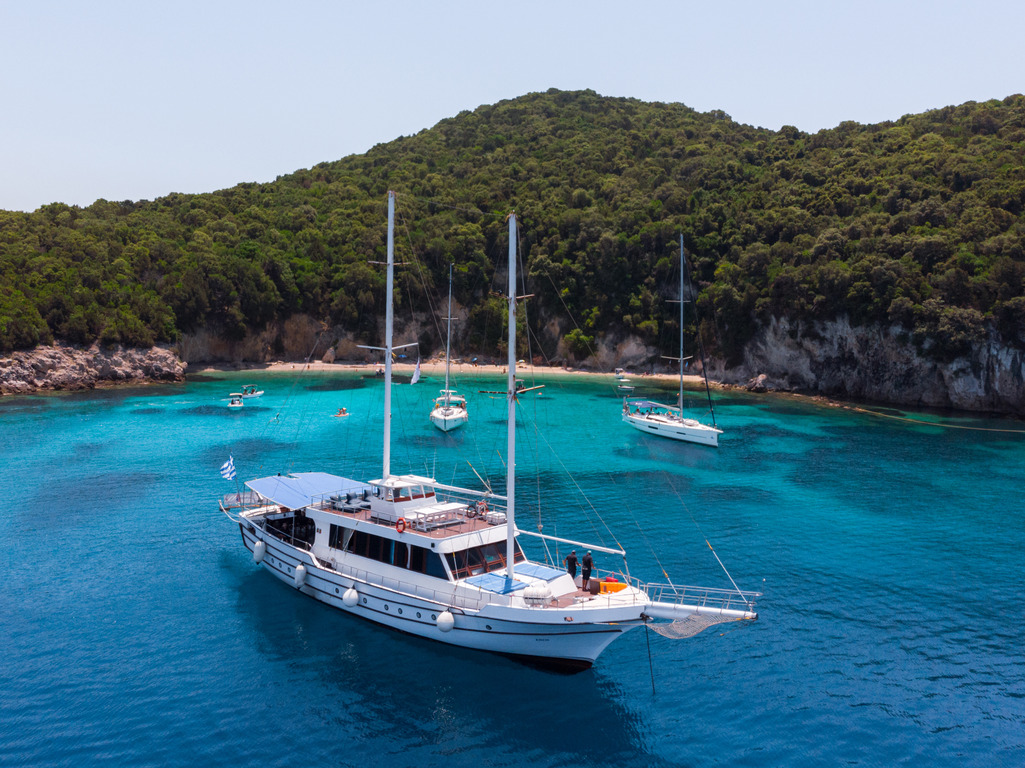
Aerial view of a turquoise bay with a white sailboat anchored near a rocky, pine-covered shoreline.

In 2026, Greece implemented daily visitor caps of 8,000 people on Santorini and introduced strict limits on mega-cruise ship arrivals in Mykonos. For travellers wanting to see these iconic islands authentically – without queuing for three hours to see a sunset – the answer is arriving by private sailing boat. A gulet cruise lets you anchor in the same bays as the superyachts, visit islands that commercial ferries never reach, and experience Greece the way it was 30 years ago.

Why Greece Is Capping Visitors in 2026

For years, Greece’s tourism boom looked like an unqualified success story. Arrival numbers climbed every season, hotel occupancy hit record highs, and islands that were once sleepy fishing communities became global travel brands. But by the mid-2020s, the strain on infrastructure, water supplies, and local life had become impossible to ignore.

Santorini, in particular, became the poster child for overtourism. On peak summer days, more than 17,000 cruise passengers were disembarking onto an island with a permanent population of roughly 15,000 people. Streets in Oia and Fira turned into slow-moving human traffic jams by mid-morning, and the famous caldera-view sunset spots required arriving hours early just to find standing room.

In response, Greek authorities introduced a daily cap of 8,000 cruise visitors to Santorini in 2026, alongside new restrictions on the number of mega-ships permitted to dock in Mykonos on any given day. Local municipalities have also tightened rules around short-term rentals, beach club expansion, and vehicle access in historic centres. The goal isn’t to discourage tourism altogether – Greece’s economy depends heavily on it – but to protect the character of the islands and the quality of life for residents, while making the visitor experience more sustainable in the long run.

For independent travellers, this shift creates a new reality. Turning up in high season without a plan now means competing for a shrinking pool of walk-in availability, particularly on the islands everyone has heard of. The islands themselves haven’t become less beautiful – if anything, the caps are protecting what makes them special. But the way people access them needs to change.

The Problem With Visiting Santorini and Mykonos in 2026

Even with visitor caps in place, Santorini and Mykonos in peak season remain two of the busiest patches of coastline in the Mediterranean. The caps limit cruise arrivals, but they do very little to reduce the sheer volume of people already staying on the islands via hotels, ferries, and short-term rentals.

The practical problems for travellers haven’t disappeared – they’ve just shifted shape:

  • Restricted spontaneity. With daily arrival limits, popular excursions, boat tours, and even restaurant tables need to be booked well in advance. Turning up and figuring it out as you go is far less realistic than it used to be.
  • Concentrated crowds in a smaller footprint. Santorini is a small island. Even 8,000 capped daily arrivals, combined with existing hotel guests, still creates dense crowds around the caldera towns, the same handful of beaches, and the sunset viewpoints everyone photographs.
  • Rising prices. Reduced supply against strong demand pushes prices upward – for accommodation, excursions, and even simple things like a table for dinner with a view.
  • A homogenised experience. Much of what visitors see on Santorini and Mykonos today is built around tourism itself: souvenir shops, infinity pools, and photo-ready cafés, rather than the fishing villages and working ports these islands once were.

None of this means Santorini and Mykonos aren’t worth visiting – they absolutely are. But seeing them exclusively by staying on land, and trying to squeeze both into a single land-based itinerary, increasingly means spending a significant part of your holiday managing logistics rather than enjoying the islands.

How a Sailing Holiday Changes Everything

A gulet cruise solves the crowding problem in a way that no amount of clever land-based planning can. Instead of basing yourself in one town and taking day trips out, you bring your accommodation with you – a traditional wooden sailing boat that moves between islands, anchoring in bays and harbours that are simply inaccessible to the coach tours and cruise ship crowds.

The difference comes down to a few key advantages:

You control your own schedule. Rather than being tied to ferry timetables or excursion departure times, a private gulet moves at the pace your group sets. If a bay is busy, you sail on to the next one. If you find somewhere beautiful and quiet, you simply stay longer.

You reach places ferries don’t go. Commercial ferry routes connect major ports because that’s where the passenger volume is. Countless smaller islands, secluded coves, and quiet anchorages across the Aegean and Ionian have little or no ferry service at all – but they’re easily reached by sailing boat.

You see Santorini and Mykonos differently. Rather than arriving by ferry into the main port and joining the crowds on foot, a sailing itinerary can approach these islands by sea, anchor away from the main harbour, and visit at times of day when the day-trippers have gone home. You get the caldera views and whitewashed villages, minus the three-hour queue for a sunset photo.

Every day brings a new anchorage. Instead of one island for your whole trip, a week-long cruise typically visits five or more islands, so the crowding problem is spread out rather than concentrated. If one spot feels busier than expected, it’s simply part of a longer journey rather than the whole holiday.

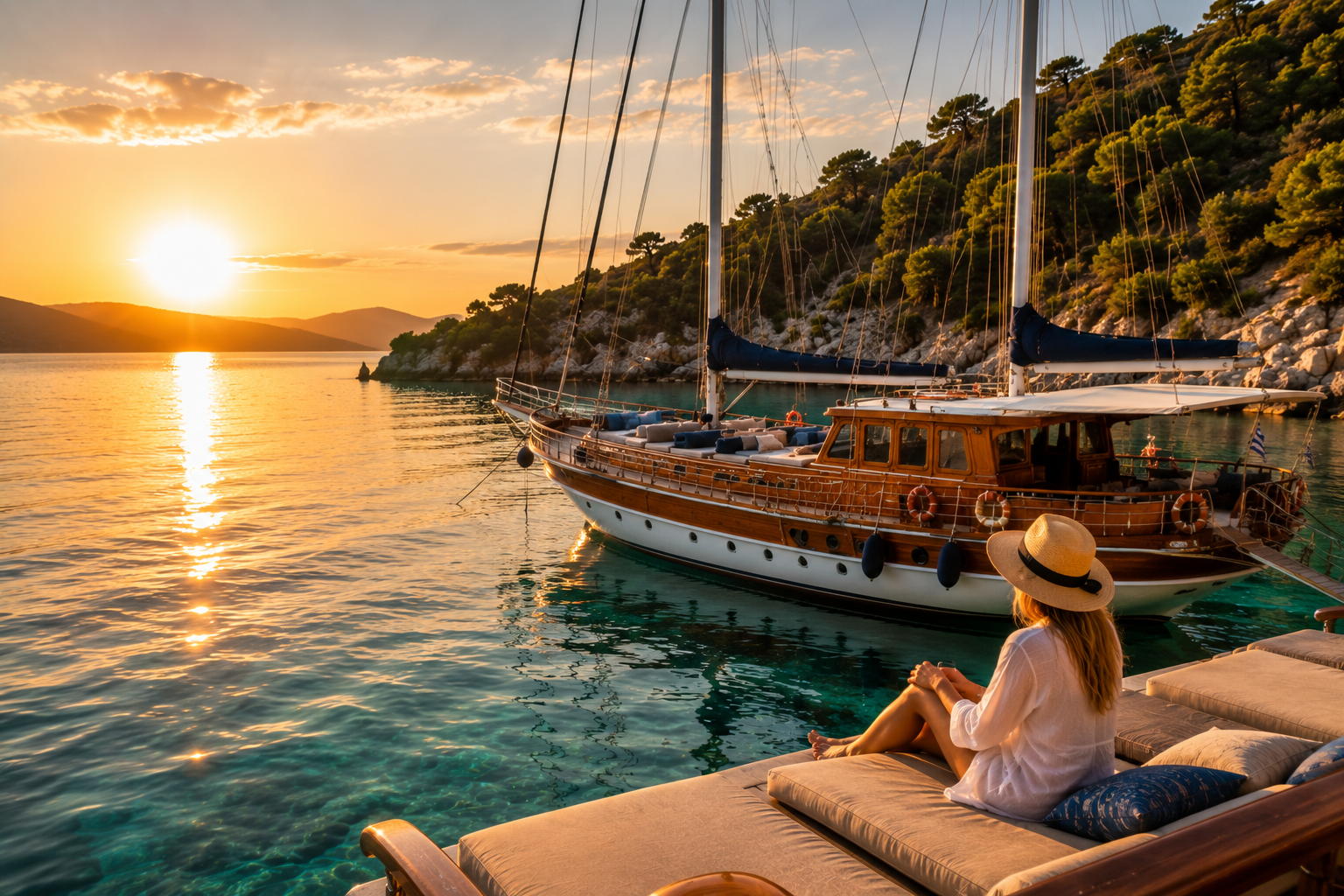
It’s how Greece used to feel. Long before mass tourism, this coastline was explored by boat – fishermen, traders, and early travellers moved between islands by sea. A gulet cruise reconnects you with that older rhythm: swimming from the deck in clear water, eating fresh fish in tiny harbour tavernas, and waking up somewhere new.

5 Greek Islands You Can Only Reach by Boat

Beyond the household names, Greece has thousands of islands and islets, and many of the most beautiful are only practically accessible by private boat. Here are five worth seeking out on a sailing itinerary.

  1. Polyaigos. Uninhabited and largely untouched, this small island near Milos has no ferry service and no permanent population – just dramatic cliffs, sea caves, and turquoise water that few travellers ever see.
  2. Koufonisia’s hidden coves. While the main village of Koufonisia does get a ferry, the island’s best swimming spots – tiny coves with sculpted rock formations and impossibly clear water – are tucked along a coastline that’s far easier to reach by boat than on foot.
  3. Marathi. A tiny islet in the Dodecanese with a handful of residents and a couple of family-run tavernas, Marathi is the kind of place where a gulet can anchor for lunch and you’ll barely see another visitor.
  4. Paximada. Off the coast of Crete, this rocky islet has no infrastructure at all, but it’s a haven for wildlife and a striking, peaceful stop for swimming and snorkelling.
  5. Sikinos. Often overlooked in favour of its neighbour Santorini, Sikinos has limited ferry connections, a slower pace of life, and Byzantine ruins with almost no other tourists in sight.

These are the kinds of stops that transform a Greek island holiday – not replacing the icons, but adding the contrast of true seclusion alongside them.

Our Crowd-Free Greece Sailing Routes

At Sail in Greece, our cruises are built around exactly this idea: combining the islands people come to Greece to see with the quieter anchorages that only a private gulet can reach.

Our Ionian Cruises explore the calmer, greener side of Greece – think Kefalonia, Ithaca, and Zante – where pine-covered hills meet turquoise bays, and the pace of island life feels noticeably slower than in the Aegean.

Our Zante Cruises focus on the beaches and sea caves of Zakynthos and its surrounding islets, including spots that are effectively unreachable except by boat, away from the beach-club crowds.

Our Rhodes Cruises combine the medieval old town of Rhodes with a chain of Dodecanese islands and hidden coves that most travellers never make it to.

For those wanting a livelier social atmosphere, our 18-39s Cruises and Mykonos Cruises blend the buzz of nightlife stops with plenty of swimming and quieter anchorages in between – so you get the party without spending your whole trip fighting crowds.

Our Harmony Cruises strike a balance between sightseeing, relaxation, and a touch of nightlife, ideal for groups with mixed priorities.

And for travellers who want full flexibility, our Yacht Experiences let you charter privately and shape the entire itinerary – including which crowded ports to skip entirely.

Every itinerary is built around a fleet of traditional wooden gulets, ranging from smaller Standard boats for intimate groups up to larger Luxury vessels for bigger parties, so the experience can be tailored to the group size and style of trip you’re after.

Practical Tips for Avoiding the Crowds in 2026

If you’re planning a Greek island trip this year, a few practical adjustments can make a significant difference to how crowded your experience feels.

Book well ahead, especially for July and August. With visitor caps in place on the busiest islands, availability for accommodation, excursions, and boat charters is tighter than in previous years. Early booking isn’t just about price – it’s about securing a spot at all.

Consider shoulder season. Late May, June, and September offer warm weather and calmer seas, with a fraction of the visitor numbers of peak summer. Many sailing routes are just as enjoyable, if not more so, outside the July-August peak.

Visit famous islands by sea, not by ferry. Arriving at Santorini or Mykonos by private boat, and anchoring away from the main port, avoids much of the disembarkation bottleneck that ferry and cruise passengers face.

Prioritise time on the water over time in town. The most memorable parts of a Greek island trip are often swimming in a quiet bay or watching the sunset from a boat deck – not standing in a crowd. Build your itinerary around these moments rather than ticking off towns.

Choose a smaller vessel and group size if you want more flexibility. Larger charter groups sometimes need to plan further ahead for anchorages and dinner reservations; smaller groups can be more spontaneous.

Pack light and pack smart. Space on a gulet is more limited than in a hotel room. A soft-sided bag, reef-safe sunscreen, and swimwear that dries quickly will serve you far better than a hard suitcase full of resort wear.

Talk to your operator about the current visitor caps. Rules can shift during the season, and an experienced local operator will know which anchorages and ports are quietest on any given week.

Frequently Asked Questions

Do the 2026 visitor caps mean I can’t visit Santorini or Mykonos this year? No. The caps limit the number of cruise ship passengers allowed to disembark each day; they don’t prevent independent travellers, including those arriving by private sailing boat, from visiting. Booking ahead and choosing quieter arrival times still gives you full access to both islands.

Is a gulet cruise suitable for people who aren’t experienced sailors? Yes. Gulets are crewed by an experienced captain and crew who handle all the navigation and sailing, so guests can simply relax, swim, and enjoy the itinerary without any sailing experience required.

How many islands do you typically visit on a one-week cruise? Most one-week itineraries call at five to seven islands and anchorages, combining well-known destinations with quieter bays and villages that aren’t accessible by regular ferry services.

When is the best time to book a Greece sailing holiday in 2026 to avoid crowds? Late May, June, and September tend to offer the best balance of good weather and lower visitor numbers, though July and August remain popular for those who don’t mind booking further in advance to secure availability.

What’s It Really Like on a Gulet Cruise in Greece?

A gulet cruise in Greece is one of those travel experiences that’s almost impossible to explain without having done it. It’s part sailing adventure, part beach holiday, part social experiment – and entirely unlike any other way of exploring the Greek islands. Here’s what a week on board is actually like, from the moment you step on deck to the bittersweet Saturday morning goodbye.

What Is a Gulet?

Before I did this trip, I genuinely didn’t know what a gulet was. I pictured something between a yacht and a pirate ship, and honestly, that’s not far off. A gulet is a traditional wooden sailing vessel, originally built by Turkish and Greek boat builders for fishing and cargo, that’s since been converted into a comfortable (if compact) cruising boat. Think wide wooden decks, a shaded dining area, sun loungers up top, and a handful of cabins tucked below.

Unlike a big cruise ship, a gulet usually carries somewhere between 15 and 40 guests, plus a small crew – a captain, a chef, and a couple of deckhands. There’s no theatre, no casino, no ten different restaurants. What you get instead is something much simpler: the sea, a handful of islands, good food, and a group of strangers who become friends faster than you’d expect.

Day 1 – Arriving in Port

I remember standing on the dock with my suitcase, squinting at rows of wooden boats trying to figure out which one was mine. There’s a nervous energy to that first afternoon. You check in, someone shows you to your cabin, and you dump your bags in a space that’s smaller than you imagined but somehow feels exactly right once you’re actually there.

Day one is all about settling in. You meet your cabin mates if you’re travelling solo, you get the safety briefing, and you start clocking faces – the couple from Manchester, the group of friends from Melbourne, the solo traveller who «just needed a break.» Nobody knows each other yet. By the time the boat pulls away from the harbour, though, that awkwardness starts melting fast. There’s usually a welcome dinner that first night, and it’s the first proper chance to actually talk to the people you’ll be spending the next week with.

A Typical Day at Sea

Ask anyone who’s done a gulet cruise what surprised them most, and most people will say the same thing: how relaxed the routine is. There isn’t really a «typical» day so much as a rhythm you fall into.

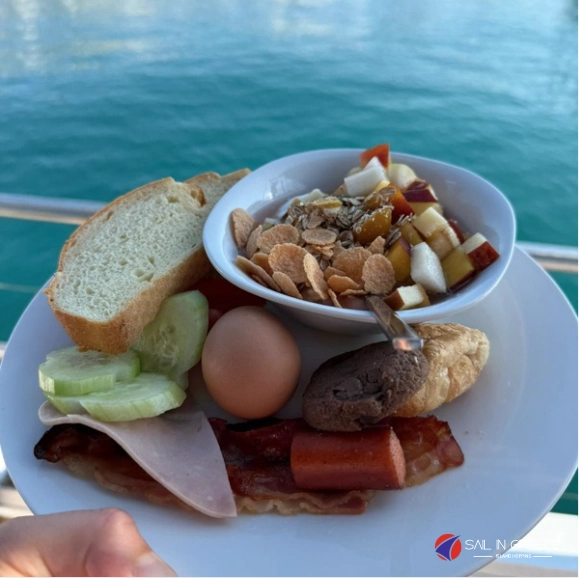
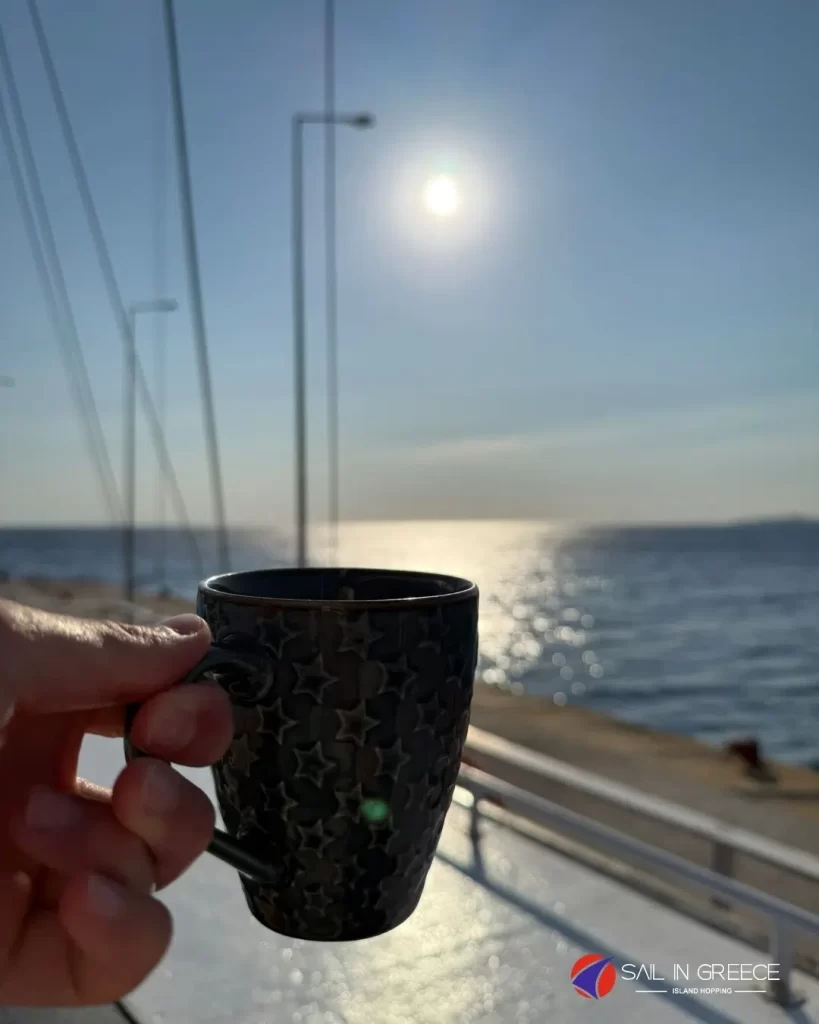
Mornings start early, but not in a bad way. You wake up to the gentle rock of the boat, the smell of coffee drifting up from the galley, and morning breakfast laid out on deck – fresh bread, yoghurt, honey, fruit, maybe some eggs if the chef is feeling generous. Eating breakfast with the sea stretching out in every direction is one of those small pleasures that gets old the least out of everything on the trip.

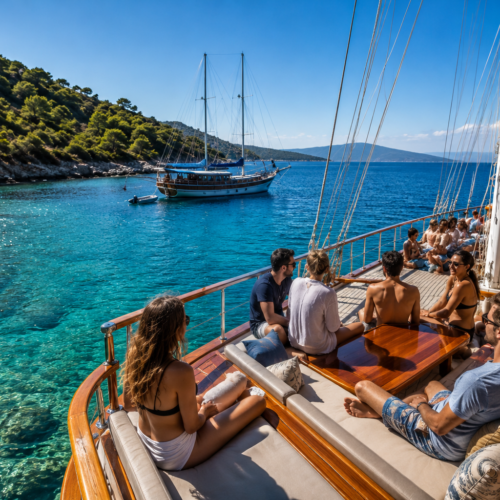
After breakfast, the boat sets sail for the next stop. Most days include at least one, often two, swimming stops in bays that you genuinely can’t reach any other way – no roads, no crowds, just turquoise water and the boat anchored a few metres offshore. One of the standout moments most people talk about is the Blue Lagoon at Sivota, a stretch of impossibly clear water tucked into the Ionian coastline that looks almost artificial, like someone added a filter to real life.

Lunch happens on board, usually after a swim, and then the afternoon is yours – nap on deck, read a book, jump in again, chat with whoever’s around. By late afternoon, the boat is usually pulling into that night’s port.

Evenings in Port

This is where the day shifts gear. Once the boat is docked, you’ve got a few hours before dinner to wander the small island village you’ve pulled into – cobbled streets, tavernas with plastic chairs and unbeatable views, little shops selling sandals and jewellery. Some of these villages barely register on a map, which is exactly the point. You’re not seeing the Greece from the postcards; you’re seeing the Greece that’s still just getting on with its own life.

One evening that stands out on most itineraries is a stop in Plataria, where there’s often an olive oil tasting arranged with a local producer. It sounds like a small thing until you’re actually sitting there dipping bread into oil that was pressed a few kilometres away, listening to someone explain the difference between varieties you never knew existed. It’s the kind of detail that makes the trip feel like more than a beach holiday.

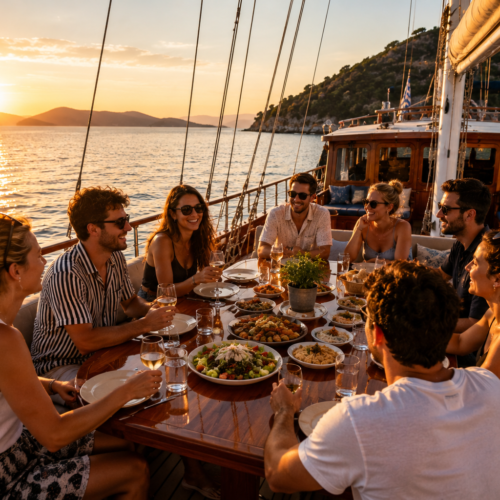
Dinner is either back on the boat or at a taverna in port, depending on the night, and the highlight of the week for a lot of people is the Captain’s Dinner – a slightly dressed-up final evening where the crew puts on a proper spread, and there’s usually a bit of dancing, some toasts, and a lot of photos being taken. It has a bittersweet feel to it, because everyone knows what it means: the trip’s nearly over.

The Food on Board

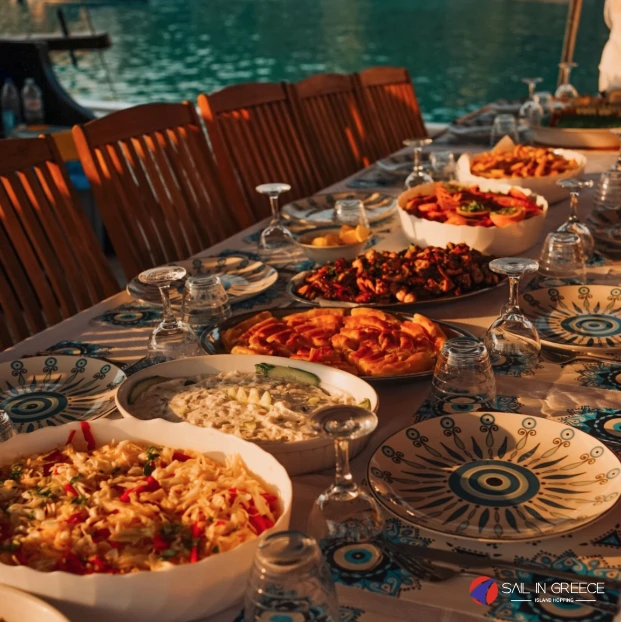
I wasn’t expecting much from boat food, if I’m honest. What actually happens is that most gulets have a chef cooking fresh meals daily, and it’s genuinely one of the better parts of the trip. Breakfast is simple and plentiful. Lunch is usually a spread of Greek dishes – salads, grilled meat or fish, dips, fresh bread – laid out buffet style so you can go back for seconds. Dinners vary more, sometimes on board, sometimes at a taverna ashore.

It’s not fine dining, and nobody’s pretending it is. But there’s something about eating fresh, simple food outdoors, with the sea right there, that makes it taste better than it probably would anywhere else.

The Cabins

Let’s be honest about this bit, because it’s the part people are most curious about and most likely to be surprised by. Cabins on a gulet are small. You’re not getting a hotel room – you’re getting a compact space with a bed, some storage, and usually an ensuite bathroom that doubles as the shower. Air conditioning is often available but sometimes runs on a schedule or costs extra, so nights can get warm, especially in peak summer.

That said, you don’t spend much time in the cabin. Most of the trip happens on deck – eating, chatting, sunbathing, sleeping under the stars if that’s your thing. The cabin is really just where you crash at the end of a long day, and once you accept that, the size stops mattering nearly as much as you’d expect.

The Social Side

Nobody really prepares you for how social this trip is. You’re sharing a boat with strangers for a week, and there’s nowhere to hide from that – which sounds intense, but in practice it’s one of the best parts. Meals are shared, deck space is shared, and conversations start easily because everyone’s in the same boat, quite literally.

By day three or four, you’ve usually got a little crew of your own – people you swim with, sit next to at dinner, stay up late talking to under the stars. It’s not unusual to leave a gulet cruise with a handful of new friends you’re already planning to visit. There’s something about being disconnected from ordinary life, with no phones glued to faces and nothing to do but be present, that speeds up how quickly people connect.

What’s NOT Included

It’s worth being upfront about this, because it changes how you budget for the week. Most gulet cruises include your cabin, meals on board, and the crew’s services, but there are a few things that typically come as extras:

  • Drinks – most boats run a bar tab you settle at the end of the week
  • Air conditioning, on some boats, if you want it running overnight
  • Excursions or activities in port, like guided tours or watersports
  • Tips for the crew, which are appreciated but not mandatory
  • Flights and travel insurance to get you to and from the departure port
  • None of this is hidden or sneaky, but it’s easy to assume a cruise is fully «all-inclusive» when it isn’t quite. Budgeting an extra amount for drinks and the odd excursion will save you from any surprises.

Is a Gulet Cruise Worth It?

Honestly? For the right kind of traveller, yes. If you want five-star luxury, room service, and total privacy, this probably isn’t it – the cabins are small, the schedule can shift with the weather, and you’re sharing the whole week with a boat full of strangers. But if you want a genuinely different way to see the Greek islands, one that mixes swimming in hidden bays, wandering through small villages, eating good food outdoors, and meeting people from all over the world, it’s hard to think of a better way to do it.

It’s not a passive holiday where things happen around you. It’s one where you’re part of it – helping with a rope now and then, jumping off the side of the boat because someone else just did, staying up later than planned because the conversation’s too good to leave. That’s the part that’s hard to explain until you’ve actually done it.

What guests are saying

«The evenings in each little port were magical – quiet harbours, great food, and stargazing from the deck.» – Jeremy

«We visited quiet bays for swimming, snorkelled in crystal-clear waters, and explored old ruins. It exceeded all our expectations.» – Stauroula

«We explored hidden coves, swam in turquoise bays, and enjoyed amazing meals on deck. It was one of the most peaceful trips I’ve taken.» – Roger

Frequently Asked Questions

How many people are on a typical gulet cruise? It varies by boat, but most gulets carry somewhere between 15 and 40 guests, plus a small crew.

Do I need any sailing experience? No. You’re a guest, not crew. The captain and deckhands handle the sailing – you’re free to relax, though you can always ask to get involved if you’re curious.

Is there Wi-Fi on board? Some boats offer limited Wi-Fi, but signal can be patchy once you’re out at sea. Most guests find it’s actually a nice excuse to switch off for the week.

What should I pack? Light, breathable clothing, swimwear, a hat, reef-safe sunscreen, and a light jacket for cooler evenings. Cabin storage is limited, so a soft duffel bag packs better than a hard suitcase.

Is it suitable for solo travellers? Very much so. The social nature of the trip makes it one of the easier ways to travel alone and still end up surrounded by people by the end of the week.

What happens if the weather turns bad? Captains adjust the itinerary as needed for safety, sometimes swapping stops or delaying a swim. It’s rare for weather to derail a trip entirely, but some flexibility is part of sailing.

When’s the best time to go? Peak summer (July-August) means warm water and lively evenings, but it’s also the busiest and hottest. Late spring and September offer quieter ports and more comfortable temperatures.

Ready to experience it for yourself? Browse our Greece cruise dates for 2026 and 2027 – most summer departures sell out early.

Amor a bordo

Amor a bordo:
Por qué un crucero podría ser la mejor terapia para parejas
Todos siempre hablan de formas de «hacer que tu relación se sienta nueva otra vez»:

Cenas románticas para dos,
escapadas rápidas a hoteles,
maratones de películas en el sofá (con comida para llevar, por supuesto).

Todo bonito… pero, ¿y si llevaras tu historia de amor al mar?

Porque aquí está la cuestión: un crucero no es solo otro viaje.
Es un enorme botón de reinicio para las parejas
que quieren reír, relajarse y recordar
por qué eligieron navegar juntos por la vida
desde el principio.
Vacaciones sin horarios (y sin quejas)
Olvida los horarios estrictos:
«A las 10 visitamos museos, a las 12 vamos de compras…»

En un crucero, el horario es más así: despierta cuando quieras. Sumérgete en el agua cuando te llame. Abre una botella… solo porque puedes.

¿Y lo mejor? Nadie se queja por llegar tarde.
El único reloj que importa aquí es el sol.
Las mejores historias comienzan en el mar
Piénsalo: ¿realmente recuerdas ese fin de semana aleatorio en un hotel… o la vez que intentasteis poneros protector solar el uno al otro con viento de 20 nudos?

Son los momentos torpes, divertidos e impredecibles los que se convierten en historias que contarás durante años —y que hacen que vuestro vínculo sea aún más fuerte.
El verdadero lujo: tiempo juntos
Aquí está el secreto: el verdadero lujo de un crucero no es el gulet. Es el hecho de que finalmente tienes el tiempo y el espacio para simplemente estar juntos. Reír, hablar, soñar —o no decir nada y simplemente mirar el horizonte como dos adolescentes enamorándose de nuevo.

En conclusión, un crucero no es «solo otra vacaciones».
Es la forma más feliz, divertida, romántica y un poco loca de traer nueva energía a tu relación. Porque en el mar, no se trata de quién siempre tiene la razón… sino de quién te abraza fuerte cuando el viento sopla.

Un vistazo a la hospitalidad griega

Un vistazo a la hospitalidad griega
Comidas y bebidas en una Goleta

En una crucero en goleta, las comidas son parte de la experiencia. Desde un desayuno relajado hasta platos griegos caseros junto al mar, cada comida tiene su propio sabor especial.

¿Qué comidas y bebidas puedo disfrutar en un crucero en goleta?

Claro, las aguas turquesas y el lento recorrido entre islas son los puntos destacados de cualquier crucero en goleta — pero si preguntas a los huéspedes anteriores qué los sorprendió realmente, muchos dirán: la comida.

Aquí tienes un vistazo rápido y honesto de qué comidas y bebidas puedes esperar mientras navegas.
Desayuno: simple, fresco y satisfactorio

Hay algo especial en comenzar el día sobre el agua que hace que el desayuno sea único. Las mañanas a bordo son relajadas, con un buffet que normalmente incluye:
  • Pan y pasteles recién horneados
  • Huevos, cereales, embutidos, quesos
  • Yogur griego y fruta de temporada
  • Café, leche y jugo

No es complicado — simplemente buena comida fresca para energizar tu día.
Almuerzo y cena: sabores griegos caseros

Las comidas a bordo se centran en la cocina griega casera — fresca, local y reconfortante. El almuerzo y la cena suelen seguir un formato simple de 3 platos:
  • Entrantes (como tartas de queso o hojas de parra rellenas)
  • Ensaladas frescas con ingredientes de temporada
  • Plato principal (moussaka, pollo a la parrilla, pasta — varía cada día)
  • Postre ligero o fruta fresca

Los menús son flexibles y se ajustan diariamente, según las preferencias del grupo y en coordinación con el capitán.
Bebidas: fáciles y personalizables

Hay tres opciones principales para las bebidas a bordo:
  • Pedir tus bebidas favoritas con antelación
  • Pedirlas sobre la marcha en el bar del barco
  • Traer tus propias bebidas (con un pequeño cargo por descorche)

El agua se sirve gratis en todas las comidas y hay agua embotellada adicional disponible por un pequeño costo.
Algunas cosas a tener en cuenta
  • Las comidas son generalmente al estilo griego y se sirven en un ambiente relajado.
  • No hay un horario fijo para las comidas — se organizan diariamente según el plan del grupo.
  • No se permite traer alimentos o bebidas externas, salvo acuerdo previo (se aplica un cargo por descorche).
No se trata solo de la comida

Comer en una goleta es informal y comunitario. Se trata de compartir comidas en la ancla, disfrutar de una bahía tranquila o ver el atardecer con una copa de vino en la mano. Es sencillo, pero inolvidable — igual que el resto del viaje.

Un día en una goleta

De Ouzo a la brisa marina: Un día en una goleta navegando por Grecia


Viajar por Grecia es más que unas simples vacaciones. Es un viaje de experiencias, aromas, sabores y actividades inolvidables. Y eso es exactamente lo que vivirás al navegar en una de las goletas de Sail in Greece. ¿Tienes curiosidad por saber cómo es un día en una goleta? Sigue leyendo: • Tu día comienza cuando te despiertas y sales a la cubierta, listo para descubrir la próxima isla. • Un rico buffet de desayuno te espera, lleno de una amplia variedad de opciones deliciosas. • A medida que avanza el día y llegas a una nueva isla, puedes elegir lanzarte directamente desde el barco a las aguas cristalinas y azules.


• Mientras la tripulación prepara un buffet tradicional griego para el almuerzo, puedes disfrutar de tu trago local favorito — un vaso de ouzo. Anís y souvlaki de cerdo griego — siempre una combinación perfecta. • Más tarde en el día, la goleta atraca en un puerto cercano, y eres libre de explorar las estrechas calles, rodeado de buganvillas y los aromas del verano. Por supuesto, las tabernas locales te esperan, listas para servir deliciosos platos tradicionales. • Por la noche, regresas a la goleta para disfrutar de la fresca brisa isleña. Puedes dormir en la cubierta, viendo el amanecer, o simplemente disfrutar de la magia de lo que llamamos el “Verano griego.”


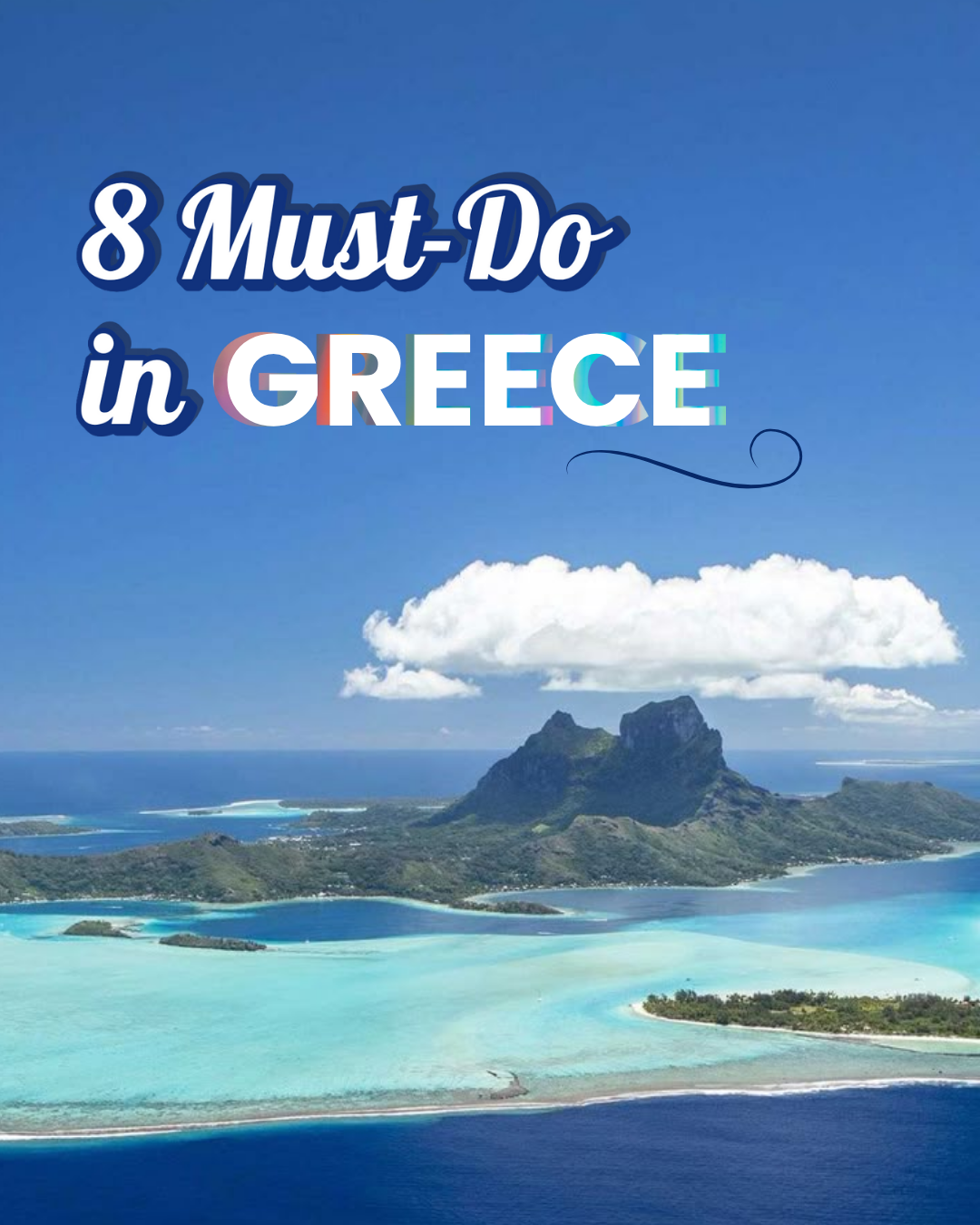
8 Must-Do in Greece

Greece is a treasure trove of history, culture, and natural beauty, making it one of the most desirable travel destinations in the world. Whether you’re a history buff, a beach lover, or a foodie, this Mediterranean gem offers something for everyone. If you’re planning your 2025 Greek getaway, here are the top must-do experiences to include on your itinerary.

1.  Visit the Best Beaches in Greece


Greece is synonymous with pristine beaches and crystal-clear waters. Here are some of the most stunning beaches you shouldn’t miss:

  • Navagio Beach (Zakynthos) – Famous for the shipwreck and dramatic cliffs.

  • Palaiokastritsa Beach (Crete) – Known for its pink sand and turquoise waters.

  • Myrtos Beach (Kefalonia) – A spectacular beach surrounded by steep cliffs.

  • Porto Katsiki Beach (Lefkada) – Offers a blend of golden sand and crystal waters.

  • Saint Paul’s Bay (Rhodes) – A lunar-like landscape with white volcanic rock formations.

These iconic beaches are accessible on our curated Greek island cruises:

Each cruise is designed to bring you up close to Greece’s most breathtaking coastal locations.


2. Discover the Best UNESCO World Heritage Sites 

Greece is home to 18 UNESCO World Heritage sites that reveal the country’s deep-rooted history. Among the most awe-inspiring is Meteora, a complex of rock formations topped with centuries-old monasteries. These monasteries, perched high on sandstone cliffs, offer not only spiritual insight but also panoramic views.

If you are interested in visiting Meteora, you may contact us through email at groups@sail-ingreece.com to ensure you get an immersive experience, with expert-led insights into the religious, cultural, and historical significance of the site.

3. Enjoy a Variety of Excursions 

From archaeological adventures to nature walks and cultural tours, Greece offers a wide range of excursions:

  • Delphi Day Tour – Visit the legendary Oracle and Temple of Apollo.

  • Hiking in Samaria Gorge (Crete) – Ideal for nature lovers.

  • Corfu Old Town Walking Tour – A charming stroll through Venetian architecture.

  • Olive Oil and Wine Tastings – Explore Greece’s gastronomic heritage.

These curated experiences can be added to your travel package to enhance your journey.

4. Explore Ancient Athens

No visit to Greece is complete without experiencing Ancient Athens. Highlights include:

  • The Acropolis and Parthenon – Towering over the city, these monuments are a testament to ancient Greek civilization.

  • The Agora – Once the heart of public life in ancient Athens.

  • Temple of Hephaestus – One of the best-preserved Greek temples.

Modern Athens offers a beautiful contrast with its vibrant neighborhoods like Plaka, Psiri, and Monastiraki—perfect for exploration on foot.

If you are interested in visiting Ancient Athens, you may contact us through email at groups@sail-ingreece.com.


5. Eat Traditional Greek Food 

Greek cuisine is a delicious journey through fresh ingredients and timeless recipes. Must-try dishes include:

  • Moussaka – A layered eggplant and meat casserole.

  • Souvlaki – Skewered grilled meat, often served with pita.

  • Dolmades – Stuffed grape leaves.

  • Spanakopita – A savory spinach and cheese pastry.

  • Baklava – A sweet dessert made of filo pastry, nuts, and honey.

Don’t forget to sip some Ouzo or Tsipouro, and finish off your meals with local Greek yogurt and honey.


6. Visit the Ionian Islands 

The Ionian Islands are an iconic island group known for their whitewashed buildings and blue-domed churches. Key islands to visit include:

  • Paxos– Famous for its sunsets and volcanic beaches.

  • Corfu  – Known for its cosmopolitan vibe and lively nightlife.

  • Zante – A more relaxed island with traditional villages.

  • Lefkada – Offers a blend of beaches, history, and agriculture.

Our Ionian Cruise & Zante Cruise offer a convenient way to explore multiple islands, with guided tours, beach stops, and cultural insights.

7. Experience Greece’s Coffee Culture 

Coffee in Greece is more than just a beverage—it’s a ritual. Join locals at a traditional kafeneio or modern café and savor:

  • Greek Coffee – Strong and served with grounds.

  • Freddo Espresso or Cappuccino – Iced coffee drinks perfect for summer.

  • Frappe – A foamy iced coffee made with instant coffee.

Whether in a bustling square in Athens or a quiet island village, coffee time is a moment to relax and socialize.

8. Discover Greece’s Best Museums

Greece is a dream for museum lovers. Must-visit institutions include:

  • The Acropolis Museum (Athens) – Showcasing artifacts from the Acropolis.

  • National Archaeological Museum (Athens) – Home to Greece’s greatest ancient treasures.

  • Museum of Byzantine Culture (Thessaloniki) – A deep dive into the Byzantine Empire.

  • Archaeological Museum of Heraklion (Crete) – Highlighting Minoan civilization.

  • Benaki Museum (Athens) – A mix of ancient, Byzantine, and modern Greek art.

These museums offer fascinating insights into the country’s layered past.

If you are interested in visiting museums, you may contact us through email at groups@sail-ingreece.com.


9. Discover The Best Greek Islands 

Beyond the Cyclades, Greece is home to over 200 inhabited islands, each with its own charm:

  • Rhodes – Medieval architecture and sunny beaches.

  • Mykonos –  Vibrant lifestyle and immersive beaches 
  • Corfu – Lush landscapes and Venetian influence.

  • Kefalonia – Ideal for nature lovers and beachgoers.

  • Hydra – Car-free and artist-friendly.

Explore some of these islands through our tailored cruises:

Final Thoughts

From lounging on pink-sand beaches to sipping Greek coffee in a sun-drenched square, Greece offers a rich tapestry of experiences. Make your 2025 holiday unforgettable by including these must-do activities, and let our exclusive cruises and tours guide you through the best of what Greece has to offer.

For bookings, availability, and custom itineraries, reach out to our travel specialists today and start planning your dream Greek getaway.

Comparación: Navegación vs. Cruceros

Navegación vs. Cruceros: Una Comparación de Libertad, Experiencia y Navegación

Al considerar unas vacaciones en el agua, la mayoría de los viajeros se dividen en dos grupos: quienes buscan la gran independencia de la navegación y quienes prefieren el lujo estructurado de los cruceros. Si bien ambos ofrecen experiencias marítimas inolvidables, la forma en que brindan aventura, libertad y conexión con el mar es muy diferente.

                                                                                                       Photo by Peter Hansen on Unsplash

Compararemos la navegación a vela y los cruceros en tres pilares fundamentales: libertad, experiencia y navegación, ofreciendo claridad a quienes se debaten entre izar las velas o embarcarse en un megabarco en 2025.

Crucero vs. Navegar por un río: Dos rutas hacia la tranquilidad

Uno de los factores clave es encontrar la libertad en el agua, ya que probablemente esa sea la razón por la que te embarcaste en esta aventura. Veamos qué ofrecen la navegación a vela y los cruceros cuando el escenario es un río sinuoso en lugar de mar abierto.


Cruceros Fluviales: Comodidad Guiada y Profundidad Cultural

Los cruceros fluviales ofrecen una experiencia completamente diferente, combinando la exploración guiada con la comodidad de una hospitalidad completa. Estas embarcaciones son largas, bajas y están diseñadas para la intimidad de un viaje por tierra. Los cruceros por el Danubio, el Rin, el Mekong o el Misisipi ofrecen rutas estructuradas que maximizan las visitas turísticas, a menudo incluyendo historiadores o expertos locales a bordo para profundizar su conocimiento de cada región.

En ningún lugar esto es más evidente que en el corazón de Europa, donde los itinerarios por el Danubio y el Rin serpentean a través de un entramado de ciudades históricas, viñedos y castillos, llevando siglos de cultura directamente a la puerta de su camarote.

La libertad en un crucero fluvial es limitada en cuanto a navegación, pero amplia en cuanto a oferta cultural y gastronómica. No dirigirá el barco ni tomará decisiones de ruta, pero tendrá acceso a excursiones personalizadas, catas de vino y espectáculos locales desde la pasarela.

Todo está preorganizado: permisos de amarre, cenas, entretenimiento y transporte terrestre. Se trata de libertad sin planificación, no de libertad de movimiento.

Navegación Fluvial: Vías Fluviales Tranquilas y Rutas Inmersivas

Navegar por un río ofrece una experiencia profundamente tranquila, paisajística y cercana a la tierra. A diferencia de la navegación oceánica, donde se está a merced de las mareas cambiantes y el mar abierto, los ríos ofrecen condiciones tranquilas y una costa siempre presente.

Normalmente se navega en embarcaciones más pequeñas, como balandras o casas flotantes tradicionales, que pueden navegar por canales más estrechos y aguas menos profundas. Este entorno es perfecto para una exploración a ritmo lento, donde se puede atracar en aldeas remotas o en parajes rurales sin señalizar a voluntad.

La libertad personal se ve reforzada por la ausencia de olas y vientos fuertes, lo que hace que la navegación fluvial sea ideal para quienes se inician en el timón. Aun así, se disfruta de la ventaja de la flexibilidad: se puede cambiar de rumbo, detenerse espontáneamente o fondear cerca de un viñedo o un café fluvial.

Dependiendo del país, algunos ríos requieren licencias, conocimiento de los sistemas de esclusas o de la normativa de las vías navegables interiores. Destinos populares como el Valle del Loira en Francia o el Duero en Portugal ofrecen una rica inmersión cultural con condiciones de navegación manejables.

Experiencia a bordo y en tierra

Ahora profundizaremos (sin ánimo de hacer un juego de palabras) en las experiencias a bordo y en tierra.

Navegación: Íntima, Auténtica e Inmersiva

Navegar ofrece una conexión inmersiva con la naturaleza, la cultura y la vida marítima. Con solo un puñado de pasajeros, a veces solo tu grupo, experimentarás un nivel de intimidad que no se encuentra en los cruceros. Podrás sentir el cambio de viento, oír el agua golpear el casco y responder al ritmo del mar.

En tierra, los navegantes pueden explorar lugares que los cruceros pasan por alto. Estos a menudo incluyen pequeños pueblos pesqueros, islas menos conocidas o tabernas locales sin infraestructura turística. En lugar de desembarcar en grupo con cientos de personas, fondeas a tu propio ritmo y descubres lugares a tu manera. Destinos como las Granadinas, las Espóradas o el archipiélago croata de Kornati se aprecian mejor así.

Los alojamientos, aunque más pequeños, son más personales. Dormirás bajo las estrellas o en acogedoras cabañas, te despertarás con el amanecer y prepararás tus propias comidas, o disfrutarás de la gastronomía local en tierra. La experiencia se centra menos en el lujo y más en la conexión, tanto con tu grupo de viaje como con la naturaleza.

Cruceros: Lujo, Entretenimiento y Ambiente Social

Los cruceros ofrecen resorts flotantes con servicios de 5 estrellas: spas, casinos, cines, gimnasios, bares temáticos y restaurantes de alta cocina. Desde parejas hasta familias con niños pequeños, hay opciones para todos los gustos. La oferta de entretenimiento a bordo es inigualable, con musicales de Broadway, clases de cocina, conferencias y tiendas de lujo, a menudo incluidas.

En tierra, las excursiones están pensadas para el turismo de masas. Los tours son preorganizados y dinámicos, y llevan a los pasajeros a las atracciones más populares. Si bien son eficientes, estas salidas a menudo carecen de la profundidad o autenticidad de la exploración independiente. Es poco probable que encuentres un café escondido o que conectes personalmente con la gente local en un tour organizado de 3 horas.

Aun así, la experiencia de un crucero destaca por su alcance y variedad. Podrías visitar cinco países en una semana sin deshacer maletas. La comodidad, la variedad de opciones gastronómicas y el acceso a atención médica a bordo hacen que los cruceros sean especialmente atractivos para grupos multigeneracionales o aquellos que buscan la comodidad de todo incluido.

                                                                                                       Photo by Artem Verbo on Unsplash

Navegación y Marinería

Aquí es donde radican las grandes diferencias, pero solo si se desea navegar sin capitán. Profundizaremos en este tema a continuación.

Navegación: Habilidad Práctica y Dominio de la Navegación

La navegación es fundamental para la experiencia de navegación, ya sea al mando de un catamarán en el Caribe o de un monocasco en el Mediterráneo. El GPS, las cartas náuticas, las radios VHF y las rutas meteorológicas desempeñan un papel fundamental, y los navegantes deben saber interpretar la dirección del viento, leer las corrientes y responder a problemas mecánicos.

Incluso al contratar un patrón, se suele animar a los pasajeros a participar, aprendiendo a izar velas, hacer nudos o gobernar a vela. Esta participación desarrolla la marinería y ofrece un reto gratificante. Cursos como el Day Skipper de la Royal Yachting Association (RYA) o el curso 104 de la American Sailing Association son populares entre los principiantes que buscan adquirir competencia antes de zarpar.

Cruceros: Transporte Pasivo y Escala Global

La navegación a bordo de cruceros es una actividad profesional, gestionada íntegramente por capitanes titulados, ingenieros navales y equipos de alta tecnología. Los cruceros modernos son maravillas de la ingeniería marítima, capaces de cubrir miles de millas náuticas con una precisión excepcional. Estas embarcaciones siguen los protocolos marítimos internacionales, utilizan navegación por satélite y cartografian los patrones meteorológicos con mucha antelación.

Los pasajeros desconocen en gran medida la complejidad de la navegación que se desarrolla entre bastidores. Esta experiencia sin intervención es ideal para quienes prefieren ignorar la mecánica del movimiento. Aunque no aprenderá a navegar ni a leer las estrellas, disfrutará de un tránsito fluido entre puertos mientras disfruta de una copa de champán en la cubierta.

                                                                                                Photo by Ludomił Sawicki on Unsplash

Nota final: ¿Cuál es el adecuado para ti?

Elegir entre navegar o un crucero suele depender de tu afán por explorar o por disfrutar de la naturaleza, pero las nuevas experiencias híbridas, como pequeños yates de expedición o catamaranes de lujo ecológico, difuminan la línea entre ambos.

Estas innovadoras opciones ofrecen itinerarios personalizados con espacio para la espontaneidad, atractivos tanto para aventureros como para quienes buscan comodidad. A medida que las tendencias de viaje evolucionen en 2025, la opción más inteligente podría ser aquella que combine libertad y lujo en lugar de obligarte a elegir entre una u otra.

Consulta más blogs de Sail in Greece aquí.

La guía de viaje definitiva de Corfú

La guía de viaje definitiva de Corfú

Todo lo que necesitas saber antes de visitar esta paradisíaca isla griega

Si sueñas con aguas cristalinas, paisajes exuberantes y siglos de rica historia, Corfú debería estar en el primer lugar de tu lista de destinos para viajar a Grecia. Esta impresionante isla, ubicada en el mar Jónico, frente a la costa noroeste de Grecia, combina influencias venecianas, francesas y británicas con el encanto tradicional griego, ofreciendo a los visitantes una experiencia única e inolvidable.

En esta guía, descubrirás todo lo que necesitas saber para visitar Corfú, desde su fascinante historia y lugares de interés imprescindibles hasta las mejores playas, restaurantes, tiendas y excursiones.

Breve Historia de Corfú

La historia de Corfú es tan rica y compleja como sus paisajes. La isla ha estado habitada desde el Paleolítico y ha desempeñado un papel fundamental a lo largo de la historia gracias a su ubicación estratégica entre Europa y Oriente.

En la antigüedad, Corfú fue una poderosa fuerza naval. Participó en la primera batalla naval registrada en la historia griega y desempeñó un papel importante en la Guerra del Peloponeso. A lo largo de los siglos, Corfú estuvo gobernada por venecianos, franceses y británicos, quienes dejaron su huella en la arquitectura, la gastronomía y la cultura de la isla.

A diferencia de gran parte de Grecia, Corfú nunca cayó bajo el dominio otomano, lo que le confiere un aire europeo único. Hoy en día, el casco antiguo de Corfú, declarado Patrimonio de la Humanidad por la UNESCO, es un testimonio de su rica historia, repleto de estrechas callejuelas adoquinadas, grandes mansiones e impresionantes fortalezas.

Las mejores playas de Corfú

Corfú cuenta con algunas de las playas más hermosas de las islas griegas. Aquí tienes algunas que no te puedes perder:

1. Playa de Paleokastritsa

Aguas turquesas y un fondo de exuberantes colinas verdes hacen de Paleokastritsa una de las playas más famosas de Corfú. Es perfecta para practicar snorkel, nadar y dar paseos en barco.

2. Playa de Glyfada

Favorita tanto para locales como para turistas, Glyfada ofrece arenas doradas, aguas cristalinas y excelentes chiringuitos.

3. Sidari y el Canal del Amor

La playa de Sidari, en la costa norte, es famosa por sus singulares formaciones de arenisca y el romántico Canal del Amor, donde, según la leyenda, las parejas que lo atraviesen nadando se casarían pronto.

4. Playa de Barbati

Una playa de guijarros con aguas cristalinas, ideal para quienes buscan un ambiente más tranquilo y relajado.

5. Playa de Issos

Ubicada al sur, Issos cuenta con amplias playas de arena y una reserva natural protegida cercana, ideal para los amantes de la naturaleza.

Excursiones de un día desde Corfú

Corfú ofrece numerosas excursiones memorables, tanto por tierra como por mar:

1. Paseo en barco a Paxos y Antipaxos

Disfruta de una excursión en barco a las islas vecinas de Paxos y Antipaxos, famosas por sus impresionantes cuevas azules y aguas cristalinas.

2. Safaris en Jeep por la isla

Explora el agreste interior de Corfú, sus encantadores pueblos y olivares en una aventura todoterreno.

3. Rutas del vino por Corfú

La industria vinícola de Corfú está en pleno auge. Visita las bodegas locales para degustar variedades autóctonas como la Kakotrygis.

4. Pueblo pesquero de Kassiopi

Un pintoresco pueblo costero en el noreste, perfecto para un día relajado de almuerzos con mariscos y paseos por la costa.

5. Recorridos a pie por la ciudad de Corfú

Únete a una visita guiada a pie para descubrir callejones escondidos, mansiones históricas y leyendas locales.

Consejos prácticos de viaje para visitar Corfú
Mejor época para visitar: De finales de abril a principios de junio y de septiembre a octubre, el clima es mejor sin aglomeraciones. Cómo llegar: En avión: El Aeropuerto Internacional de Corfú (Ioannis Kapodistrias) acepta vuelos nacionales e internacionales. En ferry: Hay ferries regulares que conectan Corfú con la Grecia continental (Igoumenitsa) e Italia. Cómo desplazarse: Alquiler de coche: Muy recomendable si desea explorar más allá de la ciudad de Corfú. Autobuses: Una forma económica de visitar playas y pueblos populares. Taxis y taxis acuáticos: Disponibles, pero pueden ser caros en temporada alta.

Reflexiones finales: Por qué Corfú debería ser tu próximo destino en una isla griega

Corfú ofrece una combinación única de belleza natural, profunda historia, cultura cosmopolita y la cálida hospitalidad griega. Ya sea que estés paseando por las encantadoras calles de la ciudad de Corfú, descansando en playas doradas o cenando al aire libre bajo las estrellas, cada momento en esta isla se siente como un sueño.

Perfecta para parejas, viajeros solitarios y familias, Corfú destaca incluso entre las joyas más brillantes de las islas griegas. Así que prepara tus maletas, prepara tus sentidos y prepárate para enamorarte de Corfú, un destino inolvidable.

¿Por qué cruceros individuales para personas de 40 y 50 años?

Si tienes entre 40 y 50 años y estás pensando en tomarte un tiempo para ti, un crucero individual podría ser la opción perfecta, especialmente si recorre las hermosas islas griegas. Cada vez más personas que viajan solas disfrutan de la libertad, la emoción y la relajación que ofrece un crucero en solitario. Ya seas recién soltero, tengas experiencia viajando solo o simplemente anheles una nueva aventura, explorar Grecia por mar tiene algo mágico.

Aquí te explicamos por qué un crucero en solitario por las islas griegas no son solo unas vacaciones, sino una experiencia inolvidable que te enriquecerá la vida.

Esta guía presenta ideas creativas para tu próxima ocasión especial a bordo, mostrando cómo nuestros alquileres de goletas en Grecia pueden realzar cada evento. Ya sea una fiesta de cumpleaños, una cena íntima de aniversario o una animada fiesta temática, nuestro equipo tiene la experiencia y los conocimientos necesarios para crear una celebración que se ajuste perfectamente a tu visión.

1. La mezcla perfecta de aventura y relajación

Cuando tienes entre 40 y 50 años, sabes lo que buscas en tus vacaciones. Quizás un día se trate de descubrir ruinas antiguas y al siguiente, disfrutar de un buen vino junto al mar. Un solo crucero por Grecia ofrece la combinación ideal de descubrimiento cultural y relajación total.

Cada isla tiene su propio encanto: desde los pueblos blancos de Mykonos hasta los espectaculares acantilados de Santorini. Un día puedes estar explorando las ruinas de Delos; al siguiente, descansando en una playa de Naxos. Un crucero te permite descubrir una gran variedad de tesoros griegos sin el estrés de organizar constantemente el viaje.

2. Diseñado para viajeros solitarios

Las experiencias de cruceros individuales de hoy en día están diseñadas cuidadosamente para quienes viajan solos. A diferencia de los cruceros tradicionales, que a veces parecen enfocados en parejas o familias, muchas líneas de cruceros ahora atienden específicamente a solteros de entre 40 y 50 años.

Encontrarás camarotes individuales, cenas en grupo y eventos sociales diseñados para quienes viajan solos. Ya sea que busques hacer nuevos amigos, disfrutar de un momento de tranquilidad o incluso iniciar un poco de romance, te sentirás como en casa. Además, viajar en crucero solo significa que puedes elegir cuán sociable (o solitario) quieres ser, sin ninguna presión.

3. Las islas griegas: un destino de ensueño

Hay una razón por la que las islas griegas se consideran uno de los mejores destinos de cruceros del mundo. Cada isla ofrece algo único, desde los exuberantes paisajes de Corfú hasta los misterios históricos de Creta.

La belleza de un solo crucero por Grecia reside en que cada día puedes despertar en una isla paradisíaca diferente. Atracarás cerca de pueblos encantadores, lo que te permitirá explorar tesoros escondidos, probar la auténtica gastronomía griega y sumergirte en el relajado estilo de vida isleño.

Y no olvidemos las puestas de sol. Ver cómo el sol se funde con el mar Egeo desde la cubierta de un crucero es un momento inolvidable, aún más mágico cuando se vive durante una aventura en solitario.

4. Reconecta contigo mismo

Viajar solo es profundamente empoderante, especialmente a los 40 y 50 años. Un crucero individual por las islas griegas te brinda la oportunidad única de reconectar contigo mismo, lejos del ruido y las exigencias del día a día.

Ya sea escribiendo en tu diario al amanecer, practicando yoga en cubierta o simplemente disfrutando del sol con un buen libro, un crucero en solitario te ofrece el espacio que necesitas para respirar, reflexionar y crecer. Es autocuidado en su máxima expresión, y regresarás a casa sintiéndote renovado, rejuvenecido y quizás incluso un poco transformado.

5. Viajes fáciles y sin estrés

Una de las mejores cosas de un crucero individual es la comodidad. No tienes que preocuparte por reservar hotel, transporte ni encontrar restaurantes: todo está organizado para ti.

Esto es especialmente importante cuando viajas solo. Disfrutas de toda la independencia de viajar solo, sin el estrés que suele conllevar planificarlo. A bordo, encontrarás un montón de actividades, desde clases de cocina hasta clases de baile griego, para que nunca te aburras (a menos que quieras). Y al bajar del barco, las excursiones personalizadas te permiten descubrir lo mejor de cada isla sin complicaciones.

6. Conoce gente afín

Conocer gente nueva puede ser una de las partes más gratificantes de un crucero individual. Los cruceros enfocados en viajeros solitarios reúnen naturalmente espíritus aventureros y abiertos a conectar.

Entre los 40 y los 50, las amistades suelen cobrar aún más importancia. Compartir experiencias, como hacer senderismo por los acantilados de Santorini o bailar toda la noche en Mykonos, puede crear vínculos duraderos. Algunos cruceros incluso ofrecen noches temáticas, catas de vino o encuentros para solteros, lo que facilita conocer a otras personas con intereses y perspectivas similares.

7. La gastronomía y la cultura de Grecia

Hablemos un momento de la gastronomía, porque Grecia es un sueño para los amantes de la gastronomía. Imagínate saboreando marisco fresco junto al mar, disfrutando de platos clásicos griegos como la moussaka y el souvlaki, o saboreando quesos y aceitunas locales.

Muchos cruceros ofrecen tours culinarios donde puedes visitar mercados locales, participar en clases de cocina o disfrutar de catas de vino privadas. Viajar solo también significa que puedes elegir tu propio ritmo: disfrutar de un almuerzo largo si lo deseas o pedir un gyro rápido y volver a la playa.

Y no se trata solo de gastronomía: la cultura es rica, cálida y acogedora. Los griegos son famosos por su hospitalidad, lo que facilita aún más que quienes viajan solos se sientan cómodos y conectados.

8. Libertad para elegir tu propia aventura

Conocer gente nueva puede ser una de las partes más gratificantes de un crucero individual. Los cruceros enfocados en viajeros solitarios reúnen naturalmente espíritus aventureros y abiertos a conectar.

Entre los 40 y los 50, las amistades suelen cobrar aún más importancia. Compartir experiencias, como hacer senderismo por los acantilados de Santorini o bailar toda la noche en Mykonos, puede crear vínculos duraderos. Algunos cruceros incluso ofrecen noches temáticas, catas de vino o encuentros para solteros, lo que facilita conocer a otras personas con intereses y perspectivas similares.

Reflexiones finales

Si estás considerando un crucero individual entre los 40 y los 50, no hay mejor destino que las islas griegas. Desde paisajes impresionantes y una rica historia hasta una cultura vibrante y una gastronomía increíble, Grecia ofrece un escenario inolvidable para tu aventura en solitario.

Disfruta de la libertad, el descubrimiento y la alegría de viajar solo, porque el mundo (y especialmente el mar Egeo) te espera.

¿Listo para zarpar? Tu crucero individual perfecto a Grecia podría estar a la vuelta de la esquina.