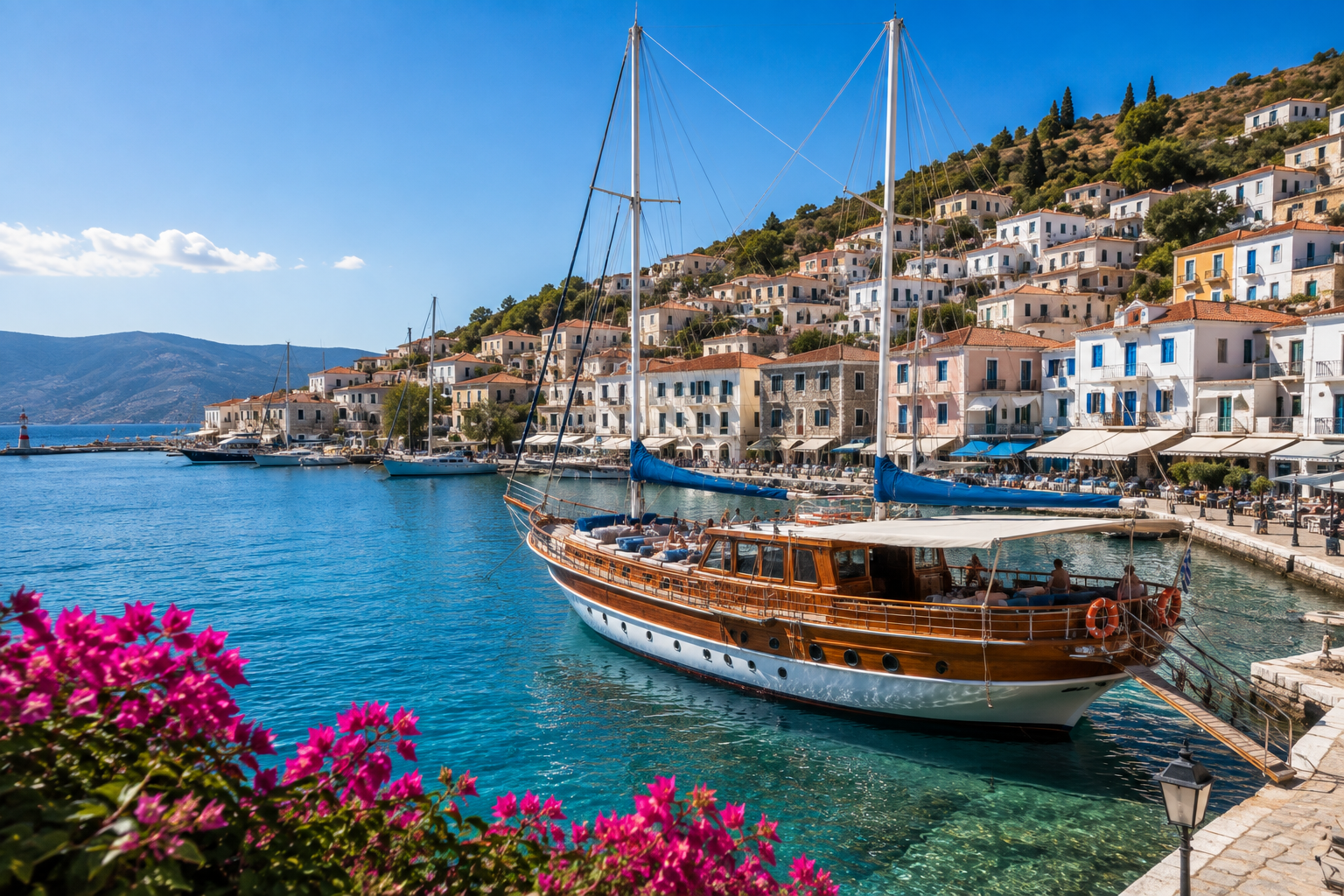
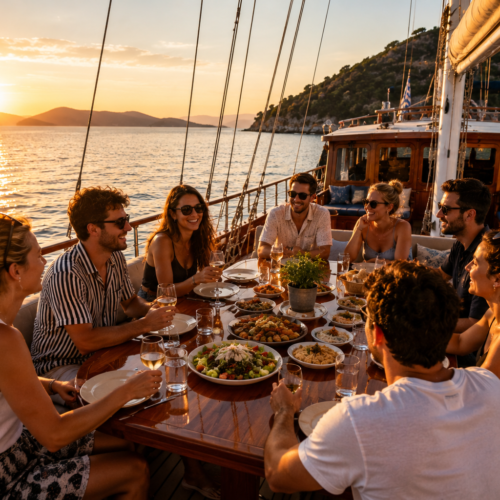
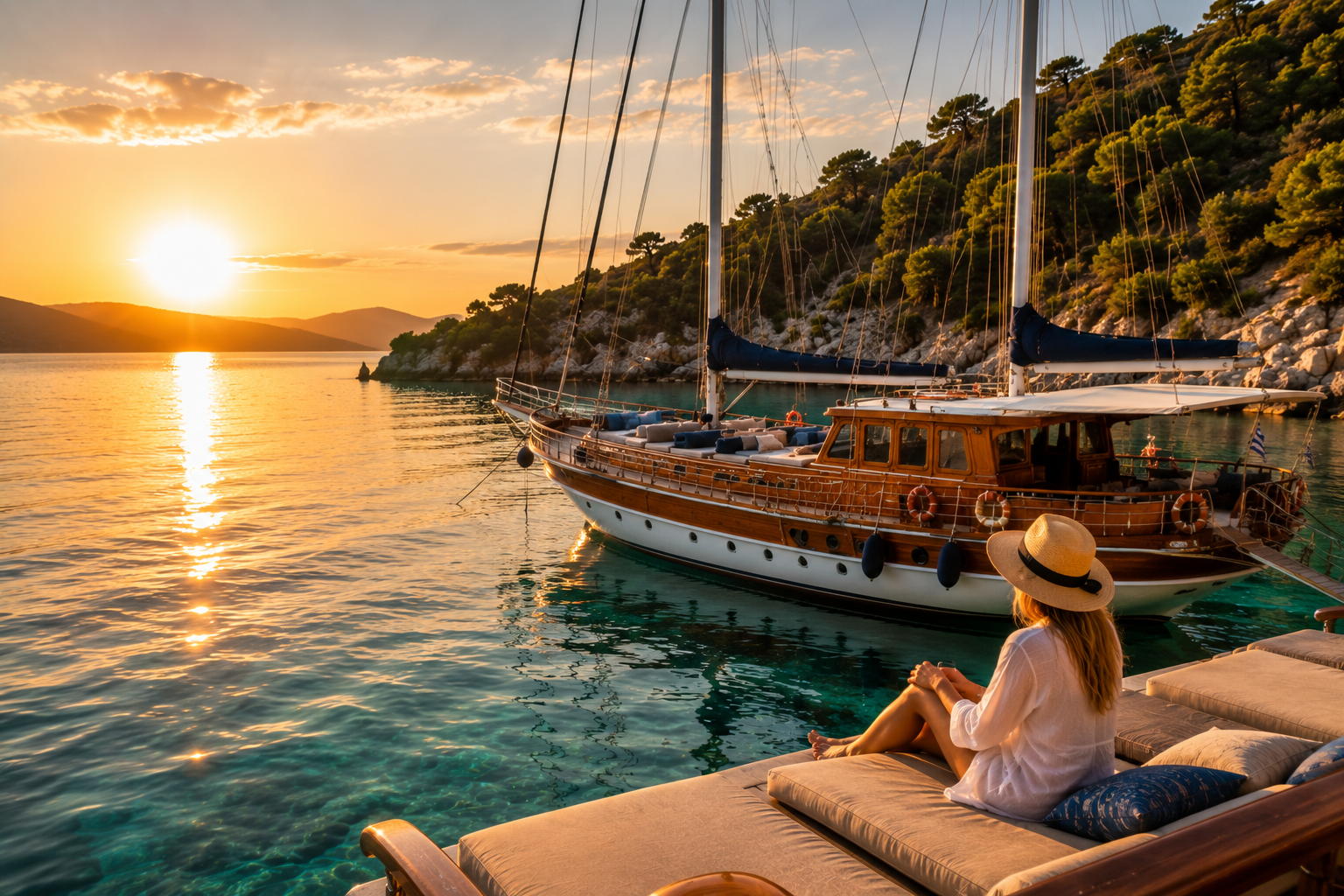
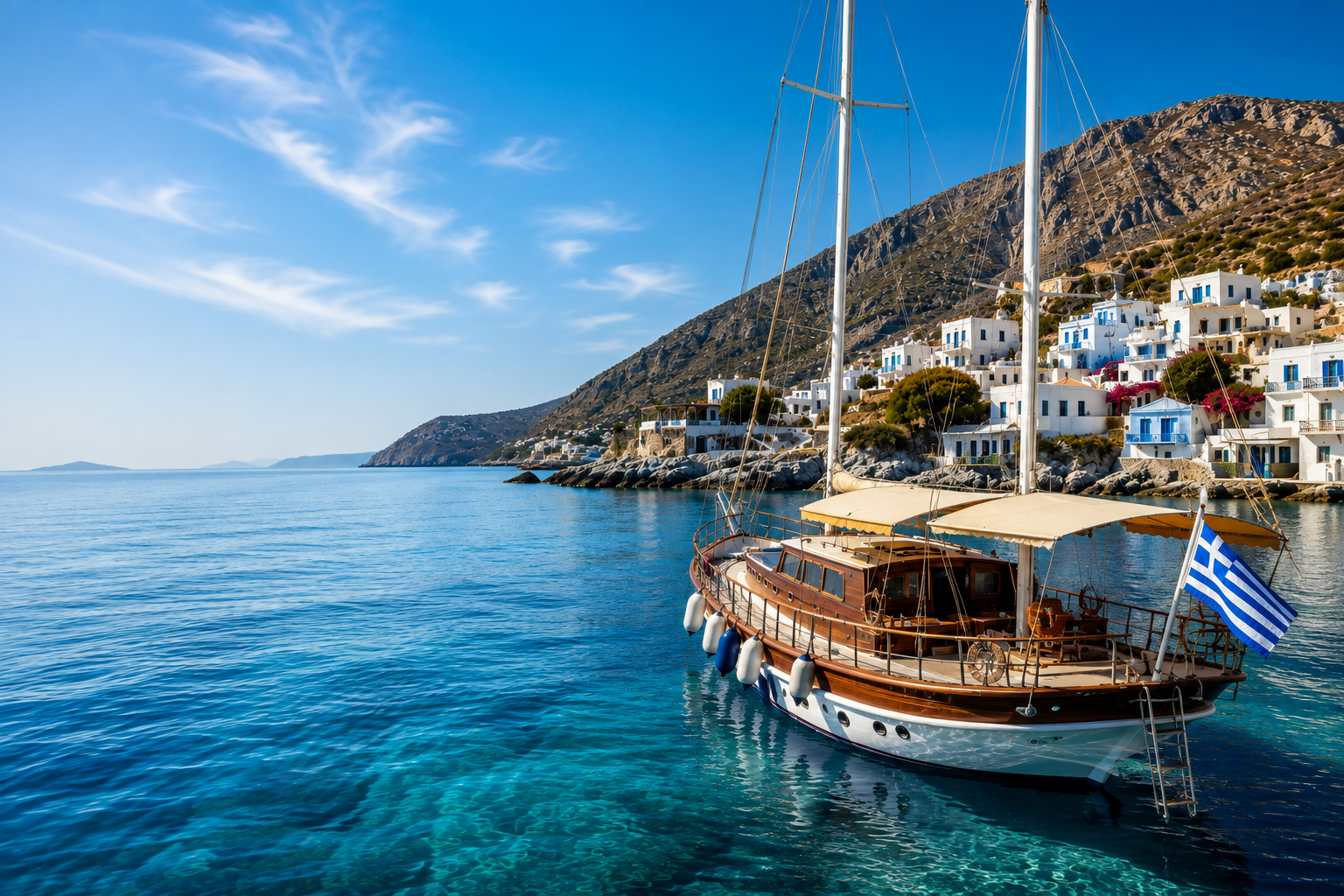
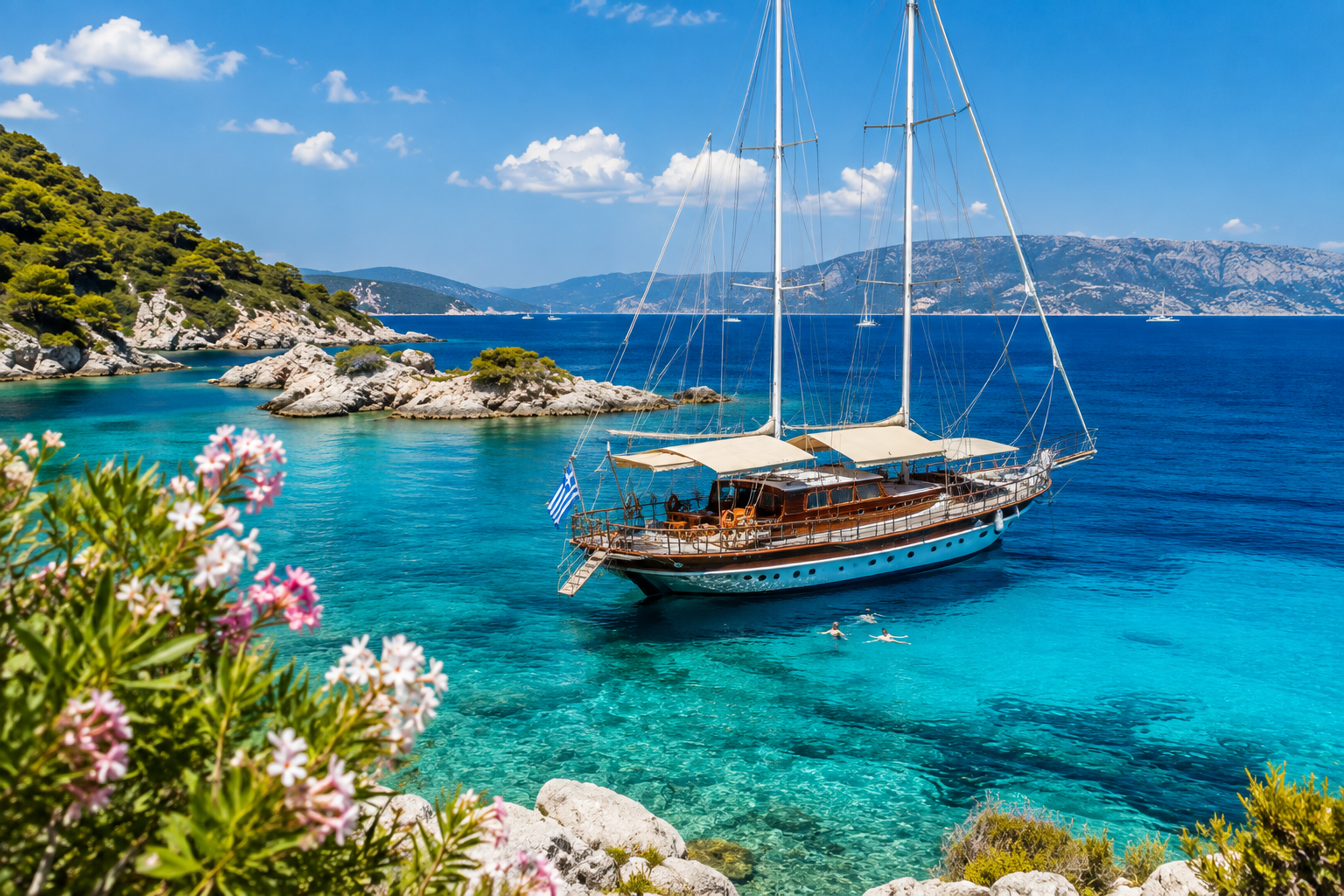
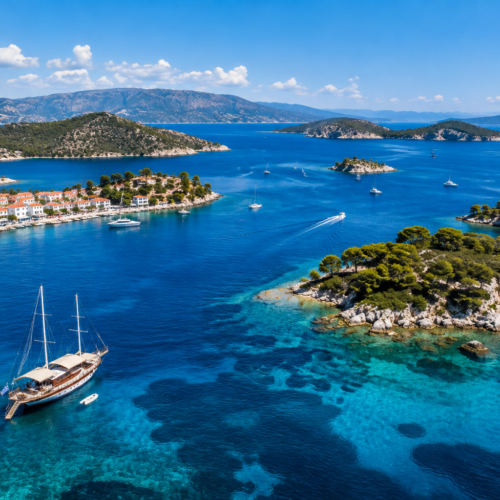
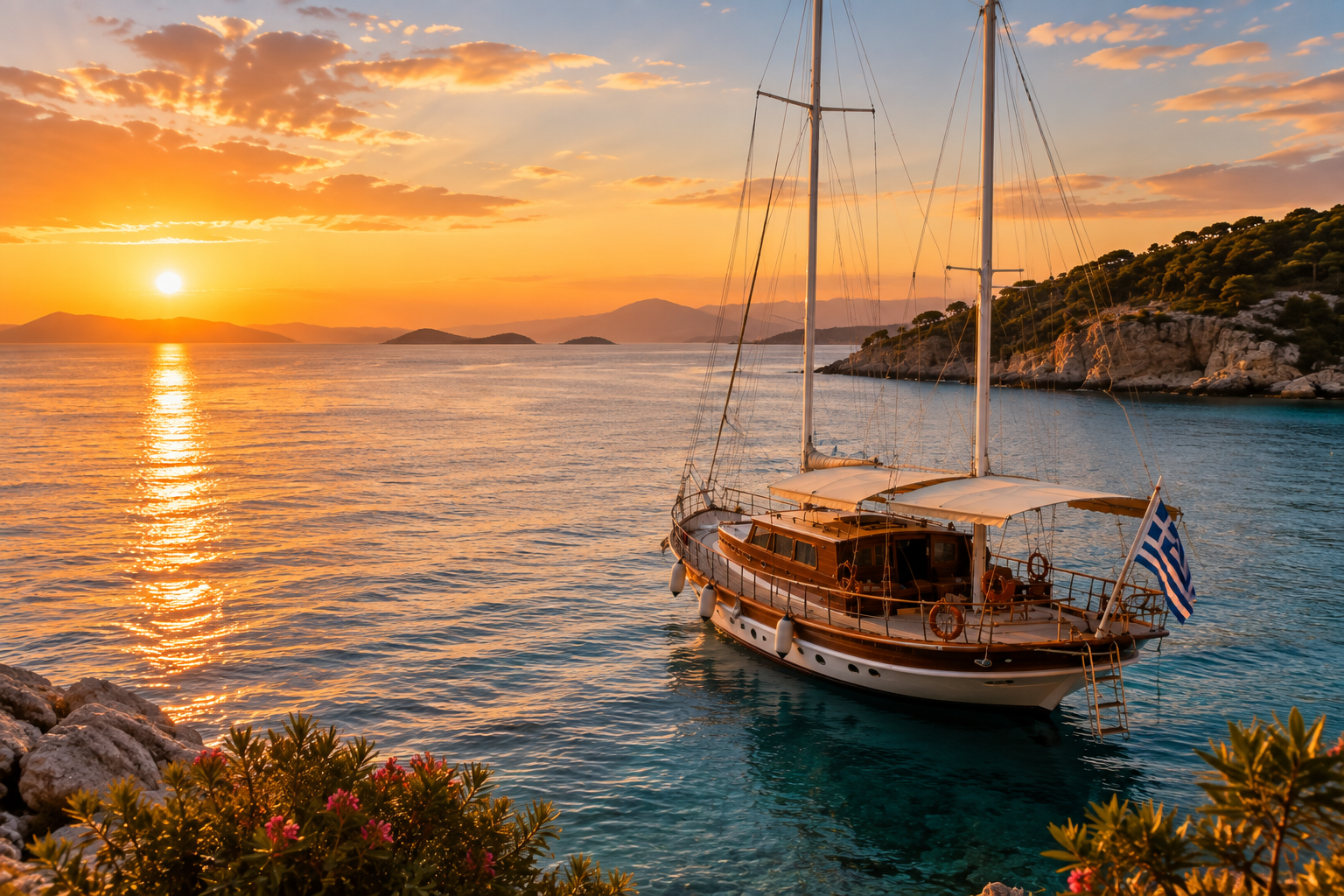
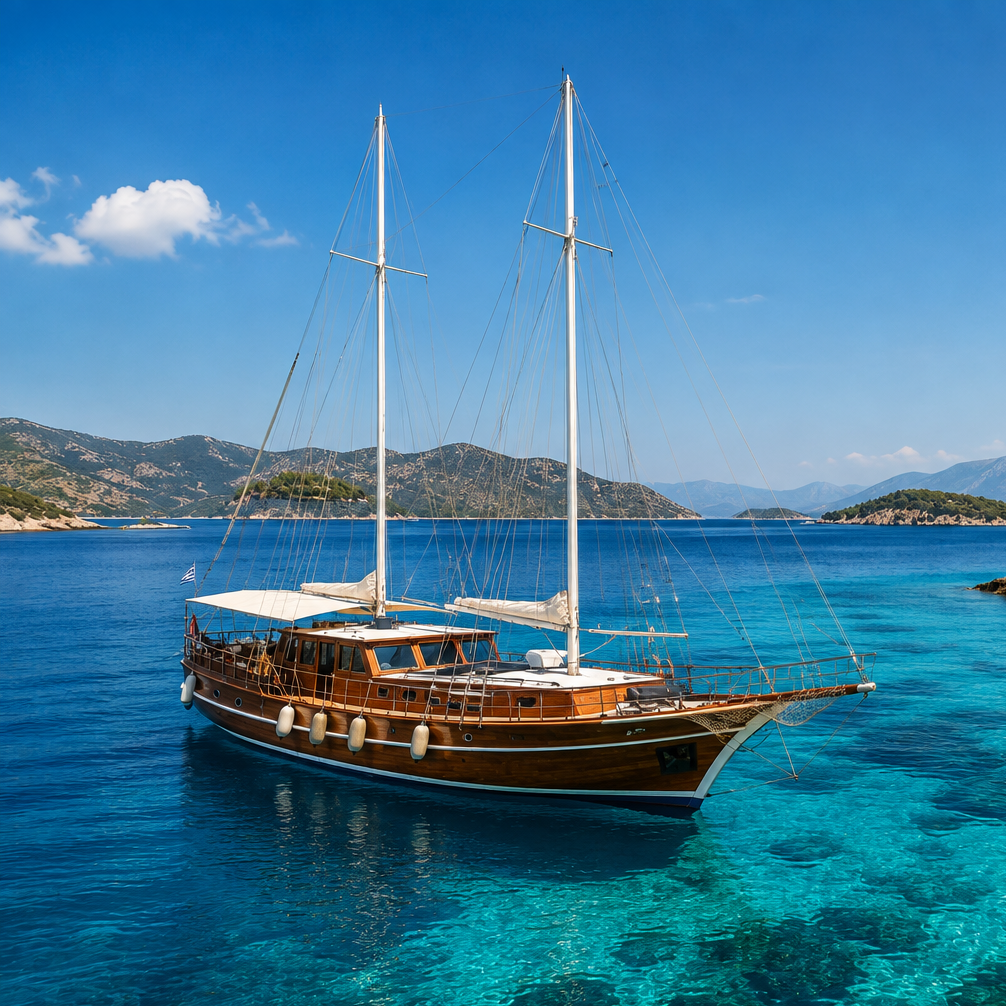
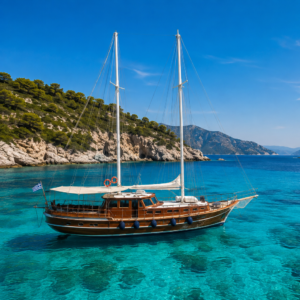
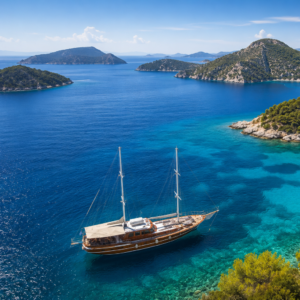
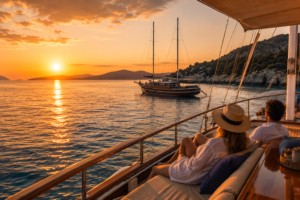
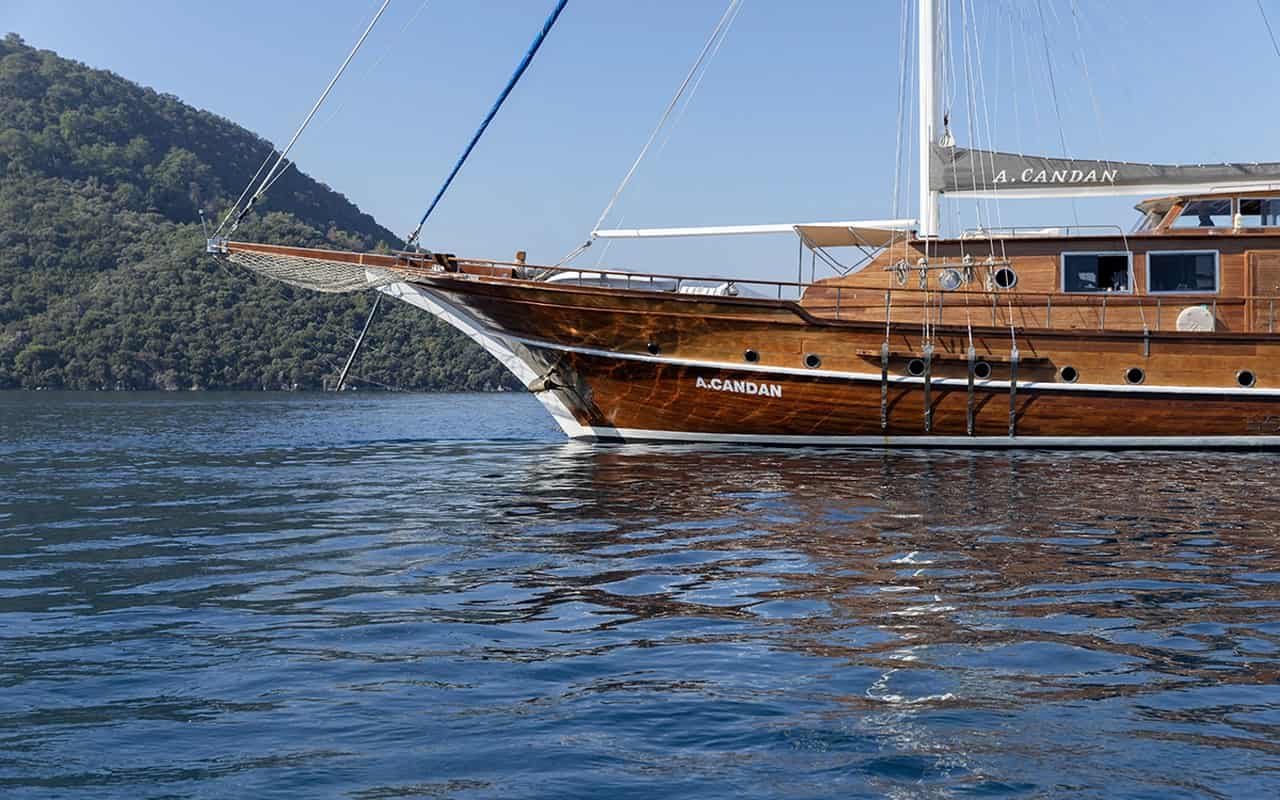
La temporada de navegación griega de 2026 marcó un punto de inflexión para Sail in Greece: las seis rutas —Islas Jónicas, Zante, Rodas, Mykonos, Harmony y 18-39s— alcanzaron el lleno total a mediados del verano por primera vez en la historia de la marca.
Desde el aumento de la demanda por las islas griegas hasta la incorporación de un nuevo barco a la flota, 2026 fue un año importante para Sail in Greece. La temporada también ayudó a definir el programa de 2027, con nuevas opciones de crucero, nuevos destinos y experiencias adicionales en goleta para los viajeros.
2026 en cifras
La temporada 2026 fue una de las más activas de la historia de Sail in Greece, con un total de 320 salidas en todo el programa de cruceros.
La demanda fue especialmente fuerte en las principales rutas por las islas griegas. Corfú y Zante alcanzaron su capacidad máxima, mientras que Rodas, Harmony y 18-39s se agotaron por primera vez, a medida que la demanda continuó creciendo durante la temporada.
Estos resultados reflejan el interés constante por las vacaciones en grupos pequeños y las experiencias de navegación en Grecia. En lugar de visitar una sola isla, los viajeros pueden descubrir varios destinos durante un mismo viaje mientras navegan a bordo de una goleta.
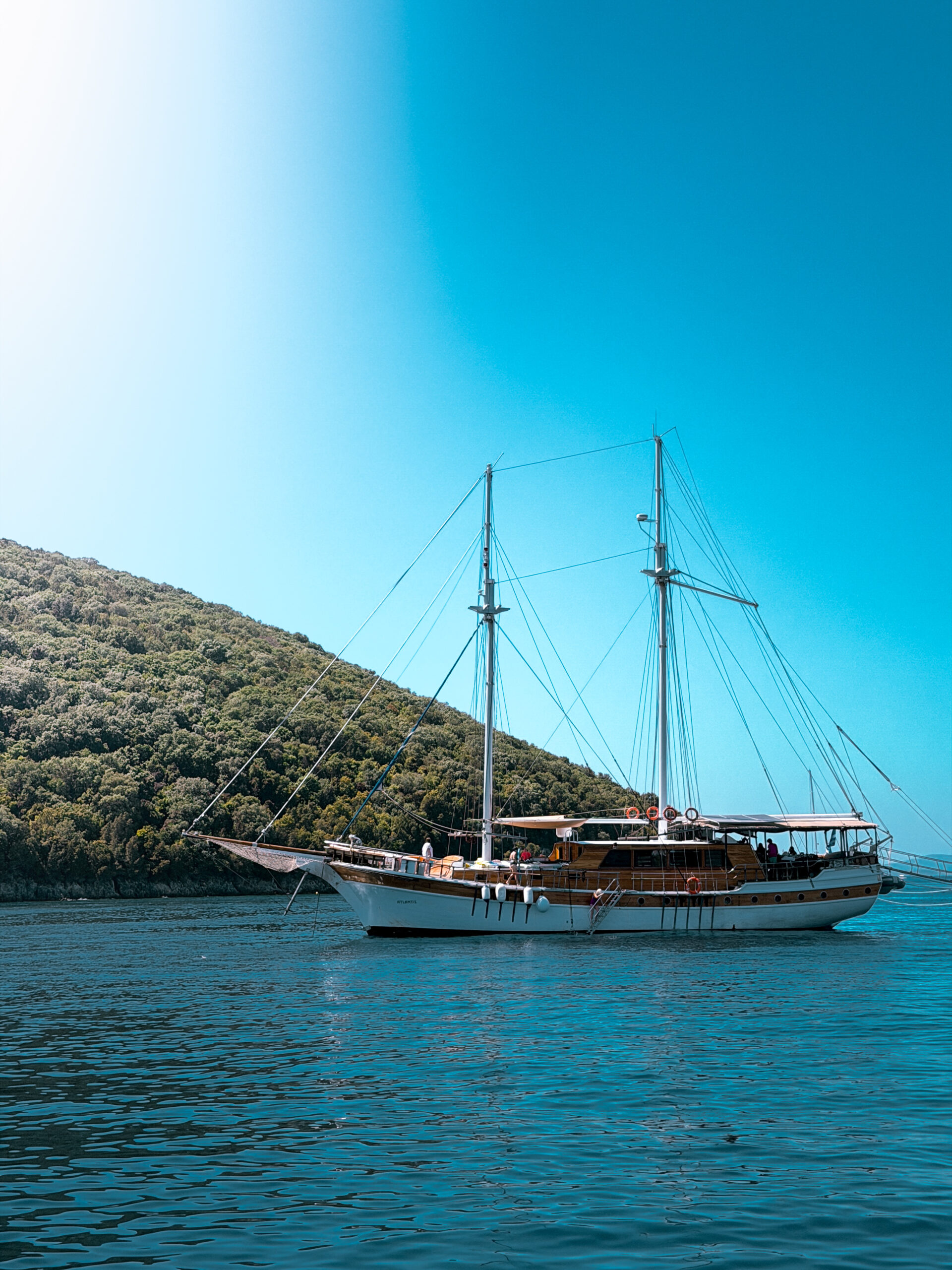
La temporada 2026 también contó con la incorporación de Atlantis, un nuevo barco, a la flota de Sail in Greece. Esta nueva embarcación amplía la oferta y ayuda a responder a la creciente demanda de las diferentes rutas de crucero.
Lo más destacado de cada ruta
Crucero por las Islas Jónicas
La ruta por las Islas Jónicas siguió siendo una parte importante del programa de Sail in Greece en 2026, con una demanda especialmente fuerte en Corfú. Sus aguas turquesas, pequeñas islas y encantadores pueblos costeros hacen que la región sea ideal para disfrutar de un relajante crucero en goleta. La fuerte demanda hizo que Corfú alcanzara su capacidad máxima durante la temporada.
Crucero a Zante
Zante también alcanzó el lleno total en 2026, confirmando el gran interés por los cruceros alrededor de las Islas Jónicas. Esta ruta permite descubrir Zante y los destinos costeros de los alrededores mientras se disfruta de una semana a bordo de una goleta. Su popularidad en 2026 demuestra la importancia de reservar con antelación para las próximas temporadas.
Crucero a Rodas
Rodas continuó atrayendo a viajeros que buscan una combinación de paisajes de las islas griegas, lugares para nadar y sitios históricos. En 2026, el crucero a Rodas se agotó por primera vez, reforzando la fuerte demanda registrada en todo el programa de Sail in Greece. El resultado demuestra el creciente interés por descubrir las islas del Dodecaneso desde el mar.
Crucero a Mykonos
Mykonos siguió siendo uno de los destinos más conocidos del programa de Sail in Greece, combinando impresionantes paisajes insulares con su famosa atmósfera y su animada vida nocturna. El crucero ofrece una forma diferente de descubrir varios lugares durante un mismo viaje por el mar. La fuerte demanda del programa de 2026 contribuyó a la tendencia general de rutas de Sail in Greece con todas las plazas ocupadas.
Crucero Harmony
El crucero Harmony también se agotó por primera vez en 2026. Su atractivo reside en combinar una experiencia social en grupo con la posibilidad de explorar las islas griegas y las aguas que las rodean. La fuerte demanda de Harmony es una de las razones por las que se recomienda reservar con antelación para la temporada 2027.
Crucero 18-39s
El crucero 18-39s continúa ofreciendo a los viajeros más jóvenes una experiencia de navegación especialmente diseñada para ellos, con un ambiente social y la oportunidad de descubrir las islas griegas. La ruta se agotó por primera vez en 2026, demostrando el interés continuo por este tipo de vacaciones en grupo. Con fechas de salida limitadas y una demanda elevada, esta ruta sigue siendo una parte importante del programa de Sail in Greece.
Qué mejoramos en 2026
Uno de los principales acontecimientos de 2026 fue la incorporación de Atlantis como nuevo barco al programa de Sail in Greece.
La incorporación de una nueva embarcación aumenta la capacidad disponible y ofrece mayor flexibilidad a medida que crece la demanda de cruceros. Al mismo tiempo, permite ofrecer más opciones a los viajeros que desean descubrir las diferentes rutas griegas.
La temporada 2026 también demostró lo rápido que las salidas más populares pueden alcanzar su capacidad máxima. Con Corfú y Zante completamente reservados, y Rodas, Harmony y 18-39s agotados por primera vez, la planificación anticipada se ha vuelto aún más importante para quienes preparan sus próximas vacaciones.
La experiencia de la temporada 2026 ayudó a definir el programa de 2027, incorporando nuevas experiencias de crucero junto a las rutas ya establecidas.
Novedades para 2027
Sail in Greece amplía su programa para 2027 con varias opciones nuevas para los viajeros.
Una de las novedades es Entre Cielos, que formará parte del programa de 2027. Esta nueva opción ofrece a los viajeros más posibilidades a la hora de elegir su experiencia de navegación en Grecia.
También está prevista una nueva ruta de crucero a Kos para 2027. Kos permite descubrir otra zona de las islas griegas y amplía la variedad de rutas de navegación disponibles con Sail in Greece.
Otra novedad es el Luxury Corfu Gulet Cruise, que ofrecerá a los viajeros una nueva forma de descubrir las Islas Jónicas desde el mar. Esta nueva experiencia se basa en la fuerte demanda registrada en Corfú durante la temporada 2026.
Por lo tanto, el programa de 2027 combina rutas ya consolidadas con nuevas experiencias de crucero, ofreciendo más opciones tanto a quienes viajan con Sail in Greece por primera vez como a quienes desean repetir la experiencia.
Reserva con antelación para 2027
La principal lección de la temporada 2026 es que los cruceros en goleta más populares de Grecia pueden alcanzar el lleno total mucho antes del final de la temporada. Con 320 salidas en todo el programa y varias rutas que alcanzaron su capacidad máxima o se agotaron en 2026, los viajeros que estén planificando 2027 deberían elegir con antelación su ruta y fecha de salida preferidas.
La incorporación de Entre Cielos, la nueva ruta a Kos y el Luxury Corfu Gulet Cruise significa además que 2027 ofrecerá nuevas posibilidades junto a las rutas ya establecidas de Sail in Greece.
Si estás pensando en unas vacaciones de navegación por las islas griegas en 2027, descubre nuestra guía de Island Hopping por Grecia 2027 para conocer mejor las rutas, consejos de planificación y experiencias de crucero disponibles.
Empieza a planificar con antelación tu aventura en goleta por Grecia en 2027 y encuentra la experiencia de navegación que mejor se adapte a ti.
A gulet is a traditional wooden sailing vessel originating from the Aegean coast of Turkey, now the iconic craft of Greek gulet cruises. Sail in Greece operates a fleet of classic gulets, each 30–35 metres in length, with 10–14 en-suite double or twin cabins, a spacious sundeck, and a dining salon where daily breakfast and lunch are served by the crew.
What is a Gulet?
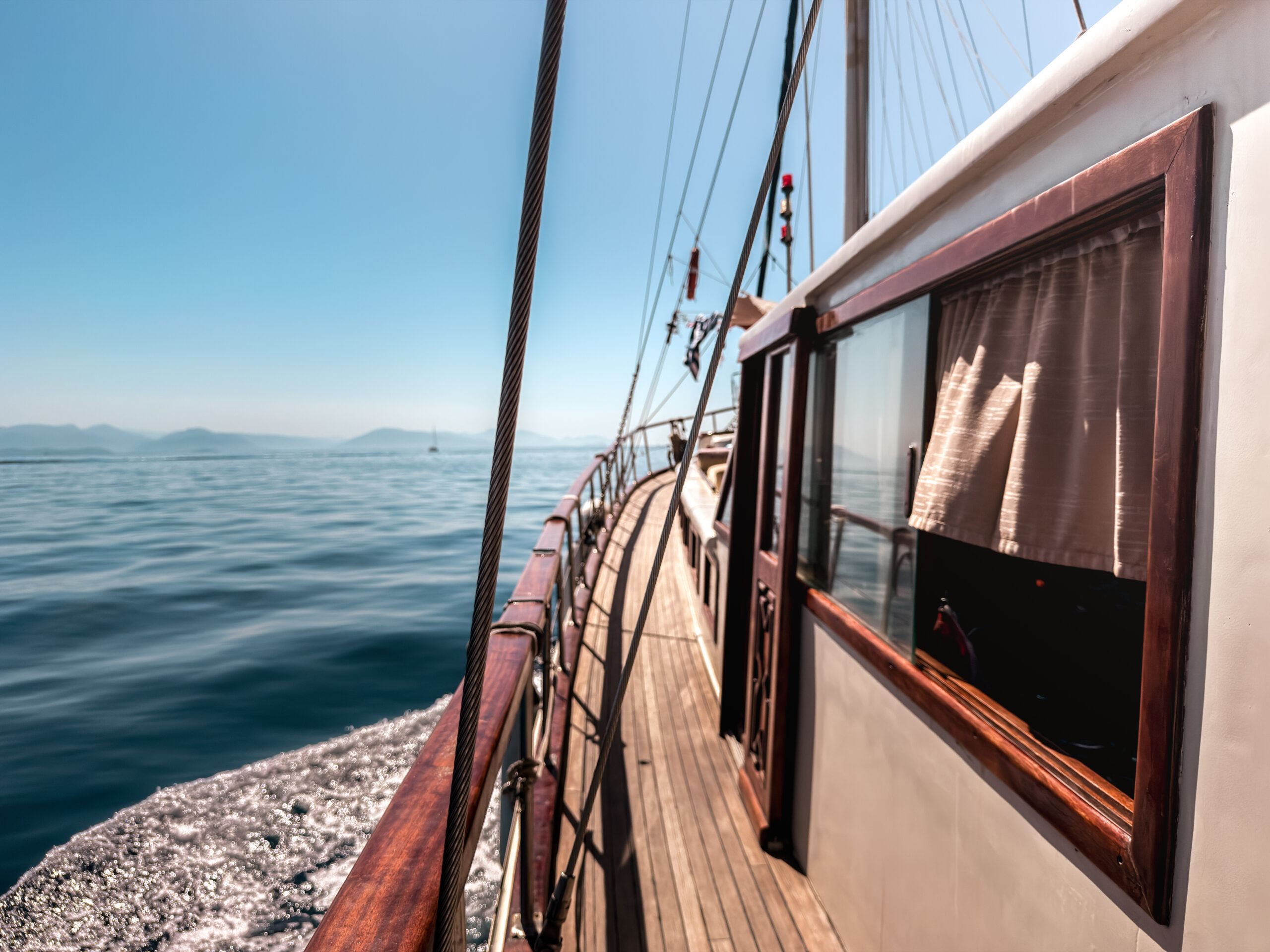
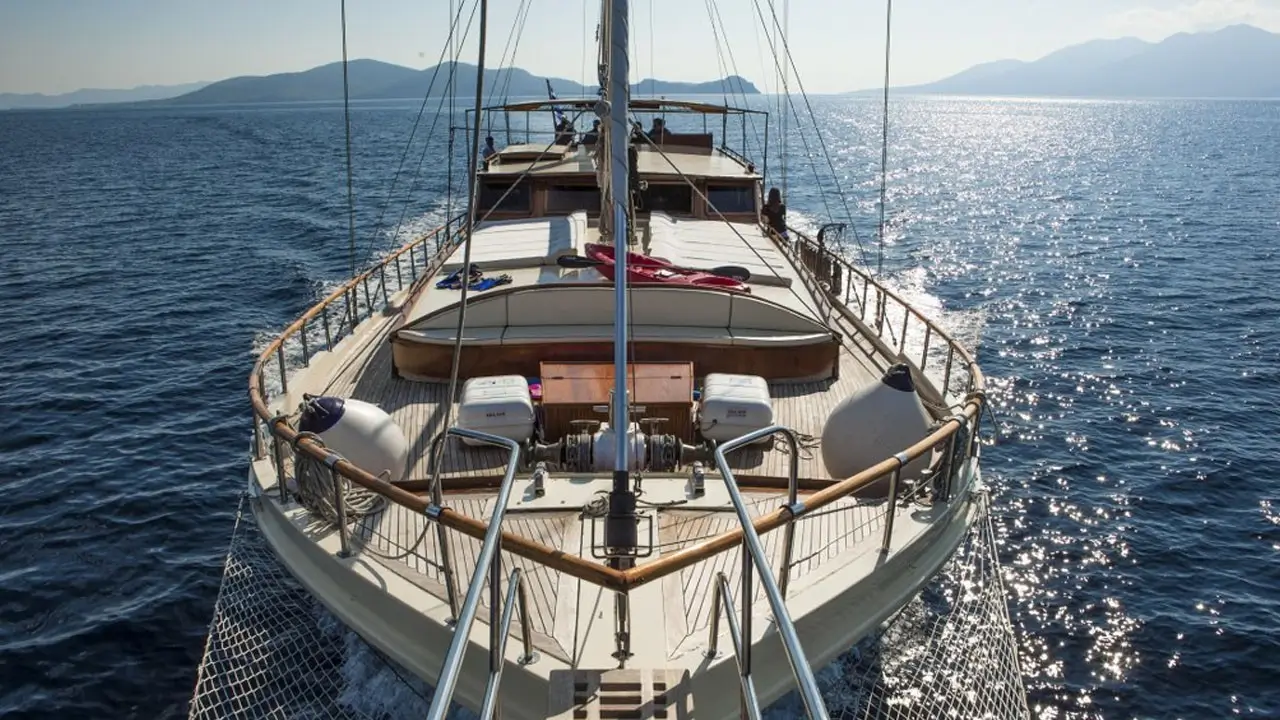
A gulet is a traditional wooden sailing vessel that originated along the Aegean coast of Turkey. Originally built for fishing and transporting goods, gulets were designed to travel comfortably across the Mediterranean and Aegean seas. Over time, these beautiful vessels evolved into comfortable cruising boats, combining traditional craftsmanship with modern facilities.
Traditionally constructed from wood, gulets are known for their broad decks, spacious interiors and relaxed sailing experience. Their design makes them particularly suitable for island hopping in Greece, where guests can travel between islands without repeatedly changing accommodation. A gulet allows you to wake up in a new destination, swim in secluded bays and enjoy the Greek coastline from the water.
Our Fleet
Sail in Greece operates a diverse fleet of traditional gulets and sailing vessels, offering different sizes and styles for Greek island cruises and private charters.
Aurora is a 22-metre gulet with 6 cabins and accommodation for up to 12 guests. The vessel offers comfortable en-suite cabins and spacious outdoor areas for relaxing and dining.
Eros is one of the larger vessels in the fleet, with 11 cabins and accommodation for up to 22 guests. The vessel is approximately 30–33 metres in length, depending on the fleet specification listed.
Hemera is a 28-metre traditional gulet featuring 9 en-suite cabins and accommodation for up to 18 guests.
Harmonia measures approximately 25 metres and offers 7 cabins for up to 16 guests.
Artemis is a larger gulet with 15 cabins and capacity for up to 42 guests, making it suitable for larger groups.
The Sail in Greece fleet also includes vessels such as Valerie, Aphrodite, Hera, Athena A, Myra, Capricorn, Cosmo, Virtuoso, Matina, Althea and Arctus. Each vessel has its own layout, facilities and guest capacity, allowing travellers to choose a cruise that best suits their group and travel style.
What’s On Board
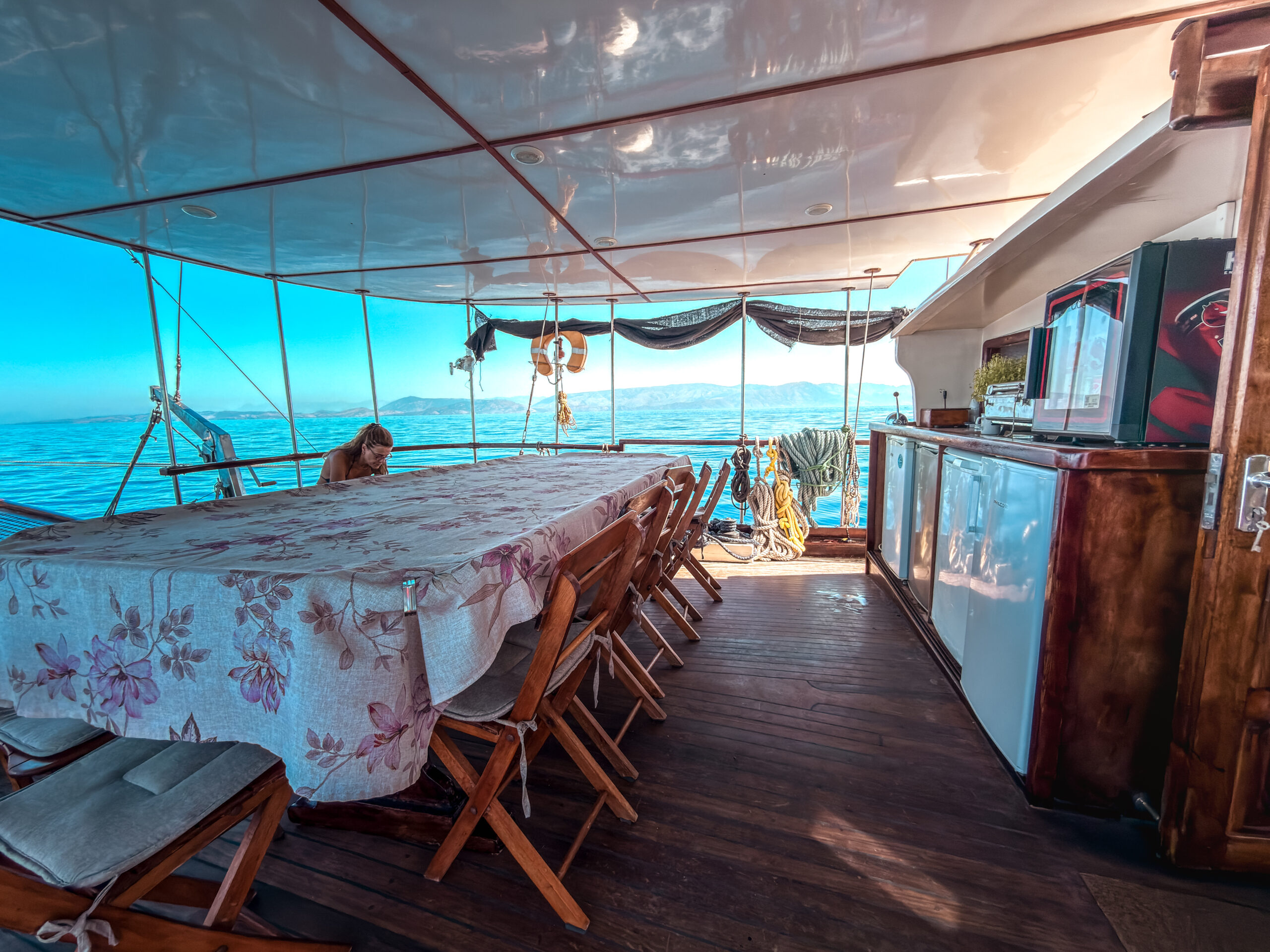
Life on board a gulet is designed to be comfortable, relaxed and social. Cabins provide a private space to rest after a day of swimming, exploring and discovering the Greek islands. Many vessels feature air-conditioned en-suite cabins with private bathroom facilities.
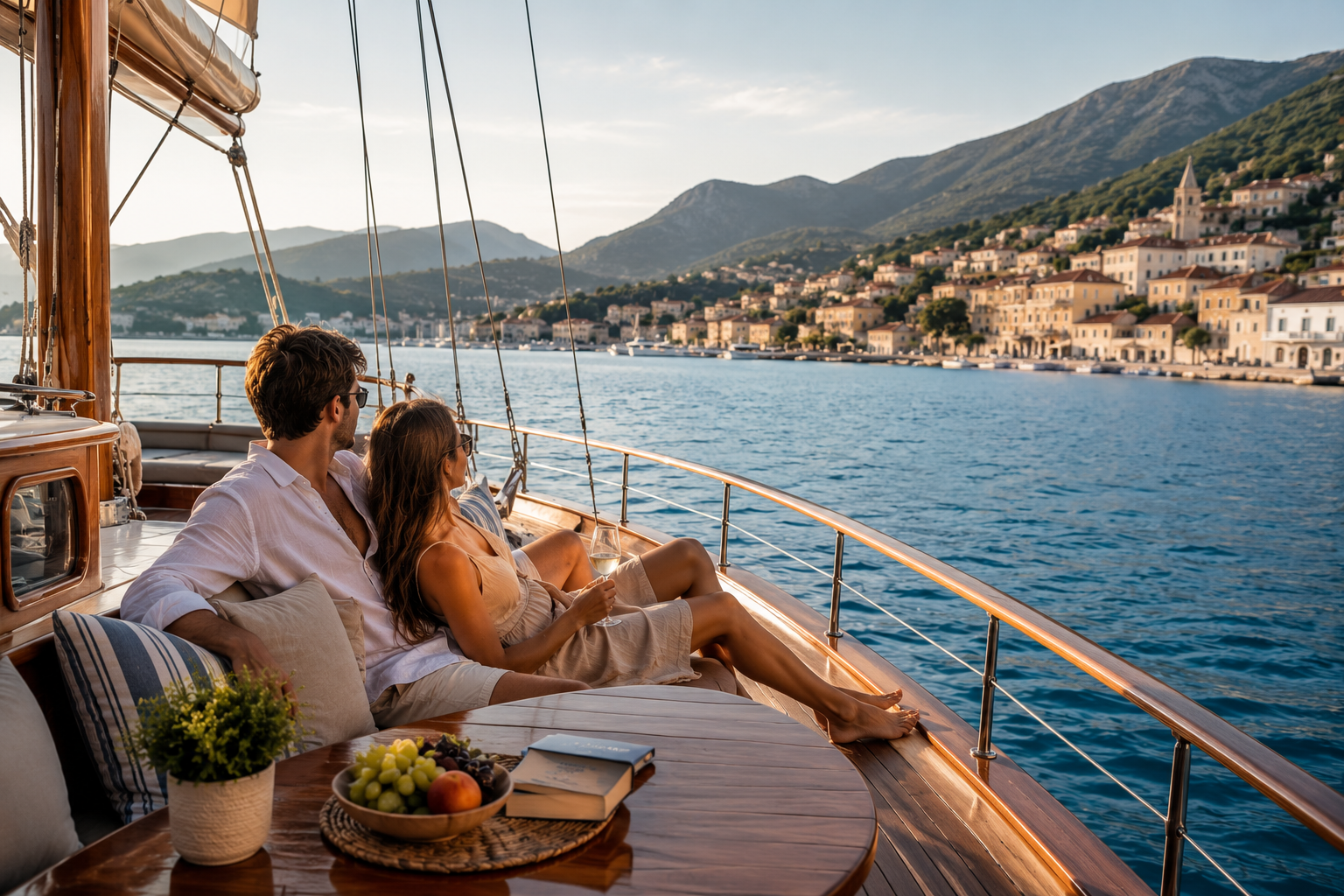
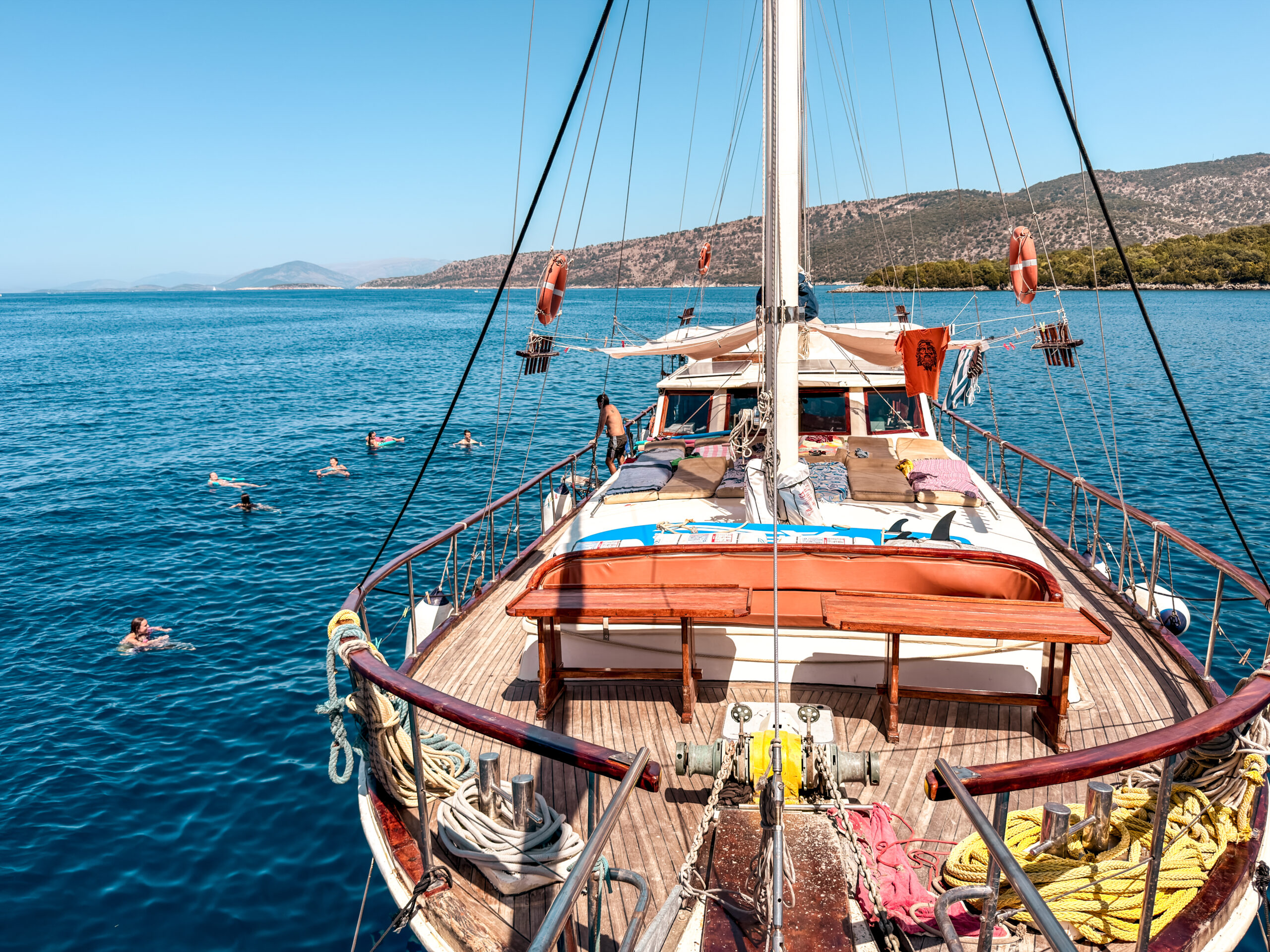
The spacious sundeck is one of the highlights of the gulet experience. Guests can relax on sun beds, enjoy the Mediterranean sunshine or simply take in the views as the vessel sails between islands.
Dining areas provide a welcoming space for guests to enjoy meals together. Depending on the vessel and cruise, meals are freshly prepared and served on board, creating a relaxed and enjoyable dining experience surrounded by the sea.
When the gulet anchors in a beautiful bay, guests can enjoy easy access to the water from the swim platform or swimming area. A fresh-water shower is also available on many vessels for rinsing off after a swim.
Additional facilities may include Wi-Fi, comfortable lounge areas and outdoor spaces designed for socialising and relaxation. Facilities can vary depending on the vessel selected.
FAQ
Is a gulet stable?
Yes. Gulets are designed for comfortable cruising and their wide structure provides good stability while sailing and when anchored. Sea conditions can vary, but cruises are planned to provide an enjoyable experience around the Greek islands.
Do I need sailing experience?
No. You do not need sailing experience to join a gulet cruise. The vessel is operated by an experienced captain and crew, allowing you to relax and enjoy your Greek island adventure.
Are cabins private?
Yes. Guests have private cabin accommodation on board. Most cabins include private en-suite bathroom facilities, although layouts and cabin types may vary depending on the vessel.
What are the meals like?
Meals are an important part of the experience on board. Guests can enjoy freshly prepared food while dining together and taking in the beautiful surroundings of the Greek islands and coastline.
How many guests are on board?
The number of guests depends on the vessel you choose. Sail in Greece offers smaller gulets for intimate groups as well as larger vessels accommodating more than 40 guests.
¿Estás planeando una escapada romántica a las islas griegas en 2027? Grecia cuenta con miles de islas, pero los mejores destinos para parejas no siempre son los más concurridos o famosos.
Para las parejas, la magia suele encontrarse en puertos más pequeños, tranquilas bahías para nadar, tabernas frente al mar, paseos al atardecer y la libertad de desplazarse entre islas sin tener que hacer y deshacer el equipaje constantemente.
Ahí es donde un crucero en goleta puede marcar una verdadera diferencia.
En lugar de elegir una isla y permanecer en ella durante una semana, un crucero en goleta le permite despertar en un lugar nuevo, nadar en bahías recónditas durante el día y desembarcar para disfrutar de una cena romántica al caer la tarde.
Desde las islas Jónicas hasta el Dodecaneso y el golfo Sarónico, Grecia ofrece varias rutas ideales para parejas que buscan unas vacaciones relajadas e inolvidables.
Por qué un crucero en goleta es perfecto para parejas
Unas vacaciones románticas no implican necesariamente pasar todos los días en un complejo turístico de lujo.
Para muchas parejas, los momentos más memorables surgen de las experiencias: contemplar el atardecer desde el agua, nadar juntos en una bahía tranquila, descubrir un pequeño puerto o disfrutar de una cena junto al mar.
Un crucero en goleta reúne muchas de esas experiencias en un viaje en solitario.
Despierta en un lugar nuevo
Una de las mayores ventajas de la navegación a vela es la variedad.
En lugar de pasar todas tus vacaciones en un solo destino, puedes visitar varias islas durante la misma semana. Tu alojamiento viaja contigo, por lo que no es necesario hacer el *check-out* repetidamente, desplazarse al aeropuerto ni tomar otro ferry.
Simplemente te despiertas, sales a la cubierta y descubres una nueva parte de Grecia.
Nada en bahías apartadas
A algunos de los lugares más hermosos para nadar en Grecia se llega más fácilmente en barco.
Una goleta puede llevarle lejos de las playas concurridas y hasta calas más pequeñas donde podrá nadar, practicar esnórquel o simplemente relajarse en cubierta.
Para las parejas, estos momentos de mayor tranquilidad pueden ser una de las partes más agradables del viaje.
Disfrute de una cena junto al mar
Las noches en las islas griegas están hechas para las parejas.
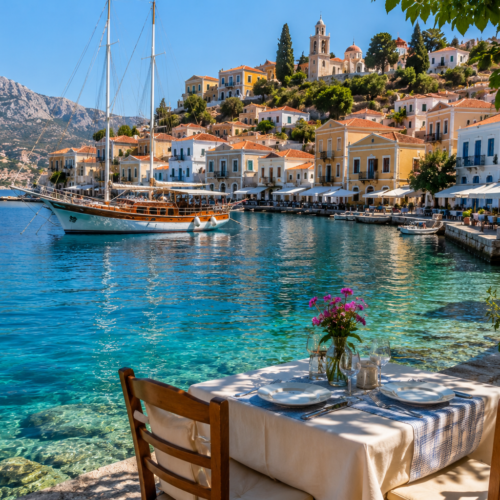
Tras un día en el agua, puede pasear por una localidad portuaria, buscar una taberna frente al mar y disfrutar de marisco fresco, especialidades griegas y una copa de vino local mientras observa cómo regresan los barcos al puerto.
Pasen más tiempo juntos
Un crucero en goleta también crea un ritmo más pausado.
No hay necesidad de apresurarse entre las atracciones turísticas. Los días pueden organizarse en torno a nadar, explorar, comer y relajarse.
La experiencia actual de Sail in Greece se basa en viajes en goleta para grupos reducidos, con embarcaciones que admiten hasta 24 pasajeros y opciones ideales para parejas.
Las mejores islas griegas para parejas en 2027 son aquellas que combinan un carácter auténtico con hermosos fondeaderos y una excelente gastronomía local; todas ellas, características que los cruceros en goleta para grupos reducidos están en una posición privilegiada para ofrecer.
Las islas griegas más románticas según la ruta
Las distintas zonas de navegación de Grecia ofrecen experiencias muy diferentes.
Si el romance es tu prioridad, considera el carácter de las islas y el tipo de experiencia de navegación que deseas, en lugar de limitarte a elegir el destino más famoso.
Islas Jónicas: Symi, Fiskardo, Meganisi
Las islas Jónicas resultan especialmente atractivas para las parejas que buscan una combinación de paisajes exuberantes, pueblos con encanto, paradas para nadar y veladas relajadas.
Fiskardo, Cefalonia
Fiskardo es uno de los pueblos portuarios más pintorescos de Cefalonia.
Su paseo marítimo está bordeado de edificios coloridos, restaurantes y cafeterías, lo que lo convierte en un lugar ideal para un paseo al atardecer.
Para las parejas, el atractivo es sencillo: llegar en barco, explorar el puerto juntos y sentarse a cenar con vistas al agua.
Meganisi
Meganisi ofrece un ambiente más tranquilo que algunos de los destinos más grandes del Jónico.
Sus bahías más pequeñas y sus pueblos tradicionales lo hacen ideal para parejas que prefieren un ritmo más pausado.
Un día en los alrededores de Meganisi puede incluir nadar desde el barco, explorar la costa y disfrutar de una velada tranquila en tierra.
Ítaca
Ítaca ocupa un lugar especial en la mitología griega y ofrece una experiencia isleña más tranquila.
Su combinación de paisajes agrestes, pequeñas localidades y vistas costeras lo convierte en una excelente opción para las parejas que buscan un destino que se perciba auténtico, en lugar de excesivamente comercial.
Para las parejas interesadas en explorar Cefalonia, Ítaca y otros destinos jónicos en barco, el [Crucero por el Jónico] es una opción natural.
Dodecaneso – Symi, Chalki, Panormitis
El Dodecaneso ofrece un estilo diferente de romanticismo griego.
La arquitectura, los paisajes áridos, las aguas turquesas y los tradicionales pueblos portuarios crean una atmósfera que se percibe claramente egea.
Symi
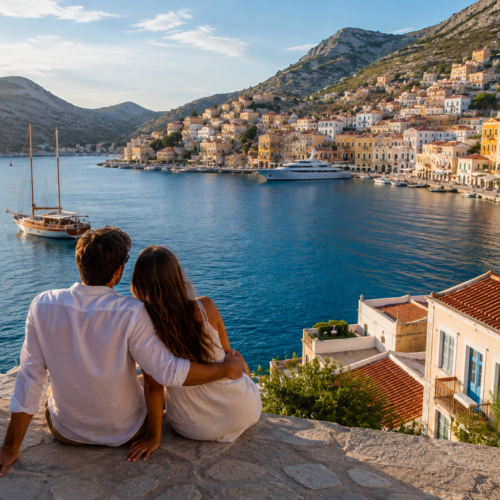
Symi es una de las islas visualmente más impresionantes del Dodecaneso.
Sus coloridos edificios neoclásicos del puerto se alzan junto al agua, creando una de las llegadas más memorables de las islas griegas.
Pasear por el puerto con tu pareja al atardecer, detenerte a cenar y contemplar el reflejo de las luces en el agua puede convertir a Symi en uno de los momentos más destacados de unas vacaciones a vela.
Symi es una de las islas más visualmente impresionantes del Dodecaneso, conocida por su colorido puerto y su arquitectura característica. Puede obtener más información sobre la isla a través de la guía oficial de Visit Greece sobre Symi.
Chalki
Chalki es más pequeña y tranquila.
Su puerto compacto y su ambiente relajado son ideales para las parejas que desean escapar del ritmo de los destinos turísticos más grandes.
La isla es un buen lugar para bajar el ritmo, explorar a pie y disfrutar de una comida larga sin prisas.
Panormitis
Panormitis, en Symi, es conocido por su monasterio y su ubicación protegida.
Llegar por mar añade otra dimensión a la experiencia, ya que la costa y la aproximación al puerto pasan a formar parte del viaje.
El [crucero por Rodas] ofrece la oportunidad de explorar Rodas, Symi, Chalki, Tilos y otros destinos del Dodecaneso.
Islas Sarónicas – Hidra, Spetses
Si buscas romanticismo combinado con un fácil acceso desde Atenas, vale la pena considerar las islas Sarónicas.
La región incluye destinos como Hidra y Spetses, además de otras islas y paradas costeras.
Hidra
Hidra es una de las islas más distintivas de Grecia.
El puerto, los edificios de piedra y el ambiente propicio para los peatones crean un entorno elegante para las parejas.
No hace falta un itinerario turístico repleto de actividades. Un paseo tranquilo por el pueblo, un café con vistas al puerto o una cena junto al agua pueden ser suficientes.
Spetses
Spetses combina el encanto isleño con un ambiente sofisticado.
Las parejas pueden recorrer el paseo marítimo, disfrutar de una comida tranquila y dedicar tiempo a descubrir la isla antes de regresar al barco.
El [Harmony Cruise] recorre el golfo Sarónico, incluyendo Hidra y Spetses, lo que lo convierte en una excelente opción para las parejas que desean combinar la navegación con las históricas localidades isleñas.
Mejoras románticas para parejas
Una vez que hayas elegido tu ruta, hay varias formas de hacer que tus vacaciones a vela resulten aún más especiales.
Elija un camarote Standard PLUS
Si desea mayor privacidad y comodidad, considere cambiar a un camarote Standard PLUS.
Actualmente, Sail in Greece define sus camarotes «Standard PLUS» como aquellos que cuentan con una cabina de ducha independiente dentro del baño.
Para las parejas que pasan una semana entera a bordo de una goleta, pequeñas mejoras en la comodidad del camarote pueden marcar una diferencia notable.
Haz de la cena parte de la experiencia.
La comida es una parte importante de unas vacaciones en Grecia.
En lugar de considerar la cena simplemente como una comida más, conviértela en parte de tu experiencia vespertina.
Elige un restaurante frente al agua, pide platos locales para compartir y tómate tu tiempo.
Pregunte por la cena del capitán.
Si para su viaje está disponible una cena con el capitán o una experiencia gastronómica especial a bordo, consulte al equipo del crucero al respecto antes de la salida.
Una comida relajada a bordo puede ser una forma memorable de celebrar un aniversario, un cumpleaños o, simplemente, el tiempo que pasan juntos.
Planea una velada especial
No necesitas hacer que cada velada sea elaborada.
Elige una tarde para una cena especial, unas copas al atardecer o un paseo tranquilo por el puerto.
El contraste entre las veladas relajadas y cotidianas y una experiencia romántica planificada puede hacer que las vacaciones se sientan más personales.
El mejor mes para un crucero por Grecia en pareja en 2027
El mejor mes depende del tipo de experiencia romántica que busquen.
Mayo: tranquilo y fresco
Mayo es una buena opción para las parejas que prefieren un ambiente más tranquilo.
Las islas cobran vida de cara a la temporada de verano, y el ambiente general puede resultar más relajado que durante los meses de mayor afluencia.
Para las parejas que deseen explorar sin las aglomeraciones más intensas del verano, vale la pena considerar el mes de mayo.
Junio - Cálida y activa
Junio trae condiciones veraniegas más cálidas y días más largos.
Es una buena opción si quieres combinar la natación, las visitas turísticas y las largas veladas en tierra.
Para muchas parejas, junio ofrece un equilibrio agradable entre la energía del verano y una afluencia de gente manejable.
Julio y agosto: el clásico verano griego
Julio y agosto son los meses tradicionales de temporada alta.
Espere más actividad, temperaturas más cálidas y un ambiente más animado.
Estos meses son ideales si disfrutas del animado ambiente veraniego y quieres vivir Grecia en su momento de mayor energía.
Septiembre: una de las mejores opciones para parejas.
Septiembre puede resultar especialmente atractivo para las parejas.
Persiste el ambiente veraniego, pero el ajetreo de la temporada alta empieza a disminuir.
El mar sigue resultando tentador, las veladas son agradables y los pueblos de la isla transmiten una sensación de mayor relajación.
Para las parejas que buscan un equilibrio entre el clima cálido, la posibilidad de nadar y un ritmo más pausado, septiembre es uno de los mejores meses a tener en cuenta.
Octubre: experiencias más tranquilas en la isla
Octubre puede ofrecer una perspectiva diferente de Grecia.
El ambiente se vuelve más tranquilo y el ritmo se ralentiza.
Si su prioridad es una exploración tranquila en lugar del bullicio propio del pico del verano, vale la pena considerar un viaje en barco en octubre, dependiendo del itinerario específico del crucero y de las condiciones meteorológicas.
¿Qué crucero por Grecia deberían elegir las parejas?
El mejor crucero depende del tipo de vacaciones que busquen.
Si busca paisajes exuberantes, encantadores pueblos jónicos y destinos como Cefalonia e Ítaca, considere el [crucero por el Jónico].
Si desea explorar las islas Jónicas partiendo de Zante y descubrir lugares como Meganisi, Ítaca y Cefalonia, considere el [Crucero desde Zante]. La información actual del itinerario destaca estos destinos como parte de la ruta.
Si sus vacaciones románticas ideales incluyen pintorescos pueblos portuarios del Dodecaneso y destinos como Symi y Chalki, el [crucero por Rodas] es una excelente opción.
Si prefieres Hydra, Spetses y el golfo Sarónico, echa un vistazo al [Harmony Cruise].
PREGUNTAS FRECUENTES
¿Cuáles son las islas griegas más románticas para parejas en 2027?
Algunas opciones excelentes incluyen Symi, Fiskardo (en Cefalonia), Meganisi, Ítaca, Hidra, Spetses y Chalki. La mejor opción depende de si prefieres pueblos tranquilos, localidades históricas, bahías aptas para el baño o animados restaurantes frente al mar.
¿Es recomendable un crucero en goleta para parejas?
Sí. Un crucero en goleta puede resultar especialmente agradable para las parejas, ya que combina alojamiento, transporte, natación y la exploración de islas en una sola experiencia. Además, permite visitar varios destinos sin tener que cambiar de hotel constantemente.
¿Cuál es el mejor mes para un crucero romántico por Grecia?
Septiembre es una excelente opción para las parejas que buscan clima cálido, oportunidades para nadar y un ambiente algo más relajado que durante la temporada alta del verano. Mayo, junio y octubre también pueden ser buenas alternativas, dependiendo de sus preferencias y del itinerario del crucero.
¿Cuál es el mejor crucero por Grecia para parejas?
No existe un único crucero ideal para todas las parejas. El crucero por el Jónico es adecuado para parejas interesadas en las islas Jónicas; el crucero por Zante ofrece una ruta distinta por la misma zona; el crucero por Rodas se centra en el Dodecaneso; y el crucero Harmony explora el golfo Sarónico. Elija según las islas y el ambiente que desee disfrutar.
¿Hay cabinas Standard PLUS disponibles?
Actualmente, Sail in Greece ofrece opciones de camarotes «Standard» y «Standard PLUS» en su calendario de reservas de cruceros. Sail in Greece define los camarotes «Standard PLUS» como aquellos que cuentan con una cabina de ducha independiente dentro del baño. La disponibilidad y los precios dependen de la fecha de navegación específica.
¿Pueden las parejas reservar un crucero en goleta para un aniversario o una ocasión especial?
Sí. Unas vacaciones en goleta pueden ser una forma memorable de celebrar un aniversario, un cumpleaños u otra ocasión especial. Si está planeando algo en concreto, contacte con el equipo del crucero antes de reservar para consultar qué preparativos especiales pueden ofrecerse.
Planifica tu escapada romántica a las islas griegas para 2027
Las vacaciones más románticas en una isla griega no tienen por qué implicar alojarse en un complejo turístico de cinco estrellas y no salir nunca de la isla.
Para muchas parejas, el romanticismo reside tanto en el trayecto como en el destino.
Es nadar juntos en una bahía tranquila.
Es llegar en barco a un hermoso puerto.
Es pasear por un pequeño pueblo griego al atardecer.
Es compartir marisco fresco junto al mar.
Y es despertarse a la mañana siguiente en un lugar totalmente nuevo.
Un crucero en goleta reúne todas estas experiencias y, al mismo tiempo, le ofrece la libertad de descubrir varias islas griegas durante unas vacaciones inolvidables.
Si está planeando su escapada para 2027, explore las rutas disponibles de Sail in Greece y [reserve su crucero en goleta por Grecia para 2027].
Si está planeando un crucero en goleta por el Mediterráneo, hay dos destinos que destacan de forma natural: Grecia y Turquía.
Ambas opciones ofrecen las tradicionales goletas de madera, hermosas aguas mediterráneas, paradas para nadar, comida local fresca y la oportunidad de explorar la costa desde el mar. Sin embargo, la experiencia puede resultar muy diferente según el lugar al que se vaya.
Un crucero en goleta griega suele centrarse en recorrer varias islas. Podrá navegar entre distintas islas, pasar las veladas en animadas localidades portuarias, visitar lugares históricos y disfrutar de las tabernas, la cultura y la vida nocturna de Grecia.
El «Crucero Azul» turco, también conocido como *Mavi Yolculuk*, suele poner un mayor énfasis en la propia línea costera. Las rutas que recorren lugares como Bodrum, Marmaris, Göcek y Fethiye se caracterizan por sus bahías de aguas turquesas, fondeaderos protegidos y playas recónditas, así como por el tiempo dedicado a nadar y relajarse lejos del bullicio de las ciudades. GoTürkiye describe el «Viaje Azul» como una experiencia centrada en las costas turcas del Egeo y el Mediterráneo, que incluye el uso de *gulets* tradicionales, la visita a bahías escondidas y la oportunidad de combinar la naturaleza con lugares de interés histórico.
Entonces, ¿cuál es mejor?
La respuesta depende de lo que busques en tus vacaciones.
Elige Grecia si deseas recorrer varias islas, disfrutar de la cultura, visitar pueblos históricos y vivir la vida nocturna. Elige Turquía si prefieres calas recónditas, naturaleza, días tranquilos fondeado y una experiencia de navegación que ofrezca mayor privacidad.
A continuación, comparamos ambas opciones.
La experiencia en goleta en Grecia
Grecia es un destino ideal para los viajeros que conciben el crucero en goleta como una forma de combinar la navegación con la exploración de las islas.
En lugar de permanecer simplemente en alta mar, muchos itinerarios griegos conectan diversas islas y destinos costeros. Podrás nadar en una cala tranquila por la tarde y, más tarde, pasar la velada explorando una localidad portuaria, cenando en una taberna o paseando por calles históricas.
Esta combinación es uno de los mayores atractivos de unas vacaciones en goleta por Grecia.
Grecia también ofrece a los viajeros una enorme variedad de experiencias posibles en sus islas. Las islas Jónicas presentan una atmósfera distinta a la del Dodecaneso, mientras que las islas del Egeo poseen sus propios paisajes, arquitectura y tradiciones.
Por ejemplo, un crucero por Zante recorre las islas Jónicas en torno a Zante, Meganisi, Ítaca, Cefalonia y Atokos. El itinerario combina la navegación con visitas a distintas islas y oportunidades para conocer el patrimonio griego.
La misma idea se aplica al crucero por el Jónico, donde la experiencia de navegación se combina con destinos a lo largo de las islas Jónicas.
Para los viajeros interesados en la historia, el crucero por Rodas ofrece otro ejemplo. La ruta recorre Rodas, Symi, Chalki, Tilos y otras zonas del Dodecaneso, combinando la navegación con visitas a lugares históricos y tiempo en tierra.
¿Cómo es un día típico en una goleta griega?
El día podría comenzar con el desayuno a bordo antes de navegar hacia el siguiente destino.
Es posible que se haga una parada para nadar en una bahía protegida, seguida de un almuerzo a bordo de la goleta. Más tarde, la embarcación podría llegar a una isla o a un puerto donde podrá explorar a pie.
Al caer la tarde, la experiencia vuelve a cambiar.
En lugar de permanecer en el barco toda la noche, es posible que tenga la oportunidad de pasear por una localidad costera, visitar un restaurante local, tomar una copa o disfrutar de la vida nocturna de la isla.
Esta combinación hace que Grecia resulte especialmente atractiva para los viajeros que no desean pasar todas sus vacaciones a bordo del barco.
La experiencia de las goletas en Turquía
Turquía ofrece una interpretación diferente de las vacaciones en goleta.
El «Crucero Azul» del país —conocido como *Mavi Yolculuk*— está estrechamente vinculado a la costa del Egeo y del Mediterráneo. Las goletas turcas tradicionales son embarcaciones de madera propulsadas a motor y a vela, y muchas de las rutas están diseñadas para recorrer las espectaculares bahías y calas de la Riviera turca.
Entre las zonas más populares para navegar se encuentran Bodrum, Marmaris, Göcek y Fethiye.
En lugar de desplazarse de una ciudad isleña importante a otra, un crucero turco de la «Ruta Azul» permite dedicar bastante tiempo a explorar bahías, nadar en aguas cristalinas y fondear en lugares costeros más tranquilos.
GoTurkiye destaca destinos como Kekova, Ölüdeniz, Dalyan y los alrededores de la Riviera turca, donde la navegación se puede combinar con visitas a yacimientos arqueológicos, rutas de senderismo y playas recónditas.
Las zonas de Gökova y Göcek también son conocidas por sus numerosas bahías protegidas y sus excelentes condiciones para la navegación.
¿Cómo es un día típico en un crucero turco de la «Ruta Azul»?
Imagínese despertando con su goleta fondeada en una bahía tranquila.
Desayuna en cubierta, se lanza al agua para un baño matutino y luego pasa un rato relajándose al sol.
Después del almuerzo, es posible que el barco se traslade a otra cala o punto de fondeo.
Más tarde, podrías bajar a tierra para explorar un pequeño asentamiento costero o un sitio histórico antes de regresar a la goleta para cenar.
El ritmo puede parecer deliberadamente lento.
Eso es parte del atractivo.
Si tu idea de unas vacaciones perfectas navegando consiste en pasar largos periodos rodeado de aguas turquesas, colinas cubiertas de pinos y calas tranquilas, en lugar de visitar un pueblo diferente cada noche, Turquía podría ser la mejor opción.
Comparativa de cruceros en goleta: Grecia frente a Turquía por categorías
El mejor destino depende del tipo de vacaciones que busques. A continuación, comparamos Grecia y Turquía según las categorías más importantes.
Destinos y variedad
Grecia gana por la variedad de islas que ofrece para recorrer.
Grecia cuenta con miles de islas e islotes, y varios grupos de islas principales ofrecen experiencias muy diferentes.
Un crucero en goleta por Grecia permite combinar natación, visitas turísticas, pueblos históricos, restaurantes locales y la vida nocturna de las islas en una misma semana.
Por ejemplo, la ruta de Rodas combina varios destinos del Dodecaneso, mientras que las rutas de Zante y el Jónico se centran en diferentes zonas del mar Jónico.
Turquía es diferente.
Su litoral está repleto de bahías, islas y calas, especialmente en zonas como Bodrum, Gökova, Marmaris, Göcek y Fethiye. GoTürkiye destaca numerosas bahías protegidas y destinos costeros en estas regiones. Elija Grecia para: disfrutar de la variedad entre islas y de la experiencia de visitar pueblos portuarios. Elija Turquía para: explorar el litoral y descubrir calas y fondeaderos apartados.
Comparativa de precios 2027
El precio es un aspecto en el que resulta difícil declarar un ganador universal.
Los precios de los cruceros en goleta varían considerablemente según:
Tipo de barco
Categoría del camarote
Ruta
Duración del crucero
Mes del viaje
Comida y bebidas
Tasas portuarias
Excursiones
Si el barco es compartido o de alquiler privado
Como referencia práctica del mercado real, los precios publicados por Sail in Greece para 2027 muestran cruceros de siete días con tarifas iniciales variables según la ruta y la fecha. Por ejemplo, las salidas de 2027 por el mar Jónico que aparecen en la página de reservas parten de 879 € en fechas seleccionadas de mayo, mientras que las salidas desde Zante comienzan en 939 € para fechas seleccionadas de mayo y junio. Las salidas desde Rodas empiezan en 929 € para fechas seleccionadas de mayo.
Estas cifras sirven para hacerse una idea del coste de un crucero en goleta para grupos reducidos en Grecia, pero no deben tomarse como una referencia directa para comparar precios entre Grecia y Turquía.
Turquía cuenta con una oferta de «Cruceros Azules» (Blue Cruises) especialmente amplia, que abarca desde experiencias compartidas o programadas hasta el alquiler privado de goletas. Por ello, el precio final puede variar considerablemente en función del barco, la ruta y el número de pasajeros.
Nuestro consejo: no compare únicamente el precio base del camarote. Compruebe exactamente qué está incluido antes de decidir.
Considere las comidas, las tasas portuarias, los traslados, las excursiones, el tipo de camarote y otros costos adicionales.
Cultura y vida nocturna
Grecia lleva ventaja si la cultura y la vida nocturna ocupan un lugar destacado en tu lista.
Una de las características definitorias de recorrer las islas griegas es la relación entre el barco y los pueblos que se visitan.
Puede pasar la tarde nadando y luego bajar a tierra para cenar, visitar lugares históricos o disfrutar de una velada animada.
Rodas es un buen ejemplo. El crucero comienza en el puerto de Rodas, donde los viajeros pueden explorar el histórico casco antiguo y disfrutar de las tabernas griegas y las tiendas locales.
A Turquía ciertamente no le falta cultura.
Las rutas de los «Cruceros Azules» pueden incluir lugares históricos y pueblos costeros. GoTürkiye destaca sitios como la antigua Myra, Kekova y Kayaköy como parte de estas experiencias de navegación.
Bodrum también combina la navegación con la historia, la gastronomía, la vida nocturna y la cultura náutica.
Sin embargo, si su prioridad es conocer un nuevo pueblo isleño griego casi cada noche, es probable que Grecia se adapte mejor a sus preferencias. Elija Grecia por: sus tabernas, la cultura isleña, los pueblos históricos y la vida nocturna. Elija Turquía por: su combinación de naturaleza, cultura costera y paradas históricas seleccionadas.
Calidad del agua y playas
Esta es una categoría en la que ambos destinos son excelentes.
Tanto Grecia como Turquía ofrecen aguas cristalinas en el Mediterráneo y el mar Egeo, magníficos lugares para nadar y numerosas oportunidades para lanzarse directamente al mar desde la goleta.
La diferencia radica principalmente en la forma de disfrutar del agua.
En Grecia, las paradas para nadar suelen formar parte de un itinerario que recorre varias islas; es posible bañarse en una bahía apartada antes de continuar hacia la siguiente isla o puerto.
En Turquía, las rutas del «Crucero Azul» son especialmente famosas por sus bahías protegidas y sus fondeaderos costeros recónditos. GoTürkiye destaca las aguas turquesas, las bahías ocultas y las playas tranquilas de la Riviera turca. Elija Grecia si busca: combinar el baño con la exploración de islas. Elija Turquía si busca: días largos y relajantes en bahías y calas apartadas.
Idoneidad para viajar en solitario
Tanto Grecia como Turquía son buenas opciones para quienes viajan solos, pero la experiencia depende en gran medida del tipo de crucero que elijas.
Un crucero compartido en goleta griega puede resultar especialmente atractivo si desea conocer a otros viajeros.
Sail in Greece describe sus cruceros como propuestas diseñadas para viajeros independientes con intereses afines, y la información sobre su crucero por Zante señala específicamente que los viajeros que viajan solos son bienvenidos.
La naturaleza social de desplazarse entre islas, comer en compañía y explorar destinos puede hacer que este formato resulte especialmente cómodo para quienes viajan solos.
Turquía también es un destino excelente para viajar en solitario, especialmente si se prefieren unas vacaciones más pausadas y tranquilas. No obstante, muchas opciones de los «Blue Voyages» (cruceros por la costa turca) están diseñadas en torno al alquiler de barcos privados y a grupos, por lo que la experiencia social puede depender en mayor medida del operador específico y de la modalidad de reserva. GoTürkiye señala que estos viajes pueden incluir programas a medida y rutas organizadas de forma privada.
Elige Grecia si buscas una experiencia de navegación social y compartida.
Elige Turquía si prefieres unas vacaciones de navegación más tranquilas o privadas.
Nuestro veredicto: ¿cuál es la opción ideal para ti?
Entonces, ¿Grecia o Turquía?
No existe una única respuesta para todos los viajeros.
Elige un crucero en goleta por Grecia si buscas:
Recorrer varias islas
Pueblos históricos
Cultura griega
Tabernas y gastronomía local
Vida nocturna
Más oportunidades para explorar en tierra
Una experiencia de navegación en grupos reducidos y con ambiente social
Elige un crucero «Blue Cruise» por Turquía si buscas:
Bahías apartadas
Aguas turquesas
Naturaleza
Fondaderos tranquilos
Largos momentos para nadar
Un ritmo más pausado
Una experiencia de navegación que se perciba más privada
Turquía puede ser la mejor opción si tus vacaciones soñadas consisten en despertar en una bahía tranquila, nadar antes del desayuno y pasar la tarde recorriendo hermosas calas.
Pero si quieres que tus vacaciones en barco ofrezcan algo más que el simple disfrute del mar, Grecia lleva la delantera.
La combinación de recorridos por distintas islas, destinos históricos, pueblos costeros, gastronomía local, cultura y vida nocturna hace que la experiencia sea variada y dinámica día tras día.
Puedes nadar por la mañana, explorar una ciudad antigua por la tarde y cenar junto al puerto al caer la noche.
Eso es precisamente lo que hace que un crucero en goleta por Grecia resulte tan atractivo.
Si buscas una experiencia de recorrido por las islas griegas, puedes consultar nuestros cruceros por Zante, el Jónico o Rodas para ver en qué consiste la experiencia en la práctica.
En última instancia, el mejor crucero en goleta es aquel que se ajusta a las vacaciones que deseas.
Para disfrutar de la soledad y de bahías recónditas, elige Turquía. Para recorrer islas, sumergirte en la cultura y vivir una aventura mediterránea más variada, elige Grecia.
PREGUNTAS FRECUENTES
¿Es mejor Grecia o Turquía para un crucero en goleta?
Depende de lo que busques. Grecia es especialmente adecuada para recorrer islas, disfrutar de la cultura, visitar pueblos históricos y vivir la vida nocturna, mientras que Turquía resulta especialmente atractiva por sus calas recónditas, el baño y los relajados itinerarios de los «Cruceros Azules».
¿Cuál es la diferencia entre un crucero en goleta griega y un Crucero Azul turco?
Los cruceros en goleta por Grecia suelen centrarse en desplazarse entre islas y visitar localidades costeras. Por su parte, los «Cruceros Azules» de Turquía suelen poner mayor énfasis en explorar bahías, calas y fondeaderos a lo largo de las costas del Egeo y el Mediterráneo. Ambas experiencias pueden incluir la posibilidad de nadar, hacer turismo y pasar tiempo en tierra firme.
¿Es más barato un crucero en goleta en Grecia o en Turquía?
No existe una respuesta universal. Los precios dependen del barco, la temporada, la ruta, el camarote, la duración y lo que esté incluido. Turquía también ofrece una amplia variedad de opciones para el «Crucero Azul» —desde viajes compartidos hasta el alquiler privado de goletas—, lo que dificulta la comparación directa de precios.
¿Qué es mejor para quienes viajan solos: Grecia o Turquía?
Ambas opciones pueden resultar adecuadas para quienes viajan solos. Un crucero compartido en goleta griega puede ser especialmente idóneo si se desea conocer a otros viajeros y disfrutar de un ambiente sociable. Por su parte, un crucero «Blue Cruise» en Turquía puede adaptarse mejor a los viajeros que buscan una experiencia más tranquila o privada, dependiendo de la embarcación y de la modalidad de reserva.
¿Qué destino tiene mejores playas: Grecia o Turquía?
Tanto Grecia como Turquía ofrecen playas excelentes, aguas cristalinas en el Mediterráneo y el Egeo, y lugares apartados para nadar. Turquía es especialmente conocida por sus bahías y calas protegidas, mientras que Grecia combina las oportunidades para nadar con la posibilidad de recorrer diversas islas y visitar pueblos costeros.
¿Es Grecia mejor que Turquía para la vida nocturna?
Si la vida nocturna es una prioridad importante, Grecia suele ser la mejor opción para unas vacaciones recorriendo varias islas. Muchos itinerarios griegos combinan la navegación diurna con veladas en localidades portuarias, donde los viajeros pueden encontrar tabernas, bares y otras opciones de ocio. Turquía también cuenta con destinos animados, como Bodrum, pero muchas rutas del «Crucero Azul» se centran más en la naturaleza y el relax.
Un crucero en goleta por Grecia en 2027 cuesta entre 879 € y 1.109 € por persona, dependiendo de la ruta, el tipo de camarote y el mes del viaje. Todos los precios incluyen 7 noches a bordo de una goleta tradicional, desayuno y almuerzo diarios, paradas para nadar, wifi, camarote con aire acondicionado, bebida de bienvenida y la cena del capitán. Se abona por separado, a la llegada, una tasa portuaria local de 150 € por persona. Entre los extras opcionales se incluyen el suplemento por camarote privado (50 %), el servicio de aire acondicionado nocturno (140 € por persona), paquetes de bebidas y excursiones opcionales.
Ya sea que estés planeando tu primera aventura recorriendo las islas o que regreses para explorar una ruta diferente, saber qué está incluido —y qué costos adicionales esperar— te ayudará a planificar tu presupuesto con confianza para tus vacaciones navegando por Grecia en 2027.
Precios por temporada para 2027
Los precios varían según el mes de salida y la ruta. Las salidas al inicio y al final de la temporada suelen ofrecer la mejor relación calidad-precio, mientras que julio y agosto son los meses de mayor afluencia y los más costosos.
Cruise Route
Low Season
Shoulder Season
Peak Season
Ionian Cruise
€879
€959
€1,059
Zante Cruise
€879
€959
€1,059
Rhodes Cruise
€899
€979
€1,109
Mykonos Cruise
€899
€979
€1,109
Harmony Cruise
€879
€949
€1,049
18–39s Cruise
€879
€949
€1,049
Temporada baja
Por lo general, incluye salidas en mayo y octubre. Estos cruceros ofrecen precios más bajos, islas menos concurridas y un ambiente más relajado.
Temporada intermedia
Habitualmente junio y septiembre. Muchos viajeros consideran que estos son los mejores meses gracias al clima cálido, el mar en calma y una excelente relación calidad-precio.
Temporada alta
Julio y agosto son los meses de mayor afluencia, con la demanda y los precios más elevados. Estas salidas suelen agotarse primero.
Camarotes Standard frente a Standard PLUS: diferencia de precio
Sail in Greece ofrece diferentes categorías de camarotes según la embarcación y la salida.
Cabaña estándar
La cabaña estándar incluye:
Camarote con aire acondicionado
Baño privado
Cómoda cama doble o dos camas individuales
Espacio de almacenamiento
Servicio de limpieza diario
Esta opción ofrece una excelente relación calidad-precio y es ideal para la mayoría de los viajeros.
Camarote Standard PLUS
Los camarotes Standard PLUS ofrecen mayor comodidad y pueden incluir:
Distribución de camarote más espaciosa
Ubicación preferente del camarote
Acabados interiores renovados
Espacio de almacenamiento adicional
Mayor confort a bordo
Si prefiere disponer de más espacio durante su crucero de siete noches, vale la pena considerar la opción Standard PLUS.
¿Qué incluye el precio del crucero?
Todos los cruceros en goleta de Sail in Greece incluyen una amplia gama de servicios.
El precio de su crucero incluye:
7 noches de alojamiento a bordo de una goleta tradicional
Desayuno diario
Almuerzo diario
Cena del capitán
Bebida de bienvenida
Camarote con aire acondicionado
Wi-Fi a bordo
Capitán y tripulación profesionales
Paradas diarias para nadar
Combustible e itinerario de navegación
Uso de las zonas comunes a bordo
Estos servicios incluidos hacen de los cruceros en goleta una de las opciones con mejor relación calidad-precio para conocer varias islas griegas en unas mismas vacaciones.
Tasa portuaria
Cada pasajero abona:
150 € por persona
Este importe se paga en destino a la llegada.
Suplemento por camarote privado
Los viajeros que viajen solos y deseen disponer de su propio camarote pueden reservarlo abonando:
50 % adicional
Aire acondicionado nocturno
Los huéspedes que deseen utilizar el aire acondicionado del camarote durante la noche pueden adquirir el servicio por:
140 € por persona Bebidas
No se incluyen bebidas alcohólicas, cócteles, refrescos ni cafés premium.
La mayoría de las goletas ofrecen paquetes de bebidas a bordo a precios razonables u opciones de pago por consumo.
Excursiones opcionales
Dependiendo de su itinerario, puede elegir experiencias opcionales como:
Cata de vinos
Cata de aceite de oliva
Visitas guiadas locales
Visitas a lugares históricos
Excursiones a cuevas
Experiencias culturales
La participación es opcional.
Cómo conseguir el mejor precio
Si estás planeando un crucero en goleta por Grecia para 2027, reservar con antelación es la forma más inteligente de ahorrar dinero.
Entre las ventajas de reservar con antelación se incluyen:
Acceso a los precios de temporada más bajos
Mejor disponibilidad de camarotes
Mayor variedad de fechas de salida
Más opciones de itinerario
Planificación del viaje más flexiblePara la temporada 2026, muchas salidas se agotaron mucho antes del verano. Reservar tu crucero de 2027 con antelación aumenta tus posibilidades de conseguir el itinerario que prefieres al mejor precio disponible.
Ya sea que te interesen las islas Jónicas, Rodas, Miconos, Zante, Harmony o el popular crucero para jóvenes de 18 a 39 años, reservar con antelación te ofrece la mayor variedad de opciones.
Además de reservar con tiempo, conviene planificar el viaje teniendo en cuenta el clima según la estación y los eventos locales en Grecia. Para inspirarte y obtener información oficial de viaje, visita el sitio web de la Organización Nacional de Turismo de Grecia.
Preguntas frecuentes
¿Cuánto cuesta un crucero en goleta por Grecia en 2027?
Los precios comienzan en 879 € por persona en temporada baja y alcanzan aproximadamente los 1.109 € en las salidas de temporada alta de verano.
¿Están incluidas las comidas?
Sí. El desayuno, el almuerzo y la Cena del Capitán están incluidos.
¿Está incluido el Wi-Fi?
Sí. Se incluye Wi-Fi gratuito a bordo durante todo el crucero.
¿Tengo que pagar tasas portuarias?
Sí. Se abona por separado una tasa portuaria local de 150 € a la llegada.
¿Cuándo debería reservar para obtener el mejor precio?
Reservar con varios meses de antelación te permite obtener los precios más bajos y la mayor variedad de camarotes y fechas de salida.
Reserva tu crucero en goleta por Grecia para 2027
¿Listo para vivir la experiencia de las islas griegas a bordo de una goleta tradicional?
Elija entre seis rutas de navegación inolvidables, disfrute de una relación calidad-precio excepcional y asegure los mejores precios para 2027 reservando con antelación.
Ya sea que viajes en pareja, en solitario, en familia o con un grupo de amigos, Sail in Greece ofrece una experiencia inolvidable recorriendo las islas.
Reserva hoy mismo tu crucero en goleta por Grecia para 2027, antes de que se agoten las salidas más populares.
Realizar un viaje en solitario recorriendo las islas griegas a bordo de una goleta en 2027 implica unirse a un grupo reducido de entre 12 y 24 viajeros con intereses afines en un barco tradicional de madera durante 7 noches. Por norma general, no se aplica suplemento individual: los viajeros que viajan solos comparten camarote con otra persona de su mismo sexo por el precio estándar, aunque existe la opción de reservar un camarote privado abonando un 50 % adicional. La mayoría de los viajeros que viajan solos en cualquiera de las rutas de Sail in Greece afirman haber entablado amistades auténticas, algo que forma parte de la propia filosofía del viaje: el formato de la goleta fomenta un ambiente de convivencia natural.
A diferencia de los cruceros tradicionales, donde los pasajeros suelen permanecer en sus propios grupos, un crucero en goleta fomenta la conversación, las comidas compartidas, las paradas para nadar y la exploración conjunta de las islas. Ya sea que viaje en busca de aventura, relajación o para conocer gente nueva, recorrer las islas griegas por su cuenta es una de las formas más sencillas y gratificantes de vivir la experiencia del Mediterráneo.
¿Es seguro y agradable un crucero en goleta para quienes viajan solos?
Viajar solo puede resultar intimidante si es la primera vez, pero un crucero en goleta ofrece un ambiente diseñado para que los pasajeros se sientan cómodos desde el primer día.
Con un máximo de 24 huéspedes, el ambiente se mantiene cercano y personal. Todos comparten el desayuno, disfrutan juntos de las paradas para nadar y a menudo exploran las islas en grupos reducidos, lo que facilita conectar de forma natural.
El capitán profesional y la tripulación experimentada permanecen a bordo durante toda la semana, ofreciendo orientación y garantizando una experiencia de navegación segura y agradable.
Muchos viajeros que viajan solos eligen un crucero en goleta precisamente porque combina la independencia de viajar en solitario con la comodidad de hacerlo junto a un grupo acogedor.
¿Cómo es viajar en solitario a bordo de una goleta? (Un día típico)
Cada día trae consigo una isla griega diferente, paisajes hermosos y nuevas experiencias. Un día típico podría incluir:
Buenos días
Despiértese con unas vistas impresionantes al mar antes de disfrutar del desayuno a bordo, mientras la goleta navega hacia el siguiente destino.
Mediodía
Ancle en una bahía apartada donde los huéspedes puedan nadar, practicar esnórquel o *paddleboard*, o simplemente relajarse en cubierta.
Por la tarde
Llegada a una encantadora isla griega y tiempo para explorar los pueblos locales, las playas, las cafeterías o los lugares de interés histórico.
Por la noche
Comparte la cena con tus compañeros de viaje antes de disfrutar de unas copas junto al puerto, contemplar el atardecer o unirte a las actividades nocturnas opcionales, según la ruta que hayas elegido.
Cada día ofrece numerosas oportunidades para socializar, sin dejar de permitirte disponer de tiempo personal siempre que lo desees.
Camarote compartido frente a camarote privado: la elección de los viajeros que viajan solos
Una de las principales dudas de quienes viajan solos tiene que ver con el alojamiento.
Camarote compartido
Por defecto, los viajeros que viajan solos comparten un camarote con dos camas con otro pasajero del mismo sexo.
Entre los beneficios se incluyen:
Sin suplemento individual
Menor coste total del viaje
Una excelente oportunidad para conocer a otro viajero
Camarote privado
Los viajeros que prefieran mayor privacidad pueden reservar un camarote privado abonando un suplemento del 50 %, sujeto a disponibilidad.
Muchos huéspedes eligen la opción compartida, especialmente en su primer crucero en goleta, ya que permite reducir costes y, al mismo tiempo, fomenta nuevas amistades.
Tras explorar las islas, muchos viajeros continúan descubriendo la cultura local, las playas y los pueblos históricos. Puede obtener más información sobre los destinos de Grecia en el sitio web oficial de la Organización Nacional de Turismo de Grecia.
Which Sail in Greece Route Is Best for Solo Travellers?
Different travellers have different priorities, so choosing the right itinerary matters.
Perfecto para viajeros que desean unas vacaciones en barco tranquilas y con un ritmo pausado, cerca de Atenas.
Crucero para jóvenes de 18 a 39 años
Diseñado específicamente para viajeros jóvenes que viajan solos y disfrutan conociendo gente, participando en actividades sociales y viviendo un ambiente divertido.
Si tienes más de 40 años y buscas unas vacaciones de navegación con un ambiente sociable, quizás te interese consultar nuestra guía de cruceros para solteros de entre 40 y 50 años para descubrir más recomendaciones de rutas. Consejos para viajar en solitario en un crucero en goleta por Grecia
Para aprovechar al máximo tus vacaciones, ten en cuenta estos sencillos consejos:
Viaja ligero, ya que el espacio de almacenamiento en los camarotes es limitado.
Lleva calzado cómodo para explorar los pueblos de las islas.
No olvides el bañador y una toalla para las paradas diarias de baño.
Participa en las comidas y actividades en grupo; es la forma más fácil de conocer a otros viajeros.
Lleva siempre contigo protector solar, gafas de sol y una botella de agua reutilizable.
Mantén cierta flexibilidad, ya que las rutas de navegación pueden variar ligeramente según las condiciones meteorológicas.
Lo más importante es llegar con la mente abierta. Las amistades que surgen durante un crucero en goleta suelen convertirse en uno de los aspectos más memorables del viaje.
¿Cuánto cuesta recorrer las islas griegas en solitario en 2027?
El coste total depende de la ruta, el mes de salida y el tipo de camarote.
Los precios habituales para 2027 comienzan en unos 799 € por persona en camarote compartido, aunque las salidas en plena temporada de verano pueden costar más, dependiendo del itinerario.
Los viajeros que viajen solos y elijan un camarote privado deben prever un suplemento adicional del 50 %.
Reservar con antelación ofrece varias ventajas:
Mejor disponibilidad de camarotes
Más fechas de salida
Precios más bajos según la temporada
Mayor variedad de itinerarios de crucero
Como se observó durante la temporada 2026, muchas salidas se agotaron mucho antes del verano. Planificar con antelación para 2027 le ofrece la mayor variedad de fechas y camarotes.
Para obtener una visión general completa de las salidas de 2027, los precios según la temporada y las comparativas de rutas, consulta nuestra guía «Greek Island Hopping 2027».
Preguntas frecuentes
¿Es adecuado un crucero en goleta para quienes viajan solos? Sí. Los cruceros en goleta son una de las formas más populares de explorar Grecia para los viajeros que van solos, gracias al ambiente cordial del grupo y al reducido número de pasajeros.
¿Tendré que pagar un suplemento por ocupación individual? No. Por lo general, los viajeros que viajan solos comparten camarote con otra persona del mismo sexo por el precio estándar. Hay camarotes privados disponibles abonando un suplemento adicional.
¿Es fácil conocer a otros viajeros? Sí. Las comidas compartidas, las actividades diarias y los grupos reducidos fomentan de forma natural la conversación y la amistad.
¿Qué crucero es el más adecuado para quienes viajan solos por primera vez? El crucero por el Jónico suele recomendarse por su ritmo relajado, sus hermosos paisajes y su ambiente acogedor.
¿Debería reservar con antelación para 2027? Sí. Muchas salidas de la temporada 2026 se agotaron, por lo que reservar con antelación ofrece las mejores opciones de camarotes y fechas de viaje.
Reserva tu aventura en solitario recorriendo las islas griegas en 2027
Ya sea que viajes solo por primera vez o seas un explorador experimentado, un crucero tradicional en goleta ofrece una de las formas más placenteras de descubrir las islas griegas.
Con seis rutas de navegación únicas, grupos reducidos y un ambiente acogedor a bordo, descubrirás destinos impresionantes mientras creas recuerdos duraderos y estableces conexiones significativas.
Reserva hoy mismo tu crucero de 2027 por las islas griegas para viajeros en solitario y asegura tu fecha de salida preferida antes de que la disponibilidad sea limitada.
The best months for a Greek gulet cruise in 2027 are June and September -offering warm sea temperatures, uncrowded ports, and shoulder-season pricing between €879 and €959 per person. July and August represent the peak season (€1,059-€1,109) and are expected to fill the fastest, following the same booking pattern seen in 2026, when all peak-season departures sold out well before the end of summer.
Whether you’re planning your first sailing holiday or returning to discover more of Greece, choosing the right month can significantly influence your experience. From peaceful spring departures to vibrant midsummer sailing and relaxed autumn escapes, every month between May and October offers something unique.
Month-by-Month 2027 Guide (May through October)
May – Peaceful Sailing & Great Value
May marks the beginning of the Greek sailing season. The weather is pleasantly warm, wildflowers cover many islands, and popular destinations remain quiet before the summer crowds arrive.
This itinerary is perfect for couples, families, and first-time visitors looking to experience some of Greece’s most picturesque islands. For couples planning a romantic Greek getaway, explore our guide to the best Greek islands for couples in 2027.
June offers an ideal combination of sunshine, warm seas, and comfortable temperatures without the peak-season crowds. Beaches, restaurants, and island villages are lively while still maintaining a relaxed atmosphere.
July brings long sunny days, warm Mediterranean waters, and vibrant nightlife across many Greek islands. It’s one of the busiest months, with limited availability due to high demand.
August is the height of the Greek summer. Islands are full of energy, the sea is at its warmest, and every destination offers a lively atmosphere.
Since 2026 departures sold out months in advance, August 2027 is expected to be the first month to reach full capacity.
Average Price:
Up to €1,109
Recommended Routes:
Mykonos Cruise
Rhodes Cruise
18–39s Cruise
September – Perfect Weather Without the Crowds
Many experienced travellers consider September the best month for Greek island hopping.
The sea remains warm after summer, temperatures become more comfortable, and popular islands become noticeably quieter.
Best for:
Couples
Photography
Relaxed sailing
Average Price:
€919–€959
Recommended Routes:
Ionian Cruise
Zante Cruise
Harmony Cruise
October – Relaxed End-of-Season Escape
October offers peaceful ports, cooler evenings, and excellent value. It’s an ideal choice for travellers looking to avoid crowds while still enjoying pleasant weather.
Pricing varies throughout the sailing season based on demand.
Season
Months
Price From
Early Season
May
€879
Shoulder Season
June
€919–€959
Peak Season
July
€1,059
Highest Demand
August
€1,109
Shoulder Season
September
€919–€959
Late Season
October
€879
For travellers looking to maximise value, May, June, September, and October provide the best balance between weather, pricing, and availability.
Which Greek Cruise Route Is Best Each Month?
Choosing the right month also depends on which Greek islands you’d like to explore.
May
The Ionian Cruise and Harmony Cruise offer peaceful sailing, lush green scenery, and comfortable temperatures.
June
The Rhodes Cruise and Ionian Cruise provide ideal weather for sightseeing and swimming while avoiding peak-season crowds.
July
The Mykonos Cruise and 18–39s Cruise are perfect for travellers seeking nightlife, beach clubs, and a lively summer atmosphere.
August
The Rhodes Cruise and Mykonos Cruise showcase Greece at its most vibrant, with festivals, nightlife, and bustling island life.
September
The Zante Cruise and Ionian Cruise offer warm seas, quieter ports, and some of the year’s best sailing conditions.
October
The Harmony Cruise provides a peaceful sailing experience close to Athens, making it ideal for travellers seeking relaxation before the season ends.
2026 Was Sold Out -Why Book 2027 Now
The 2026 sailing season demonstrated just how popular Greek island hopping has become. Peak-season departures sold out well before summer, leaving many travellers unable to secure their preferred dates.
Booking your 2027 cruise early provides several advantages:
Greater choice of departure dates
Access to lower introductory pricing
Better cabin availability
Easier planning for groups and families
More flexibility when selecting your preferred cruise route
If you’re considering travelling in July or August, booking well in advance is highly recommended, as these departures are expected to sell out first once again.
Frequently Asked Questions
What is the best month for Greek island hopping in 2027? June and September are widely considered the best months thanks to warm weather, pleasant sea temperatures, and fewer crowds.
Which month offers the lowest prices? May and October generally offer the lowest prices, with departures starting from approximately €879.
When should I book for July or August 2027? Booking as early as possible is recommended because peak-season departures filled quickly during the 2026 season.
Which cruise is best for first-time visitors? The Ionian Cruise is often recommended because it combines beautiful scenery, traditional villages, and a relaxed pace.
Are cruises available from May to October? Yes. Sail in Greece operates weekly departures throughout the sailing season from May through October.
Book Your 2027 Greek Island Hopping Cruise
The best 2027 departure dates are already available for booking. Whether you’re looking for a peaceful spring escape, a lively midsummer adventure, or a relaxing autumn sailing holiday, there’s a route to suit every travel style.
Explore the Ionian, Zante, Rhodes, Mykonos, Harmony, and 18–39s cruises and reserve your preferred departure before peak-season availability becomes limited.
Los cruceros en goleta por las islas griegas para 2027 mantienen el mismo formato de sábado a sábado que provocó que se agotaran todas las plazas de las rutas de Sail in Greece en 2025 y 2026. Con las reservas ya abiertas para la temporada de mayo a octubre de 2027, es posible reservar con antelación cualquiera de las seis rutas —Jónica, Zante, Rodas, Miconos, Harmony y la específica para jóvenes de 18 a 39 años— a precios que suponen un ahorro considerable frente a las reservas de última hora.
Ya sea que planee una escapada relajante a las islas, una aventura con amigos o sus primeras vacaciones navegando por Grecia, reservar con antelación le ofrece la mayor variedad de fechas de salida, camarotes y rutas. Sail in Greece sigue ofreciendo auténticos cruceros en goleta que combinan islas espectaculares, aguas cristalinas, gastronomía local y experiencias inolvidables difíciles de replicar en los grandes cruceros convencionales.
Por qué planificar con antelación su crucero por las islas griegas en 2027 (en 2026 se agotaron todas las plazas)
La demanda de cruceros por las islas griegas ha seguido creciendo año tras año. Tras agotarse las plazas en todas las salidas de las temporadas 2025 y 2026, muchos viajeros ya están reservando sus fechas preferidas para 2027.
Reservar con antelación ofrece varias ventajas importantes. Tendrá acceso a la selección completa de fechas de salida entre mayo y octubre, mayor flexibilidad a la hora de elegir el tipo de camarote y acceso a los mejores precios disponibles antes de que aumente la demanda.
A diferencia de los grandes cruceros que visitan puertos concurridos, las goletas tradicionales de Sail in Greece exploran bahías más tranquilas, playas recónditas, encantadores pueblos pesqueros y auténticas islas griegas. Dado que cada goleta tiene capacidad para un número limitado de pasajeros, la disponibilidad suele agotarse mucho antes de lo que muchos viajeros esperan.
Si viaja con familiares, amigos o como parte de un grupo, reservar con antelación también garantiza que todos puedan viajar en la misma salida.
Las 6 rutas de crucero en goleta por Grecia disponibles en 2027
Sail in Greece ofrece seis itinerarios cuidadosamente diseñados; cada uno brinda una perspectiva diferente de las islas griegas, manteniendo al mismo tiempo el formato característico de la compañía: cruceros de sábado a sábado.
Recorrido por las islas Jónicas (Corfú, Cefalonia, Ítaca, Zante)
El crucero por el mar Jónico es una de las rutas más populares para los viajeros que buscan un equilibrio entre relajación, turismo, natación y la auténtica cultura griega. Los pasajeros exploran hermosas islas —como Corfú, Cefalonia, Ítaca, Léucade, Paxos y Zante— mientras disfrutan de paradas diarias para nadar en aguas cristalinas.
Este itinerario es perfecto para parejas, familias y visitantes que viajan por primera vez y desean conocer algunas de las islas más pintorescas de Grecia.
Crucero por Zante y el Jónico (Cefalonia, Meganisi, Ítaca)
El crucero por Zante combina paisajes costeros espectaculares con tranquilos pueblos isleños y célebres atractivos naturales. Entre los puntos destacados se incluyen las playas de aguas turquesas de Cefalonia, los puertos serenos de Meganisi, la legendaria historia de Ítaca y el ambiente vibrante de Zante (Zakynthos).
Los viajeros disfrutan de una combinación de navegación por paisajes pintorescos, visitas a tabernas locales, excursiones opcionales y la oportunidad de nadar en calas recónditas accesibles únicamente por barco.
Crucero por Rodas y el Dodecaneso (Symi, Chalki, Tilos)
El crucero por Rodas recorre las hermosas islas del Dodecaneso, en el sureste del mar Egeo. Los pasajeros descubren puertos llenos de color, ciudades medievales, pueblos tranquilos y fondeaderos de aguas cristalinas en islas como Symi, Chalki, Tilos y Rodas.
A los amantes de la historia les gusta especialmente esta ruta por su combinación de arquitectura antigua, vida tradicional isleña e impresionantes paisajes costeros.
Crucero por Miconos y las Cícladas
El crucero por Miconos recorre el famoso archipiélago de las Cícladas, combinando destinos emblemáticos con joyas menos conocidas. Los viajeros disfrutan de pueblos de casas encaladas, iglesias de cúpulas azules, animados paseos marítimos y espectaculares atardeceres mientras exploran algunas de las islas más fotografiadas de Grecia.
El itinerario ofrece el equilibrio perfecto entre una animada vida nocturna, la exploración cultural, playas relajantes y la tradicional hospitalidad griega.
Crucero Harmony (Islas Sarónicas)
El crucero Harmony recorre el hermoso golfo Sarónico, situado cerca de Atenas. Islas como Egina, Poros, Hidra y Spetses ofrecen encantadoras localidades costeras, lugares de interés histórico, hermosas calles peatonales y un estilo de vida isleño relajado.
Esta ruta es ideal para los viajeros que buscan tiempos de traslado más cortos desde Atenas, sin dejar de disfrutar de una auténtica experiencia de navegación por algunas de las islas más elegantes de Grecia.
Crucero de fiesta para jóvenes de 18 a 39 años
Diseñado específicamente para viajeros jóvenes, este crucero combina recorridos por diversas islas con experiencias sociales, fiestas en la playa, actividades acuáticas, vida nocturna y recuerdos inolvidables.
Los huéspedes disfrutan de la misma experiencia de navegación espectacular mientras conocen a viajeros afines de todo el mundo. Es una opción excelente para quienes viajan solos, grupos de amigos y cualquier persona que busque un ambiente animado enmarcado por los hermosos paisajes de Grecia.
Los mejores meses para un crucero por Grecia en 2027 (con guía de precios)
La temporada de cruceros por Grecia abarca de mayo a octubre, y cada mes ofrece algo diferente.
Mayo marca el inicio de la temporada, con temperaturas agradables, islas más tranquilas y atractivos precios de temporada baja.
Junio ofrece un clima cálido, días más largos y condiciones ideales para nadar, a la vez que registra menos afluencia de gente que en plena temporada alta de verano.
Julio y agosto son los meses de mayor afluencia. Los viajeros disfrutan de un clima constantemente soleado, una vida nocturna vibrante y eventos animados en la isla. Debido a la alta demanda, durante estos meses los precios suelen ser más elevados y las reservas se agotan primero.
Septiembre se considera uno de los mejores meses para navegar. El mar permanece cálido tras el verano, las temperaturas se vuelven más agradables y los destinos populares están menos concurridos.
Octubre ofrece un final tranquilo para la temporada de navegación, con un clima agradable, hermosas puestas de sol y una excelente relación calidad-precio para los viajeros que buscan una experiencia más sosegada.
Por norma general, las salidas en mayo y octubre suelen ser las más económicas; junio y septiembre ofrecen una excelente relación calidad-precio, mientras que julio y agosto corresponden a los precios de temporada alta debido a la demanda.
Novedades para 2027: nuevos destinos y actualizaciones de la flota
La temporada 2027 reafirma el compromiso de Sail in Greece de ofrecer experiencias auténticas de navegación en grupos reducidos, manteniendo al mismo tiempo los altos estándares que han hecho tan exitosas a las temporadas anteriores.
Los pasajeros disfrutarán de goletas tradicionales cuidadosamente mantenidas, tripulaciones locales expertas, paradas flexibles para nadar según las condiciones meteorológicas e itinerarios continuamente perfeccionados, diseñados para aprovechar al máximo tanto el tiempo de navegación como el de exploración en cada destino.
Las mejoras operativas, las opiniones de los clientes y los ajustes en los itinerarios siguen enriqueciendo la experiencia general, preservando a la vez el ambiente relajado que caracteriza a las vacaciones con Sail in Greece.
A medida que surjan novedades para la temporada 2027, estas se actualizarán en las páginas específicas de cada crucero y en los calendarios de salidas.
Cómo reservar tu crucero en goleta por Grecia para 2027 (depósito, proceso)
Reservar tu crucero para 2027 es sencillo.
Elige la ruta de crucero que mejor se adapte a tu estilo de viaje.
Selecciona tu fecha de salida preferida entre mayo y octubre.
Completa tu reserva en línea.
Abona el depósito requerido para asegurar tu camarote.
Recibe la confirmación de la reserva y la información del viaje.
Liquida el saldo restante según el calendario de pagos antes de la salida.
Dado que las salidas de 2025 y 2026 han alcanzado su capacidad máxima, se recomienda encarecidamente reservar con antelación, especialmente para las salidas de julio y agosto y para los viajeros que necesiten varios camarotes.
Si no estás seguro de qué itinerario es el más adecuado para ti, el equipo de Sail in Greece puede recomendarte la mejor ruta en función de tus preferencias de viaje, presupuesto y tamaño del grupo.
Preguntas frecuentes
¿Ya están abiertas las reservas para 2027?
Sí. Sail in Greece ha abierto las reservas para la temporada 2027, con salidas programadas desde mayo hasta octubre.
¿Por qué debería reservar con antelación?
Las entradas para las temporadas anteriores se agotaron con mucha antelación. Reservar con antelación le permite acceder a la mayor variedad de fechas, camarotes y precios.
¿Qué ruta de crucero es la mejor para quienes visitan por primera vez?
El crucero por el mar Jónico suele recomendarse a quienes visitan la zona por primera vez, ya que combina paisajes hermosos, una navegación tranquila, pueblos encantadores e islas griegas emblemáticas.
¿Están incluidas las comidas a bordo?
Las comidas y los servicios incluidos a bordo varían según el crucero seleccionado. Por favor, consulte la página específica de cada crucero para obtener todos los detalles antes de realizar la reserva.
¿Cuánto depósito se requiere?
El depósito requerido y el calendario de pagos se muestran durante el proceso de reserva y pueden variar según el crucero y la salida seleccionados.
Empieza a planificar tu aventura por las islas griegas
Un crucero en goleta sigue siendo una de las formas más gratificantes de descubrir Grecia. En lugar de apresurarte entre terminales de ferry abarrotadas o visitar únicamente los destinos turísticos más concurridos, te despertarás cada mañana rodeado por el mar, nadarás en calas recónditas, disfrutarás de la auténtica cocina griega y explorarás las islas a un ritmo pausado.
Con las salidas de 2027 ya disponibles y habiéndose agotado por completo las plazas de temporadas anteriores, planificar con antelación es la mejor manera de asegurar el itinerario y las fechas de viaje que prefieras. Tanto si sueñas con las islas Jónicas, las Cícladas o el Dodecaneso, como si buscas una experiencia de navegación animada y social, Sail in Greece ofrece una ruta diseñada para cada tipo de viajero.
Empieza a planificar hoy mismo y haz de 2027 el año en que vivas la experiencia de las islas griegas desde la cubierta de una goleta tradicional.
Un crucero en goleta por Grecia es una de esas experiencias de viaje casi imposibles de explicar si no se han vivido. Combina la aventura de la navegación, las vacaciones de playa y una especie de experimento social; además, es una forma de explorar las islas griegas totalmente distinta a cualquier otra. Aquí te contamos cómo es realmente una semana a bordo, desde el instante en que pisas la cubierta hasta la agridulce despedida del sábado por la mañana.
¿Qué es una goleta?
Antes de hacer este viaje, sinceramente no sabía qué era una goleta. Me imaginaba algo a medio camino entre un yate y un barco pirata y, la verdad, no iba muy desencaminado. Una goleta es un velero tradicional de madera —construido originalmente por artesanos turcos y griegos para la pesca y el transporte de mercancías— que con el tiempo se ha transformado en una embarcación de recreo cómoda, aunque compacta. Imagina amplias cubiertas de madera, una zona de comedor a la sombra, tumbonas en la parte superior y varios camarotes situados en la cubierta inferior.
A diferencia de un gran crucero, una goleta suele transportar entre 15 y 40 pasajeros, además de una pequeña tripulación compuesta por un capitán, un cocinero y un par de marineros. No hay teatro, ni casino, ni diez restaurantes diferentes. Lo que obtienes a cambio es algo mucho más sencillo: el mar, unas cuantas islas, buena comida y un grupo de desconocidos que se convierten en amigos más rápido de lo que cabría esperar.
Día 1 – Llegada al puerto
Recuerdo estar de pie en el muelle con mi maleta, entrecerrando los ojos para distinguir, entre las filas de barcos de madera, cuál era el mío. Esa primera tarde se respira una energía nerviosa: te registras, alguien te acompaña a tu camarote y dejas las maletas en un espacio más pequeño de lo que habías imaginado, pero que, una vez allí, resulta ser justo el adecuado.
El primer día se dedica a instalarse. Conoces a tus compañeros de camarote si viajas solo, recibes las instrucciones de seguridad y empiezas a identificar rostros: la pareja de Mánchester, el grupo de amigos de Melbourne, el viajero solitario que «solo necesitaba un respiro». Nadie se conoce todavía. Sin embargo, para cuando el barco se aleja del puerto, esa incomodidad empieza a disiparse rápidamente. Por lo general, esa primera noche se celebra una cena de bienvenida, que supone la primera oportunidad real de conversar con las personas con las que pasarás la semana siguiente.
Un día típico en el mar
Pregúntale a cualquiera que haya hecho un crucero en goleta qué fue lo que más le sorprendió, y la mayoría dirá lo mismo: lo relajada que es la rutina. No existe realmente un día «típico», sino más bien un ritmo en el que uno se deja llevar.
Las mañanas comienzan temprano, pero no de mala manera. Te despiertas con el suave balanceo del barco, el aroma del café que llega desde la cocina y el desayuno servido en cubierta: pan fresco, yogur, miel, fruta y, tal vez, unos huevos si el chef se siente generoso. Desayunar con el mar extendiéndose en todas direcciones es uno de esos pequeños placeres que nunca cansan, por más que se repitan a lo largo del viaje.
Tras el desayuno, el barco zarpa hacia la siguiente parada. La mayoría de los días incluyen al menos una —y a menudo dos— paradas para nadar en bahías a las que es imposible llegar de otra manera: sin carreteras ni aglomeraciones, solo aguas turquesas y el barco fondeado a pocos metros de la costa. Uno de los momentos más destacados, del que habla la mayoría de la gente, es la Laguna Azul de Sivota: una extensión de agua de una transparencia increíble, enclavada en la costa jónica, que parece casi artificial, como si alguien hubiera aplicado un filtro a la realidad.
El almuerzo se sirve a bordo, generalmente después de un baño, y luego la tarde es tuya: puedes dormir la siesta en cubierta, leer un libro, volver a tirarte al agua o charlar con quien esté cerca. Hacia el final de la tarde, el barco suele llegar al puerto donde pasará la noche. Antes de zarpar, muchos viajeros consultan las condiciones del viento y el tiempo en tiempo real a través de Windy.
Atardeceres en el puerto
Aquí es donde el ritmo del día cambia. Una vez que el barco atraca, dispones de unas horas antes de la cena para recorrer el pequeño pueblo isleño al que has llegado: calles empedradas, tabernas con sillas de plástico y vistas inmejorables, y tiendecitas que venden sandalias y joyas. Algunos de estos pueblos apenas aparecen en los mapas, y precisamente de eso se trata. No estás viendo la Grecia de las postales, sino la Grecia que sigue su propio curso, ajena a todo lo demás.
Una de las veladas que más destacan en la mayoría de los itinerarios es la parada en Plataria, donde a menudo se organiza una degustación de aceite de oliva con un productor local. Puede parecer un detalle menor hasta que te encuentras allí sentado, mojando pan en un aceite prensado a pocos kilómetros de distancia mientras escuchas explicar las diferencias entre variedades cuya existencia desconocías. Es el tipo de detalle que convierte el viaje en algo más que unas simples vacaciones de playa.
La cena se sirve a bordo o en una taberna del puerto, según la noche; para muchos, el momento culminante de la semana es la cena del capitán: una velada de despedida algo más formal en la que la tripulación prepara un banquete especial y suele haber baile, brindis y muchas fotos. Es un momento agridulce, pues todos saben lo que significa: el viaje está llegando a su fin.
La comida a bordo
Para ser sincero, no esperaba gran cosa de la comida a bordo. Sin embargo, la realidad es que la mayoría de las goletas cuentan con un chef que prepara platos frescos a diario, y esta es, sin duda, una de las mejores partes del viaje. El desayuno es sencillo pero abundante. El almuerzo suele consistir en una variedad de platos griegos —ensaladas, carnes o pescados a la parrilla, cremas para untar, pan recién hecho— servidos tipo bufé para que puedas repetir. Las cenas son más variadas: a veces se sirven a bordo y otras veces se hacen en alguna taberna en tierra firme.
No se trata de alta cocina, y nadie pretende que lo sea. Pero hay algo especial en disfrutar de comida fresca y sencilla al aire libre, con el mar justo al lado, que hace que todo sepa mejor de lo que sabría en cualquier otro lugar.
Las cabañas
Seamos sinceros sobre este aspecto, ya que es el que más curiosidad despierta y el que probablemente más sorprenda a la gente: los camarotes de una goleta son pequeños. No se trata de una habitación de hotel, sino de un espacio compacto con cama, algo de espacio para guardar cosas y, por lo general, un baño privado que también hace las veces de ducha. A menudo hay aire acondicionado, pero a veces funciona con un horario restringido o conlleva un coste adicional, por lo que las noches pueden resultar calurosas, sobre todo en plena temporada alta.
Dicho esto, no se pasa mucho tiempo en el camarote. La mayor parte del viaje transcurre en cubierta: comiendo, charlando, tomando el sol o incluso durmiendo bajo las estrellas, si es lo que te apetece. El camarote es, en realidad, simplemente el lugar donde descansar al final de una larga jornada; una vez que se asume esto, el tamaño deja de importar tanto como cabría esperar.
El aspecto social
Nadie te prepara realmente para lo sociable que resulta este viaje. Compartes barco con desconocidos durante una semana y no hay forma de escapar de esa convivencia; puede parecer intenso, pero en la práctica es una de las mejores partes. Las comidas y los espacios de la cubierta se comparten, y las conversaciones surgen con naturalidad porque todos están en el mismo barco, literalmente.
Para el tercer o cuarto día, ya sueles haber formado tu propio grupito: personas con las que nadar, con las que te sientas a cenar y con las que te quedas charlando hasta tarde bajo las estrellas. No es raro terminar el crucero en goleta con un puñado de nuevos amigos a los que ya planeas visitar. Hay algo en desconectarse de la vida cotidiana —sin teléfonos pegados a la cara y sin más obligación que la de estar presente— que acelera la conexión entre las personas.
Lo que NO está incluido
Vale la pena aclarar esto desde el principio, ya que influye en cómo planificas tu presupuesto para la semana. La mayoría de los cruceros en goleta incluyen el camarote, las comidas a bordo y los servicios de la tripulación, pero hay algunos gastos que suelen ser adicionales:
Bebidas: en la mayoría de los barcos se lleva una cuenta de consumo que se abona al finalizar la semana
Aire acondicionado: en algunos barcos, si deseas mantenerlo encendido durante la noche
Excursiones o actividades en puerto, como visitas guiadas o deportes acuáticos
Propinas para la tripulación: son bien recibidas, aunque no obligatorias
Vuelos y seguro de viaje para el traslado de ida y vuelta al puerto de salida
Nada de esto es oculto ni engañoso, pero es fácil asumir que un crucero es totalmente «todo incluido» cuando en realidad no lo es del todo. Reservar un presupuesto adicional para bebidas y alguna que otra excursión te evitará sorpresas.
¿Vale la pena un crucero en goleta?
¿Sinceramente? Para el tipo de viajero adecuado, sí. Si buscas lujo de cinco estrellas, servicio de habitaciones y total privacidad, probablemente esta no sea la opción ideal: los camarotes son pequeños, los horarios pueden cambiar según el tiempo y compartes toda la semana con un barco lleno de desconocidos. Pero si buscas una forma realmente diferente de conocer las islas griegas —que combine nadar en calas escondidas, pasear por pequeños pueblos, disfrutar de buena comida al aire libre y conocer gente de todo el mundo—, es difícil imaginar una manera mejor de hacerlo.
No son unas vacaciones pasivas en las que las cosas simplemente suceden a tu alrededor. Es una experiencia de la que formas parte activa: echando una mano con un cabo de vez en cuando, saltando por la borda porque alguien más acaba de hacerlo o quedándote despierto hasta más tarde de lo previsto porque la conversación es demasiado buena como para marcharse. Eso es precisamente lo difícil de explicar hasta que realmente lo vives.
Lo que dicen los huéspedes
«Las noches en cada pequeño puerto fueron mágicas: puertos tranquilos, comida deliciosa y observación de estrellas desde la cubierta.» – Jeremy
«Visitamos calas tranquilas para nadar, hicimos snorkel en aguas cristalinas y exploramos ruinas antiguas. Superó todas nuestras expectativas.» – Stauroula
«Exploramos calas escondidas, nadamos en bahías de color turquesa y disfrutamos de comidas increíbles en cubierta. Fue uno de los viajes más tranquilos que he hecho.» – Roger
Preguntas frecuentes
¿Cuántas personas viajan en un crucero típico en goleta? Depende del barco, pero la mayoría de las goletas transportan entre 15 y 40 pasajeros, además de una pequeña tripulación.
¿Necesito experiencia en navegación? No. Usted es un pasajero, no parte de la tripulación. El capitán y los marineros se encargan de la navegación; usted puede relajarse, aunque siempre puede pedir participar si siente curiosidad.
¿Hay Wi-Fi a bordo? Algunos barcos ofrecen Wi-Fi limitado, pero la señal puede ser inestable una vez en alta mar. Para la mayoría de los pasajeros, esto resulta ser una buena excusa para desconectarse durante la semana.
¿Qué debo llevar en el equipaje? Ropa ligera y transpirable, traje de baño, sombrero, protector solar respetuoso con los arrecifes y una chaqueta ligera para las noches más frescas. El espacio de almacenamiento en los camarotes es limitado, por lo que resulta más práctico llevar una bolsa de viaje flexible (tipo *duffel*) que una maleta rígida.
¿Es adecuado para quienes viajan solos? Sin duda. El carácter sociable del viaje lo convierte en una de las formas más sencillas de viajar en solitario y, aun así, terminar rodeado de gente al final de la semana.
¿Qué ocurre si empeora el tiempo? Los capitanes ajustan el itinerario según sea necesario por seguridad; a veces intercambian paradas o retrasan el momento del baño. Es poco frecuente que el mal tiempo arruine el viaje por completo, pero la flexibilidad forma parte de la experiencia de navegar.
¿Cuál es la mejor época para ir? El pleno verano (julio y agosto) ofrece aguas cálidas y veladas animadas, aunque también es la temporada de mayor afluencia y calor. A finales de primavera y en septiembre, los puertos están más tranquilos y las temperaturas son más agradables.
¿Listo para vivir la experiencia? Consulta nuestras fechas de cruceros por Grecia para 2026 y 2027; la mayoría de las salidas de verano se agotan rápidamente.
En 2026, Grecia estableció un límite diario de 8.000 visitantes en Santorini e impuso restricciones estrictas a la llegada de megacruceros a Miconos. Para los viajeros que deseen conocer estas islas emblemáticas de forma auténtica —sin tener que hacer cola durante tres horas para ver el atardecer—, la solución es llegar en un velero privado. Un crucero en goleta permite fondear en las mismas bahías que los superyates, visitar islas a las que nunca llegan los ferris comerciales y vivir la experiencia de Grecia tal como era hace 30 años. Guía oficial de viajes de Grecia.
Por qué Grecia limita el número de visitantes en 2026
Durante años, el auge turístico de Grecia pareció una historia de éxito rotundo. Las cifras de visitantes aumentaban cada temporada, la ocupación hotelera alcanzaba máximos históricos y las islas, que antaño eran tranquilas comunidades pesqueras, se transformaron en marcas turísticas de alcance mundial. Sin embargo, a mediados de la década de 2020, la presión sobre las infraestructuras, el suministro de agua y la vida local se había vuelto imposible de ignorar.
Santorini, en particular, se convirtió en el ejemplo emblemático del turismo masivo. En los días de mayor afluencia del verano, más de 17.000 pasajeros de cruceros desembarcaban en una isla con una población permanente de unos 15.000 habitantes. A media mañana, las calles de Oia y Fira se transformaban en lentos atascos humanos, y para los famosos miradores desde donde contemplar el atardecer sobre la caldera era necesario llegar con horas de antelación tan solo para encontrar un sitio donde estar de pie.
In response, Greek authorities introduced a daily cap of 8,000 cruise visitors to Santorini in 2026, alongside new restrictions on the number of mega-ships permitted to dock in Mykonos on any given day. Local municipalities have also tightened rules around short-term rentals, beach club expansion, and vehicle access in historic centres. The goal isn’t to discourage tourism altogether – Greece’s economy depends heavily on it – but to protect the character of the islands and the quality of life for residents, while making the visitor experience more sustainable in the long run.
Para los viajeros independientes, este cambio plantea una nueva realidad. Llegar en temporada alta sin un plan implica ahora competir por una oferta cada vez más reducida de plazas disponibles para quienes no tienen reserva, especialmente en aquellas islas que gozan de gran fama. Las islas en sí no han perdido su belleza; de hecho, las limitaciones de acceso contribuyen a preservar aquello que las hace únicas. Sin embargo, la forma en que la gente accede a ellas debe cambiar.
El problema de visitar Santorini y Miconos en 2026
A pesar de las restricciones en el número de visitantes, Santorini y Miconos siguen siendo, durante la temporada alta, dos de los tramos de costa más concurridos del Mediterráneo. Dichas limitaciones restringen la llegada de cruceros, pero apenas reducen el enorme volumen de personas que ya se alojan en las islas en hoteles, feris y alquileres de corta estancia.
Los problemas prácticos para los viajeros no han desaparecido; simplemente han cambiado de forma:
Espontaneidad limitada. Debido a los límites diarios de llegadas, es necesario reservar con mucha antelación las excursiones populares, los paseos en barco e incluso las mesas en los restaurantes. Llegar al destino y decidir los planes sobre la marcha es una opción mucho menos viable que en el pasado.
Concentración de multitudes en un espacio reducido. Santorini es una isla pequeña. Incluso con un tope de 8.000 llegadas diarias, sumadas a los huéspedes que ya se alojan en los hoteles, se forman aglomeraciones densas en los pueblos de la caldera, en las pocas playas populares y en los miradores desde donde todos fotografían el atardecer.
Precios al alza. La oferta limitada frente a una fuerte demanda hace subir los precios, tanto del alojamiento y las excursiones como de cosas tan sencillas como una mesa para cenar con vistas.
Una experiencia homogeneizada. Gran parte de lo que los visitantes ven hoy en Santorini y Miconos gira en torno al propio turismo —tiendas de recuerdos, piscinas infinitas y cafeterías diseñadas para Instagram—, en lugar de los pueblos pesqueros y puertos activos que estas islas fueron en otro tiempo.
Nada de esto significa que no valga la pena visitar Santorini y Miconos; sin duda, lo valen. Sin embargo, conocerlas exclusivamente desde tierra e intentar incluir ambas en un mismo itinerario terrestre implica, cada vez más, dedicar una parte considerable de las vacaciones a gestionar la logística en lugar de disfrutar de las islas.
Cómo unas vacaciones navegando lo cambian todo
Un crucero en goleta resuelve el problema de las aglomeraciones de una manera que ninguna planificación terrestre, por ingeniosa que sea, puede lograr. En lugar de establecerse en una localidad y realizar excursiones de un día, usted lleva consigo su propio alojamiento: un velero tradicional de madera que navega entre islas y fondea en bahías y puertos inaccesibles para los circuitos en autobús y las multitudes de los grandes cruceros.
La diferencia radica en unas pocas ventajas clave:
Usted controla su propio itinerario. En lugar de depender de los horarios de los ferris o de las horas de salida de las excursiones, una goleta privada se desplaza al ritmo que marque su grupo. Si una bahía está muy concurrida, se navega hacia la siguiente; si encuentra un lugar hermoso y tranquilo, simplemente se queda allí más tiempo.
Puedes llegar a lugares a los que no van los ferris. Las rutas comerciales de ferris conectan los principales puertos porque es allí donde se concentra el mayor volumen de pasajeros. Innumerables islas pequeñas, calas recónditas y fondeaderos tranquilos del Egeo y el Jónico carecen de servicio de ferris —o este es muy escaso—, pero son fácilmente accesibles en velero.
Santorini y Miconos se perciben de otra manera. En lugar de llegar en ferry al puerto principal y unirse a las multitudes a pie, un itinerario a vela permite acercarse a estas islas por mar, fondear lejos del puerto principal y visitarlas en momentos del día en que los excursionistas ya se han marchado. Así, uno disfruta de las vistas de la caldera y de los pueblos de casas encaladas, sin tener que soportar la cola de tres horas para tomar una foto del atardecer.
Cada día ofrece un nuevo lugar de fondeo. En lugar de limitarse a una sola isla durante todo el viaje, un crucero de una semana suele visitar cinco o más islas, por lo que el problema de las aglomeraciones se dispersa en lugar de concentrarse. Si un sitio resulta estar más concurrido de lo previsto, es simplemente una parte de un recorrido más amplio, y no la totalidad de las vacaciones.
Así es como se sentía Grecia antaño. Mucho antes del turismo de masas, esta costa se recorría en barco: pescadores, comerciantes y los primeros viajeros se desplazaban por mar entre las islas. Un crucero en goleta te reconecta con ese ritmo de otros tiempos: nadar en aguas cristalinas directamente desde la cubierta, degustar pescado fresco en pequeñas tabernas portuarias y despertar cada día en un lugar nuevo.
5 islas griegas a las que solo se puede llegar en barco
Más allá de los nombres más conocidos, Grecia cuenta con miles de islas e islotes, y muchas de las más hermosas son prácticamente accesibles solo en barco privado. Aquí presentamos cinco que vale la pena visitar durante una travesía a vela.
1. Polyaigos
Deshabitada y prácticamente virgen, esta pequeña isla cercana a Milos carece de servicio de ferry y de población permanente; solo cuenta con acantilados espectaculares, cuevas marinas y aguas turquesas que pocos viajeros llegan a ver.
2. Calas escondidas de Koufonisia
Aunque el pueblo principal de Koufonisia cuenta con servicio de ferry, los mejores lugares para bañarse de la isla —pequeñas calas con formaciones rocosas esculpidas y aguas de una claridad increíble— se encuentran a lo largo de una costa a la que resulta mucho más fácil llegar en barco que a pie.
3. Marathi
Marathi, un diminuto islote del Dodecaneso con un puñado de habitantes y un par de tabernas familiares, es el tipo de lugar donde una goleta puede fondear para almorzar sin que apenas se vea a otro visitante.
4. Paximada
Situado frente a la costa de Creta, este islote rocoso carece por completo de infraestructura, pero es un refugio para la fauna y un lugar impresionante y tranquilo para nadar y practicar esnórquel.
5. Sikinos
A menudo eclipsada por su vecina Santorini, Sikinos cuenta con conexiones de ferry limitadas, un ritmo de vida más pausado y ruinas bizantinas donde apenas se ven otros turistas.
Estas son las paradas que transforman unas vacaciones en una isla griega: no para reemplazar los lugares emblemáticos, sino para añadir el contraste de un aislamiento auténtico junto a ellos.
Nuestras rutas de navegación por Grecia lejos de las multitudes
En AtSail in Greece, nuestros cruceros se diseñan precisamente bajo esta premisa: combinar las islas que los viajeros vienen a conocer con fondeaderos más tranquilos, accesibles únicamente para una goleta privada.
Nuestros cruceros por el Jónico exploran la vertiente más serena y verde de Grecia —lugares como Cefalonia, Ítaca y Zante—, donde las colinas cubiertas de pinos se funden con bahías de aguas turquesas y el ritmo de vida isleño se percibe notablemente más pausado que en el Egeo.
Nuestros cruceros por Zante se centran en las playas y cuevas marinas de la isla y sus islotes circundantes, incluyendo rincones prácticamente inaccesibles por tierra —lejos de las aglomeraciones de los clubes de playa— y a los que solo se puede llegar por mar.
Nuestros cruceros por Rodas combinan el casco antiguo medieval de Rodas con una cadena de islas del Dodecaneso y calas escondidas que la mayoría de los viajeros nunca llegan a conocer.
Para quienes buscan un ambiente social más animado, nuestros cruceros para jóvenes de 18 a 39 años y los cruceros por Miconos combinan la emoción de las paradas con vida nocturna y abundantes oportunidades para nadar y fondear en lugares más tranquilos; así disfrutarás de la fiesta sin pasar todo el viaje entre multitudes.
Nuestros cruceros Harmony logran un equilibrio entre turismo, relajación y un toque de vida nocturna, lo que los hace ideales para grupos con intereses diversos.
Y para los viajeros que buscan total flexibilidad, nuestras experiencias en yate permiten alquilar la embarcación en privado y diseñar el itinerario completo, incluyendo qué puertos concurridos evitar por completo.
Cada itinerario se organiza en torno a una flota de goletas tradicionales de madera —que abarca desde embarcaciones estándar más pequeñas para grupos reducidos hasta lujosos barcos de mayor tamaño para grupos más grandes—, lo que permite adaptar la experiencia al tamaño del grupo y al estilo de viaje que usted busca.
Consejos prácticos para evitar las multitudes en 2026
Si estás planeando un viaje a las islas griegas este año, unos cuantos ajustes prácticos pueden marcar una diferencia significativa en cuanto a la sensación de aglomeración que percibas durante tu experiencia.
Reserve con bastante antelación, especialmente para los meses de julio y agosto. Debido a los límites de visitantes establecidos en las islas más concurridas, la disponibilidad de alojamiento, excursiones y alquiler de embarcaciones es más limitada que en años anteriores. Reservar con tiempo no es solo una cuestión de precio, sino de asegurarse una plaza.
Considere la temporada intermedia. Finales de mayo, junio y septiembre ofrecen un clima cálido y mares más tranquilos, con una fracción del número de visitantes que recibe la temporada alta de verano. Muchas rutas de navegación resultan igual de agradables —o incluso más— fuera del pico de julio y agosto.
Visita islas famosas por mar, no en ferry. Llegar a Santorini o Miconos en barco privado y fondear lejos del puerto principal permite evitar gran parte del cuello de botella en el desembarque que sufren los pasajeros de ferris y cruceros.
Prioriza el tiempo en el mar sobre el tiempo en tierra firme. Los momentos más memorables de un viaje a las islas griegas suelen ser nadar en una bahía tranquila o contemplar el atardecer desde la cubierta de un barco, no estar rodeado de multitudes. Organiza tu itinerario en torno a estas experiencias en lugar de limitarte a tachar pueblos de una lista.
Elija una embarcación más pequeña y un grupo reducido si desea mayor flexibilidad. Los grupos de chárter más grandes a veces necesitan planificar con mayor antelación los fondeaderos y las reservas para cenar, mientras que los grupos más pequeños pueden ser más espontáneos.
Viaja ligero y con criterio. El espacio en una goleta es más limitado que en una habitación de hotel. Una bolsa flexible, protector solar respetuoso con los arrecifes y ropa de baño de secado rápido te resultarán mucho más prácticos que una maleta rígida llena de ropa de estilo vacacional.
Consulta a tu operador sobre las restricciones actuales de aforo para visitantes. Las normas pueden cambiar a lo largo de la temporada, y un operador local experimentado sabrá qué fondeaderos y puertos son los más tranquilos en una semana determinada.
Preguntas frecuentes
¿Significan los límites de visitantes previstos para 2026 que no podré visitar Santorini o Miconos este año? No. Dichos límites restringen el número de pasajeros de cruceros autorizados a desembarcar cada día, pero no impiden la visita de viajeros independientes, incluidos aquellos que llegan en velero privado. Reservar con antelación y elegir horarios de llegada menos concurridos le permitirá disfrutar de pleno acceso a ambas islas.
¿Es adecuado un crucero en goleta para personas sin experiencia en navegación? Sí. Las goletas cuentan con un capitán y una tripulación experimentados que se encargan de toda la navegación y las maniobras; de este modo, los huéspedes pueden simplemente relajarse, nadar y disfrutar del itinerario sin necesidad de tener experiencia previa en navegación.
¿Cuántas islas se suelen visitar en un crucero de una semana? La mayoría de los itinerarios de una semana incluyen escalas en entre cinco y siete islas y fondeaderos, combinando destinos famosos con bahías y pueblos más tranquilos a los que no llegan los servicios regulares de ferry.
¿Cuál es el mejor momento para reservar unas vacaciones a vela por Grecia en 2026 y evitar las aglomeraciones? Finales de mayo, junio y septiembre suelen ofrecer el mejor equilibrio entre buen tiempo y menor afluencia de visitantes, aunque julio y agosto siguen siendo opciones populares para quienes no les importa reservar con mayor antelación para asegurar la disponibilidad.
We use technologies like cookies to store and/or access device information. We do this to improve browsing experience and to show (non-) personalised ads. Consenting to these technologies will allow us to process data such as browsing behaviour or unique IDs on this site. Not consenting or withdrawing consent, may adversely affect certain features and functions.
Functional
Siempre activo
The technical storage or access is strictly necessary for the legitimate purpose of enabling the use of a specific service explicitly requested by the subscriber or user, or for the sole purpose of carrying out the transmission of a communication over an electronic communications network.
Preferences
The technical storage or access is necessary for the legitimate purpose of storing preferences that are not requested by the subscriber or user.
Statistics
The technical storage or access that is used exclusively for statistical purposes.The technical storage or access that is used exclusively for anonymous statistical purposes. Without a subpoena, voluntary compliance on the part of your Internet Service Provider, or additional records from a third party, information stored or retrieved for this purpose alone cannot usually be used to identify you.
Marketing
The technical storage or access is required to create user profiles to send advertising, or to track the user on a website or across several websites for similar marketing purposes.