Greece vs Turkey Gulet Cruise – Which Should You Choose?

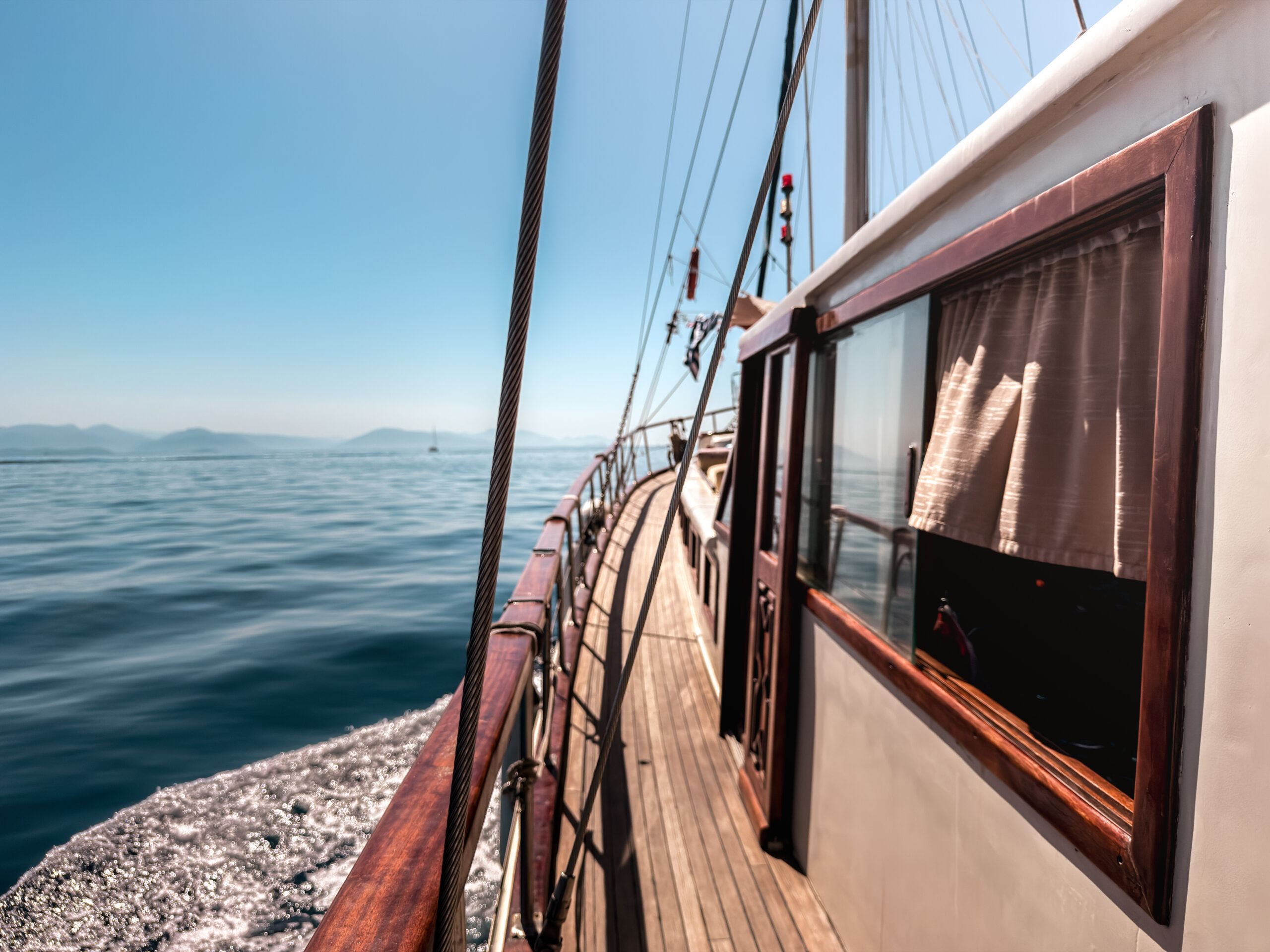
Wooden two-masted sailboat anchored in calm blue waters near a rocky coastline with white houses on a hillside under a clear sky.

If you’re planning a gulet cruise in the Mediterranean, two destinations naturally stand out: Greece and Turkiye.

Both offer traditional wooden gulets, beautiful Mediterranean waters, swimming stops, fresh local food and the chance to explore the coastline from the sea. But the experience can feel quite different depending on where you go.

A Greek gulet cruise is often centred around island hopping. You can sail between different islands, spend evenings in lively port towns, visit historic sites and experience Greek tavernas, culture and nightlife.

A Turkish Blue Cruise, also known as Mavi Yolculuk, tends to place more emphasis on the coastline itself. Routes around places such as Bodrum, Marmaris, Göcek and Fethiye are known for turquoise bays, sheltered anchorages, secluded beaches and time spent swimming and relaxing away from busy towns. GoTürkiye describes Blue Voyage as an experience built around Türkiye’s Aegean and Mediterranean coasts, with traditional gulets, hidden bays and opportunities to combine nature with historical sites.

So, which is better?

The answer depends on what you want from your holiday.

Choose Greece if you want island hopping, culture, historic towns and nightlife. Choose Türkiye if you want secluded bays, nature, relaxed days at anchor and a more private-feeling sailing experience.

Here’s how the two compare.

The Gulet Experience in Greece
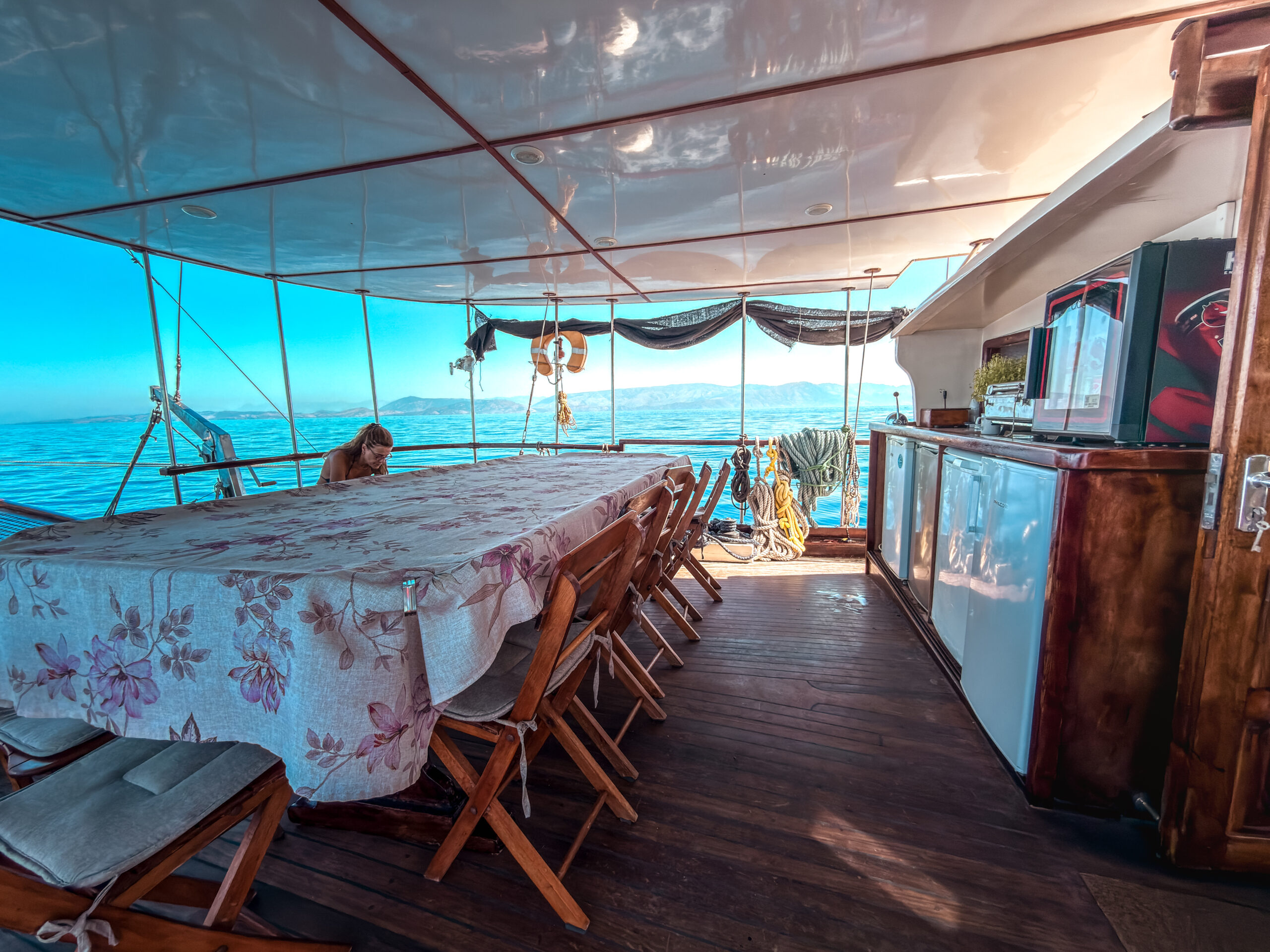
Greece is particularly well suited to travellers who see a gulet cruise as a way to combine sailing with island exploration.

Rather than simply staying offshore, many Greek itineraries connect several islands and coastal destinations. You might swim in a quiet bay during the afternoon and then spend the evening exploring a harbour town, eating at a taverna or walking through historic streets.

This combination is one of the biggest attractions of a Greek gulet holiday.

Greece also gives travellers a huge range of possible island experiences. The Ionian Islands offer a different atmosphere from the Dodecanese, while the Aegean islands have their own landscapes, architecture andtraditions.

For example, a Zante cruise explores the Ionian Islands around Zakynthos, Meganisi, Ithaca, Kefalonia and Atokos. The itinerary combines time on the water with island-hopping and opportunities to experience Greek heritage.

The same idea applies to the Ionian Cruise, where the sailing experience is combined with destinations across the Ionian Islands.

For travellers interested in history, the Rhodes Cruise provides another example. The route explores Rhodes, Symi, Chalki, Tilos and other parts of the Dodecanese, combining sailing with historical sightseeing and time ashore.

What does a typical Greek gulet day feel like?

A day might begin with breakfast on board before sailing towards the next destination.

There could be a swimming stop in a sheltered bay, followed by lunch on the gulet. Later, the boat may arrive at an island or harbour where you can explore on foot.

By evening, the experience changes again.

Instead of staying on the boat all night, you may have the opportunity to walk through a seaside town, visit a local restaurant, enjoy a drink or experience the island’s nightlife.

That combination makes Greece particularly attractive to travellers who don’t want their entire holiday to take place on the boat.

The Gulet Experience in Turkiye

Türkiye offers a different interpretation of the gulet holiday.

The country’s Blue Cruise, or Mavi Yolculuk, is strongly associated with the Aegean and Mediterranean coastline. Traditional Turkish gulets are wooden motor-sailing vessels, and many routes are designed around the spectacular bays and coves of the Turkish Riviera.

Popular sailing areas include Bodrum, Marmaris, Gocek and Fethiye.

Instead of moving from one major island town to another, a Turkish Blue Cruise can spend significant time exploring bays, swimming in clear water and anchoring in quieter coastal locations.

GoTurkiye highlights destinations including Kekova, Oludeniz, Dalyan and the surrounding Turkish Riviera, where sailing can be combined with archaeological sites, hiking routes and secluded beaches.

The Gökova and Göcek areas are also known for their numerous sheltered bays and sailing opportunities.

What does a typical Turkish Blue Cruise day feel like?

Imagine waking up with your gulet anchored in a quiet bay.

You have breakfast on deck, jump into the water for a morning swim and then spend some time relaxing in the sun.

After lunch, the boat may move to another cove or anchorage.

Later, you might go ashore to explore a small coastal settlement or historical site before returning to the gulet for dinner.

The pace can feel deliberately slow.

That’s part of the appeal.

If your idea of a perfect sailing holiday is spending long periods surrounded by turquoise water, pine-covered hills and quiet coves rather than visiting a different town every evening, Türkiye may be the stronger choice.

Comparing Greece vs Turkey Gulet Cruises by Category

The best destination depends on the type of holiday you’re looking for. Here’s how Greece and Türkiye compare across the categories that matter most.

Destinations & Variety

Greece wins for island-hopping variety.

Greece has thousands of islands and islets, with several major island groups offering very different experiences.

A Greek gulet cruise can combine swimming, sightseeing, historic towns, local restaurants and island nightlife within the same week.

For example, the Rhodes route combines several Dodecanese destinations, while the Zante and Ionian routes focus on different parts of the Ionian Sea.

Türkiye is different.

Its coastline is packed with bays, islands and coves, particularly around areas such as Bodrum, Gökova, Marmaris, Göcek and Fethiye. GoTürkiye highlights numerous sheltered bays and coastal destinations throughout these regions.

Choose Greece for: island-to-island variety and port-town experiences.

Choose Türkiye for: coastline exploration, coves and secluded anchorages.

Price Comparison 2027

Price is one area where it is difficult to declare a universal winner.

Gulet cruise prices vary considerably depending on:

  • Boat type
  • Cabin category
  • Route
  • Cruise duration
  • Travel month
  • Food and drinks
  • Port fees
  • Excursions
  • Whether the boat is shared or privately chartered

For a useful real-world reference, Sail in Greece’s published 2027 prices currently show seven-day cruises starting at different levels depending on the route and date. For example, 2027 Ionian departures shown on the booking page begin from €879 for selected May dates, while Zante departures begin from €939 for selected May and June dates. Rhodes departures begin from €929 for selected May dates.

These figures are useful as an indication of what a Greek small-group gulet cruise can cost, but they should not be treated as a direct Greece-versus-Türkiye price benchmark.

Türkiye has a particularly broad Blue Cruise market, ranging from shared or scheduled experiences to private gulet charters. Because of that, the final price can vary significantly depending on the boat, route and number of guests.

Our advice: don’t compare only the headline cabin price. Check exactly what is included before deciding.

Look at meals, port charges, transfers, excursions, cabin type and other additional costs.

Culture & Nightlife

Greece has the advantage if culture and nightlife are high on your list.

One of the defining features of Greek island hopping is the relationship between the boat and the towns you visit.

You can spend the afternoon swimming and then walk ashore for dinner, visit historical sites or enjoy a lively evening.

Rhodes is a good example. The cruise begins in Rhodes Harbour, where travellers can explore the historic Old Town and enjoy Greek tavernas and local shops.

Türkiye certainly isn’t lacking in culture.

Blue Cruise routes can include historical locations and coastal towns. GoTürkiye highlights places such as ancient Myra, Kekova and Kayaköy as part of Blue Voyage experiences.

Bodrum also combines sailing with history, restaurants, nightlife and marina culture.

However, if your priority is to experience a new Greek island town almost every evening, Greece is likely to feel more naturally suited to you.

Choose Greece for: tavernas, island culture, historical towns and nightlife.

Choose Turkiye for: a combination of nature, coastal culture and selected historical stops.

Water Quality & Beaches

This is one category where both destinations are excellent.

Both Greece and Türkiye have clear Mediterranean and Aegean waters, beautiful swimming locations and plenty of opportunities to jump straight from the gulet into the sea.

The difference is more about how you experience the water.

In Greece, swimming stops are often part of an island-hopping itinerary. You might swim in a secluded bay before continuing towards the next island or port.

In Türkiye, Blue Cruise routes are particularly well known for sheltered bays and secluded coastal anchorages. GoTürkiye highlights turquoise waters, hidden bays and quiet beaches across the Turkish Riviera.

Choose Greece for: swimming combined with island exploration.

Choose Türkiye for: long, relaxing days around secluded bays and coves.

Solo Travel Suitability

Both Greece and Türkiye can work for solo travellers, but the experience depends heavily on the type of cruise you choose.

A shared Greek gulet cruise can be particularly appealing if you want to meet other travellers.

Sail in Greece describes its cruises as being designed for independent, like-minded travellers, and its Zante cruise information specifically notes that solo travellers are welcome.

The social nature of moving between islands, eating together and exploring destinations can make this format especially comfortable for solo travellers.

Türkiye can also be excellent for solo travel, particularly if you prefer a slower and quieter holiday. However, many Blue Voyage options are also designed around private boat hire and groups, so the social experience can depend more on the specific operator and booking format. GoTürkiye notes that Blue Voyages can involve tailor-made programmes and privately arranged routes.

Choose Greece if: you want a social, shared sailing experience.

Choose Turkiye if: you prefer a quieter or more private sailing holiday.

Our Verdict – Which is Right for You?

So, Greece or Turkiye?

There isn’t one answer for every traveller.

Choose a Greek gulet cruise if you want:

  • Island hopping
  • Historic towns
  • Greek culture
  • Tavernas and local food
  • Nightlife
  • More frequent opportunities to explore ashore
  • A social small-group sailing experience

Choose a Turkish Blue Cruise if you want:

  • Secluded bays
  • Turquoise water
  • Nature
  • Quiet anchorages
  • Long swimming stops
  • A slower pace
  • A more private-feeling sailing experience

Türkiye may be the better choice if your dream holiday is waking up in a quiet bay, swimming before breakfast and spending the afternoon moving between beautiful coves.

But if you want your sailing holiday to be about more than the sea itself, Greece has the edge.

The combination of island hopping, historic destinations, seaside towns, local food, culture and nightlife creates a more varied experience from day to day.

You can swim in the morning, explore an ancient town in the afternoon and have dinner beside the harbour in the evening.

That’s what makes a Greek gulet cruise particularly appealing.

If you’re looking for a Greek island-hopping experience, you can explore our Zante Cruise, Ionian Cruise or Rhodes Cruise to see how the experience works in practice.

Ultimately, the best gulet cruise is the one that matches the holiday you want.

For solitude and secluded bays, choose Türkiye. For island hopping, culture and a more varied Mediterranean adventure, choose Greece.

FAQ

Is Greece or Türkiye better for a gulet cruise?

It depends on what you want. Greece is particularly suitable for island hopping, culture, historic towns and nightlife, while Türkiye is especially attractive for secluded bays, swimming and relaxed Blue Cruise itineraries.

What is the difference between a Greek gulet cruise and a Turkish Blue Cruise?

Greek gulet cruises often focus on moving between islands and visiting coastal towns. Turkish Blue Cruises typically place greater emphasis on exploring bays, coves and anchorages along the Aegean and Mediterranean coastline. Both experiences can include swimming, sightseeing and time ashore.

Is a gulet cruise cheaper in Greece or Türkiye?

There is no universal answer. Prices depend on the boat, season, route, cabin, duration and what’s included. Türkiye also has a wide range of Blue Cruise options, from shared trips to private gulet charters, making direct price comparisons difficult.

Which is better for solo travellers, Greece or Türkiye?

Both can work well for solo travellers. A shared Greek gulet cruise can be particularly suitable if you want to meet other travellers and enjoy a social atmosphere. A Turkish Blue Cruise can be better suited to travellers looking for a quieter or more private experience, depending on the boat and booking format.

Which destination has better beaches, Greece or Türkiye?

Both Greece and Türkiye offer excellent beaches, clear Mediterranean and Aegean waters and secluded swimming locations. Türkiye is particularly known for sheltered bays and coves, while Greece combines swimming opportunities with island hopping and visits to coastal towns.

Is Greece better than Türkiye for nightlife?

If nightlife is a major priority, Greece is generally the stronger choice for an island-hopping holiday. Many Greek itineraries combine daytime sailing with evenings in port towns, where travellers can find tavernas, bars and other entertainment. Türkiye also has lively destinations such as Bodrum, but many Blue Cruise routes focus more heavily on nature and relaxation.
 

How Much Does a Greek Gulet Cruise Cost in 2027?

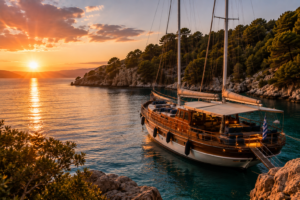
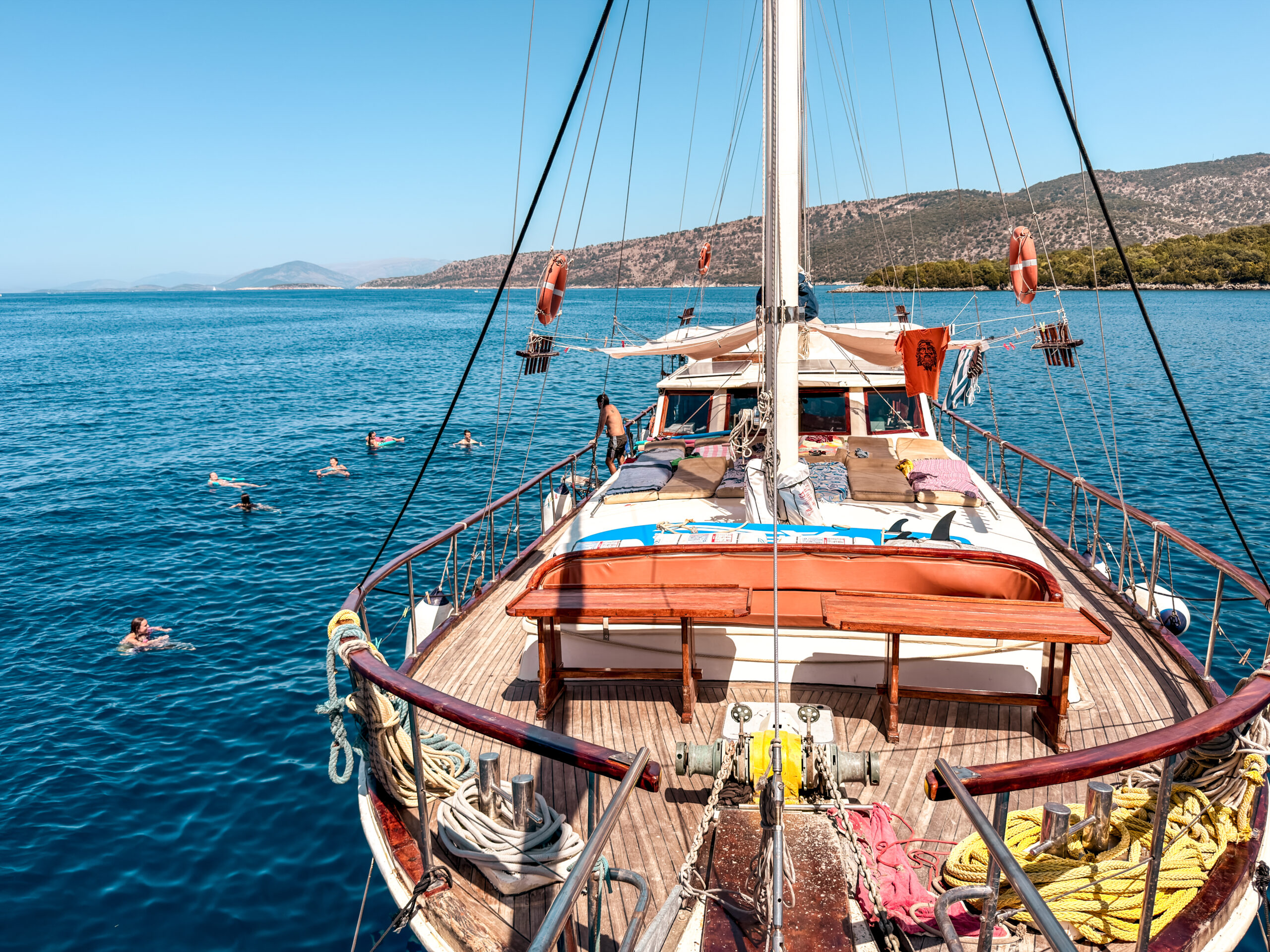
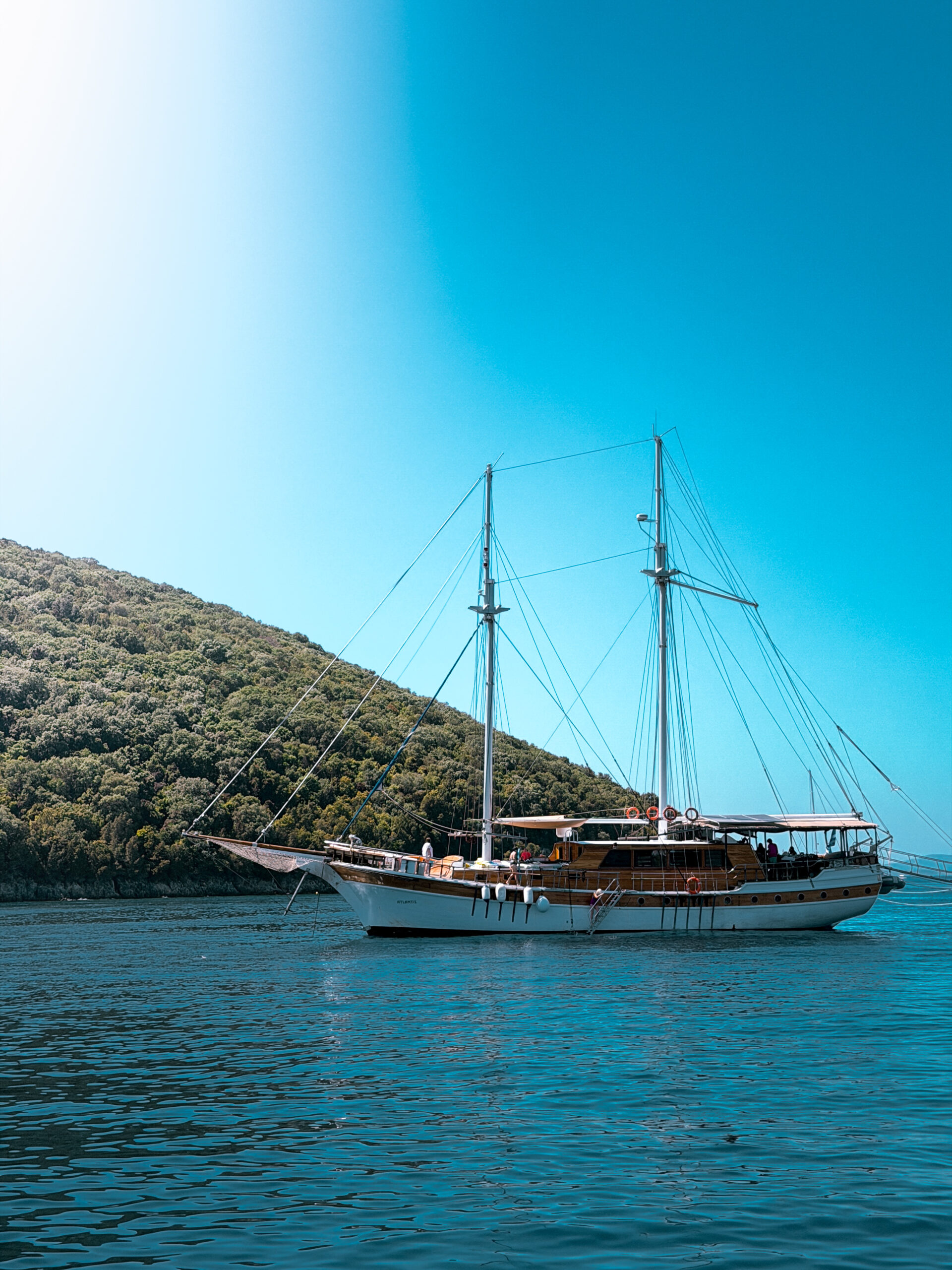
Wooden sailboat anchored in turquoise water near a rocky pine-covered coastline; a straw hat and woven bag sit on the rocky shore in the foreground.

A Greek gulet cruise in 2027 costs between €879 and €1,109 per person depending on the route, cabin type, and travel month. All prices include 7 nights aboard a traditional gulet, daily breakfast and lunch, swim stops, Wi-Fi, air-conditioned cabin, welcome drink, and Captain’s dinner. A local port fee of €150 per person is paid separately on arrival. Optional extras include a private cabin supplement (50%), overnight A/C service (€140 per person), drinks packages, and optional excursions.

Whether you’re planning your first island-hopping adventure or returning to explore a different route, understanding what’s included-and what extra costs to expect-helps you budget confidently for your 2027 Greek sailing holiday.

2027 Price by Season

Prices vary depending on the departure month and route. Early and late season departures generally offer the best value, while July and August are the busiest and most expensive months.

Cruise RouteLow SeasonShoulder SeasonPeak Season
Ionian Cruise€879€959€1,059
Zante Cruise€879€959€1,059
Rhodes Cruise€899€979€1,109
Mykonos Cruise€899€979€1,109
Harmony Cruise€879€949€1,049
18–39s Cruise€879€949€1,049

Low Season

Typically includes May and October departures. These cruises offer lower prices, quieter islands, and a more relaxed atmosphere.

Shoulder Season

Usually June and September. Many travellers consider these the best months thanks to warm weather, calm seas, and excellent value.

Peak Season

July and August are the busiest months, with the highest demand and prices. These departures often sell out first.

Standard vs Standard PLUS Cabins – Price Difference

Sail in Greece offers different cabin categories depending on the vessel and departure.

Standard Cabin

The Standard Cabin includes:

  • Air-conditioned cabin
  • Private bathroom
  • Comfortable twin or double bed
  • Storage space
  • Daily housekeeping

This option provides excellent value and is ideal for most travellers.

Standard PLUS Cabin

Standard PLUS cabins provide additional comfort and may include:

  • Larger cabin layout
  • Preferred cabin location
  • Updated interior finishes
  • Extra storage space
  • Enhanced onboard comfort

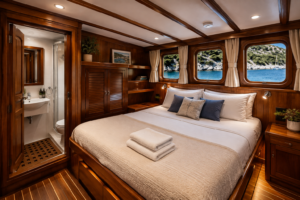
If you prefer more space during your seven-night cruise, Standard PLUS is worth considering.

What’s Included in the Cruise Price?

Every Sail in Greece gulet cruise includes a comprehensive range of services.

Your cruise price includes:

  • 7 nights accommodation aboard a traditional gulet
  • Daily breakfast
  • Daily lunch
  • Captain’s Dinner
  • Welcome Drink
  • Air-conditioned cabin
  • Wi-Fi onboard
  • Professional captain and crew
  • Daily swim stops
  • Fuel and sailing itinerary
  • Use of onboard common areas

These inclusions make gulet cruises one of the best-value ways to experience multiple Greek islands in a single holiday.

Additional Costs to Budget For

Although many services are included, there are a few additional expenses to plan for.

Port Fee

Every guest pays:

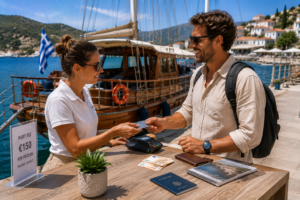
€150 per person

This is paid locally upon arrival.

Private Cabin Supplement

Solo travellers wanting their own cabin can reserve one by paying:

50% extra

Overnight Air Conditioning

Guests wishing to use overnight cabin air conditioning can purchase:

€140 per person

Drinks

Alcoholic beverages, cocktails, soft drinks, and premium coffees are not included.

Most gulets offer reasonably priced onboard drink packages or pay-as-you-go options.

Optional Excursions

Depending on your itinerary, you may choose optional experiences such as:

  • Wine tasting
  • Olive oil tasting
  • Local guided tours
  • Historic site visits
  • Cave excursions
  • Cultural experiences

Participation is optional.

How to Get the Best Price

If you’re planning a Greek gulet cruise in 2027, booking early is the smartest way to save money.

Benefits of early booking include:

  • Access to the lowest seasonal prices
  • Better cabin availability
  • Greater choice of departure dates
  • More route options
  • Flexible travel planning

The 2026 season sold out across many departures well before summer. Booking your 2027 cruise early increases your chances of securing your preferred itinerary at the best available price.

Whether you’re interested in the Ionian Islands, Rhodes, Mykonos, Zante, Harmony, or the popular 18–39s Cruise, early reservations offer the widest selection.

Besides booking early, it’s also worth planning your trip around Greece’s seasonal weather and local events. For destination inspiration and official travel information, visit the Official Greek National Tourism Organisation.

Frequently Asked Questions

How much does a Greek gulet cruise cost in 2027?

Prices start from €879 per person in low season and reach approximately €1,109 during peak summer departures.

Are meals included?

Yes. Breakfast, lunch, and the Captain’s Dinner are included.

Is Wi-Fi included?

Yes. Complimentary onboard Wi-Fi is included throughout the cruise.

Do I have to pay port fees?

Yes. A €150 local port fee is paid separately on arrival.

When should I book for the best price?

Booking several months in advance gives you the lowest prices and the widest choice of cabins and departure dates.

Book Your 2027 Greek Gulet Cruise

Ready to experience the Greek Islands aboard a traditional gulet?

Choose from six unforgettable sailing routes, enjoy exceptional value, and secure the best 2027 pricing by booking early.

Whether you’re travelling as a couple, solo traveller, family, or group of friends, Sail in Greece offers an unforgettable island-hopping experience.

Book your 2027 Greek Gulet Cruise today before the most popular departures sell out.

Comparison: Sailing vs. Cruises

Sailing vs. Cruises: A Comparison Of Freedom, Experience, And Navigation

When considering a vacation on the water, most travelers fall into two camps: those drawn to the vast independence of sailing and those who prefer the structured luxury of cruises. While both offer unforgettable maritime experiences, the way they deliver adventure, freedom, and connection with the sea couldn’t be more different. 

                                                                                                       Photo by Peter Hansen on Unsplash

We will compare sailing and cruises across three key pillars—freedom, experience, and navigation—offering clarity for anyone torn between hoisting the sails or boarding a megaship in 2025.

Cruising vs. Sailing On A River: Two Routes To Tranquility

One of the key factors is finding freedom on the water, since that’s probably the reason why you embarked on the whole adventure. Let’s look at what sailing and cruises offer when the setting is a winding river rather than the open sea.

River Cruises: Guided Comfort and Cultural Depth

River cruises offer an entirely different experience, blending guided exploration with the comfort of full-service hospitality. These vessels are long, low, and designed for the intimacy of inland travel. Cruises along the Danube, Rhine, Mekong, or Mississippi deliver structured routes that maximize sightseeing, often including onboard historians or local experts to enhance your understanding of each region.

Nowhere is this more evident than in the heart of Europe, where Danube and Rhine itineraries wind through a tapestry of historic cities, vineyards, and castles—bringing centuries of culture directly to your cabin door.

Freedom on a river cruise is limited in terms of navigation—but expansive in cultural and culinary offerings. You won’t be steering or making course decisions, but you will have access to tailored excursions, wine tastings, and local performances right from the gangway.

Everything is pre-arranged: mooring permissions, dining, entertainment, and ground transportation. It’s freedom from planning, not freedom of movement.


River Sailing: Quiet Waterways and Immersive Routes

Sailing on a river introduces a deeply tranquil, scenic, and close-to-the-land experience. Unlike ocean sailing, where you’re at the mercy of changing tides and open water, rivers offer calm conditions and an ever-present shoreline. 

You’ll typically sail smaller vessels such as sloops or traditional houseboats that can navigate narrower channels and shallower waters. This environment is perfect for slow-paced exploration, where you can dock in remote hamlets or unmarked countryside spots at will.

Personal freedom is enhanced by the absence of waves and harsh winds, making river sailing ideal for those newer to the helm. You still get the benefit of flexibility—changing course, stopping spontaneously, or anchoring near a vineyard or river café. 

Depending on the country, some rivers require licenses, awareness of lock systems, or knowledge of inland waterway regulations. Popular destinations like the Loire Valley in France or the Douro in Portugal offer rich cultural immersion with manageable sailing conditions.


Experience Aboard And Ashore

We’ll now dive deer (no pun intended) into the aboard and ashore experiences. 


Sailing: Intimate, Authentic, and Immersive

Sailing delivers an immersive connection to nature, culture, and maritime life. With only a handful of passengers—sometimes just your own party—you’ll experience a level of intimacy unavailable on cruise liners. You can feel the wind shift, hear the water slap against the hull, and respond to the rhythm of the sea.

Onshore, sailors can explore locations that cruise ships overlook. These often include tiny fishing villages, lesser-known islands, or local tavernas with no tourism infrastructure. Instead of herding off a ship with hundreds of others, you drop anchor at your own pace and discover places on your terms. Destinations like the Grenadines, Sporades, or Croatia’s Kornati archipelago are best seen this way.

Accommodations, while smaller, are more personal. You sleep under the stars or in cozy cabins, wake with the sunrise, and prepare your own meals—or enjoy local cuisine ashore. The experience is less about luxury and more about connection, both with your travel group and with nature.

Cruises: Luxury, Entertainment, and Social Atmosphere

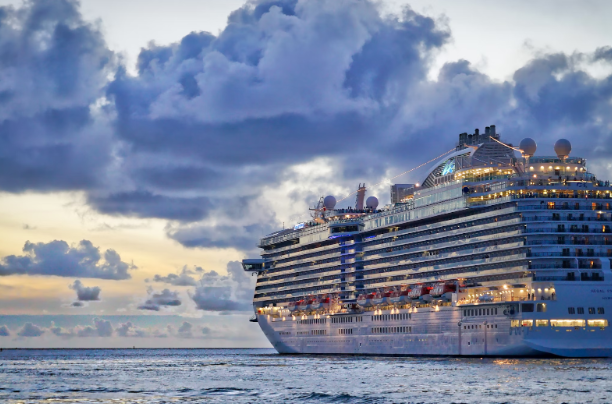
Cruise ships offer floating resorts with 5-star amenities—think spas, casinos, cinemas, fitness centers, themed bars, and fine dining restaurants. From couples to families with young children, there’s something for everyone. The scale of entertainment onboard is unmatched, with Broadway musicals, cooking classes, lectures, and high-end shopping often included.

Ashore, shore excursions cater to mass tourism. Tours are pre-arranged and fast-paced, taking passengers to the most popular attractions. While efficient, these outings often lack the depth or authenticity of independent exploration. You’re unlikely to stumble upon a hidden café or forge personal connections with locals in a 3-hour organized tour.

Still, the cruise experience excels in scale and variety. You might visit five countries in a week without unpacking once. The convenience, variety of dining options, and access to onboard medical care make cruises particularly appealing for multigenerational groups or those seeking all-inclusive ease.

                                                                                                       Photo by Artem Verbo on Unsplash

Navigation and Seamanship

Here’s where the big differences come, but only if you want to sail without a captain. We’ll delve into this below. 

Sailing: Hands-On Skill and Navigational Mastery

Navigation is central to the sailing experience, whether you’re managing a catamaran in the Caribbean or a monohull in the Mediterranean. GPS, nautical charts, VHF radios, and weather routing all play critical roles, and sailors must know how to interpret wind direction, read currents, and respond to mechanical issues.

Even when hiring a skipper, passengers are often encouraged to participate—learning to hoist sails, tie knots, or steer under sail power. This engagement builds seamanship and offers a rewarding challenge. Courses like the Royal Yachting Association (RYA) Day Skipper or the American Sailing Association’s 104 course are popular among novices looking to gain competence before setting out.

Cruises: Passive Transport and Global Scale

Navigation aboard cruise ships is a professional endeavor handled entirely by licensed captains, marine engineers, and high-tech equipment. Modern cruise liners are marvels of maritime engineering, capable of covering thousands of nautical miles with remarkable precision. These vessels follow international maritime protocols, utilize satellite navigation, and chart weather patterns far in advance.

Passengers are largely unaware of the navigational complexity occurring behind the scenes. This hands-off experience suits travelers who prefer not to think about the mechanics of movement. While you won’t learn to sail or read the stars, you’ll enjoy a seamless transit between ports while sipping champagne on the sun deck.

                                                                                                Photo by Ludomił Sawicki on Unsplash

Endnote – Which Is Right For You?

Choosing between sailing and cruises often comes down to your appetite for exploration versus indulgence, but emerging hybrid experiences—like small expedition yachts or eco-luxury catamarans—now blur the line between both. 

These innovative options offer curated itineraries with room for spontaneity, appealing to adventurers and comfort-seekers alike. As travel trends evolve in 2025, the smartest choice might be one that blends freedom and luxury rather than forcing you to pick a side.

Check out more Sail in Greece blogs here