


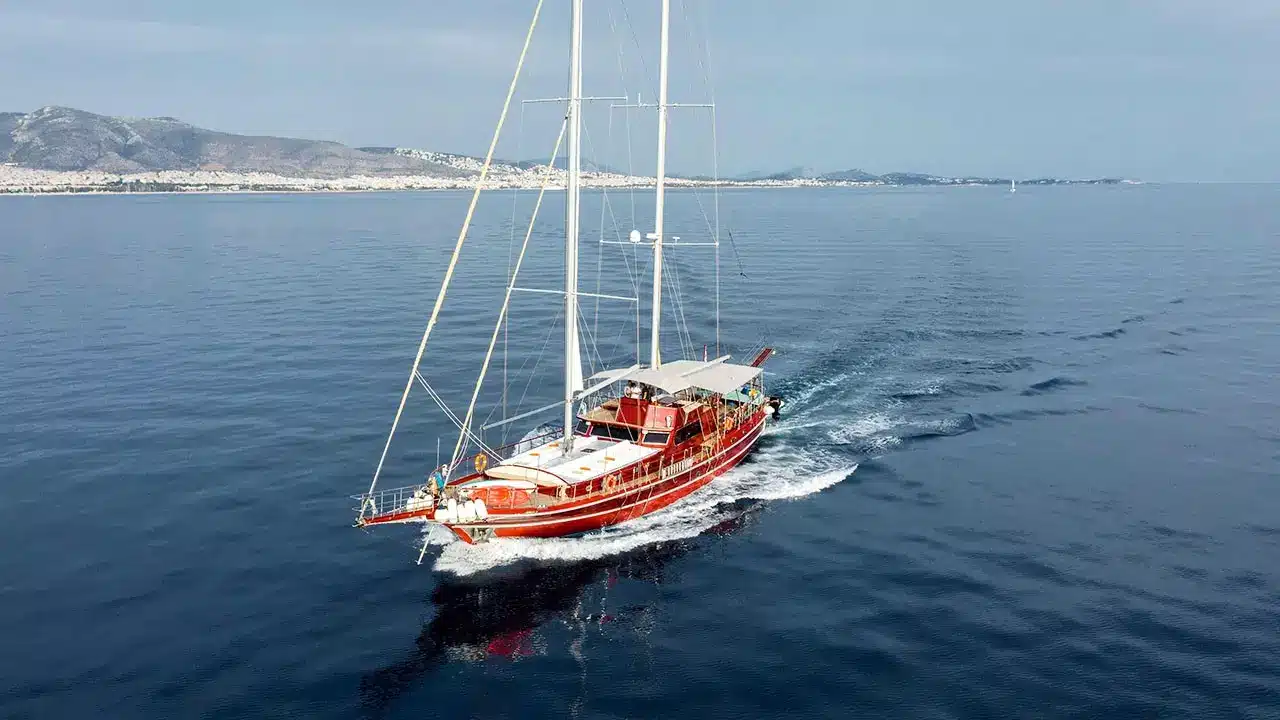
The bexst time to sail Greece is May-June and September-October, when the Aegean and Ionian seas are calm, temperatures are warm but not extreme (22-28°C), and the islands are not yet overwhelmed with summer visitors. July and August offer the warmest swimming weather but bring the Meltemi winds in the Aegean and the highest prices of the season.
Choosing when to sail matters just as much as choosing where to sail. Greece’s coastline spans several distinct sailing grounds – the sheltered Ionian, the wind-swept Cyclades, the scattered Dodecanese, and the compact Saronic Gulf – and each responds differently to the seasons. A month that delivers perfect conditions in one region might bring strong winds or overcrowded ports in another. This guide breaks down what to expect month by month, explains the Meltemi wind that defines Aegean sailing, looks at how 2026’s new tourism caps on islands like Santorini and Mykonos are changing the way people should plan their trips, and compares the best timing across Greece’s four major cruising routes.
Quick Summary Table
| Month | Avg Temp | Sea Temp | Crowds | Price | Our Rating |
|---|---|---|---|---|---|
| May | 22°C | 20°C | Low | Low | ★★★★☆ |
| June | 26°C | 23°C | Medium | Medium | ★★★★★ |
| July | 30°C | 26°C | High | High | ★★★☆☆ |
| August | 32°C | 27°C | Very High | High | ★★★☆☆ |
| September | 28°C | 25°C | Medium | Medium | ★★★★★ |
| October | 23°C | 22°C | Low | Low | ★★★★☆ |
Sailing Greece Month by Month
May
Weather: May marks the true opening of the Greek sailing season. Days average around 22°C, with plenty of sunshine and cooler evenings that make for comfortable sleeping aboard. Rain is rare, and the light is soft and clear.
Sea temperature: At roughly 20°C, the sea is swimmable for most people, though it hasn’t yet reached the balmy warmth of high summer. A wetsuit is optional but appreciated by those sensitive to cooler water.
Crowds: Very low. Marinas are quiet, tavernas have space, and popular anchorages that get packed in August are often empty or hold just a handful of boats.
Prices: This is one of the most budget-friendly months to charter. Boat rental rates, mooring fees, and shoreside dining are all noticeably cheaper than peak summer.
Is it good for sailing? Yes – May is one of the best months on the calendar. Winds are generally light to moderate and predictable, making it ideal for relaxed cruising, families, and less experienced sailors. The only caveat is that some smaller island tavernas and services haven’t fully opened for the season yet.
June
Weather: June brings reliably warm, dry days with temperatures climbing to around 26°C. This is arguably the sweet spot of the Greek summer – hot enough for full beach days, but not yet oppressive.
Sea temperature: The sea warms to about 23°C, comfortable for extended swimming and water sports without hesitation.
Crowds: Moderate. School holidays haven’t started across most of Europe, so islands are livelier than in May but still far from the saturation of July and August.
Prices: Mid-range. Rates begin to rise from the May low season but remain well below the July-August peak.
Is it good for sailing? Excellent – June earns the top rating in our table. Sea and air temperatures are ideal, the Meltemi hasn’t fully established itself in the Aegean, and there’s enough energy in the ports and towns to enjoy without fighting crowds.
July
Weather: July is peak Mediterranean summer, with average temperatures around 30°C and long, cloudless days. Heat can be intense at midday, especially at anchor with no breeze.
Sea temperature: At 26°C, the water is at its warmest and most inviting for swimming, snorkeling, and diving.
Crowds: High. This is one of the two busiest months of the year, with popular islands like Mykonos, Santorini, and the Ionian hotspots seeing significant tourist traffic.
Prices: High. Charter rates, accommodation, and dining all sit at or near their seasonal peak.
Is it good for sailing? It’s a mixed picture. July delivers reliably hot, sunny weather perfect for swimming, but the Meltemi wind typically strengthens in the Aegean during this month, bringing sustained northerly winds that can reach Force 6-7 and make some passages and anchorages uncomfortable or unsafe for inexperienced crews. The Ionian Sea, on the other hand, remains largely unaffected and sails beautifully in July.
August
Weather: August is the hottest month, often exceeding 32°C, with heat that can feel intense both on land and at sea, particularly in sheltered bays with little air movement.
Sea temperature: The warmest of the year at around 27°C, ideal for swimming at any time of day.
Crowds: Very high – the busiest month in Greece. Ports, anchorages, and island towns are at their fullest, and popular routes require earlier planning and booking.
Prices: High, on par with or slightly above July, especially around the August 15th public holiday (Assumption Day), which is one of the busiest travel weekends of the Greek calendar.
Is it good for sailing? August combines the best swimming conditions with the most challenging combination of Meltemi winds, crowded anchorages, and premium pricing. Experienced sailors who enjoy brisk downwind conditions in the Aegean can find August exhilarating, but those seeking calm, relaxed cruising may prefer the Ionian or a shift to September.
September
Weather: September offers a gentle transition out of peak summer, with average temperatures around 28°C and slightly shorter, more comfortable days.
Sea temperature: Still warm at roughly 25°C, having absorbed a full summer’s worth of heat.
Crowds: Moderate, easing steadily as the month progresses and European school holidays end.
Prices: Mid-range, with rates typically softening in the second half of the month.
Is it good for sailing? Yes – September ties with June as the top-rated month. The Meltemi begins to ease, the sea remains warm from summer, and the islands regain a more relaxed, authentic pace without sacrificing reliably good weather.
October
Weather: October sees average temperatures drop to around 23°C, with occasional rain becoming more likely, particularly toward the end of the month.
Sea temperature: At about 22°C, the water is still comfortable for swimming, though noticeably cooler than the summer peak.
Crowds: Low. Many seasonal businesses begin winding down, and the islands return to a quieter rhythm.
Prices: Low, making October attractive for budget-conscious sailors and those seeking a peaceful end-of-season cruise.
Is it good for sailing? Yes, particularly in the first half of the month. Conditions are similar in appeal to May – settled weather, light winds, and near-empty anchorages – though sailors should keep an eye on the forecast for the season’s first autumn depressions later in the month.
Understanding the Meltemi Wind
What is the Meltemi?
The Meltemi is a strong, dry, northerly wind that blows across the Aegean Sea during the warmer months. It’s driven by the pressure difference between a high-pressure system over the Balkans and a low-pressure system over Turkey and the eastern Mediterranean. Winds typically run from Force 4 to 6, but can gust to Force 7 or higher on the strongest days, particularly in the afternoon.Sailors can also monitor live wind conditions before departure using Windy.
When does it happen?
The Meltemi is most active from mid-June through September, with its peak intensity typically occurring in July and August. It tends to build through the morning, strengthen through the afternoon, and ease off overnight, giving sailors a predictable daily rhythm to plan around.For current weather forecasts and marine conditions, check Meteo Greece.
Which areas are affected?
The Meltemi primarily affects the Aegean Sea, including the Cyclades, the northern Dodecanese, and the waters around Athens and Evia. Its effects are strongest in open water and funnel through channels between islands, where wind speeds can increase significantly compared to the open sea.
Which routes avoid it?
The Ionian Sea, on the west coast of Greece, is sheltered from the Meltemi entirely and offers calm, gentle sailing conditions throughout the summer. Within the Aegean, the southern Dodecanese and the Saronic Gulf experience comparatively milder Meltemi effects than the central Cyclades, making them reasonable alternatives for sailors wanting Aegean scenery with less wind exposure.
Overtourism in 2026: Why It Matters for Sailors
Greece’s most iconic islands have reached a turning point in 2026, and the changes underway are reshaping how visitors should plan their trips. Santorini, long one of the most photographed destinations in the world, now allows only 8,000 cruise passengers per day, a cap introduced to ease the pressure on the island’s narrow caldera paths, cable cars, and clifftop villages that were buckling under the weight of tourism during peak season. For travelers arriving by conventional means, this has meant longer queues, tighter scheduling, and a scramble to see the island’s highlights within a shrinking window of time.Visitors can find official travel information and destination updates on the Official Greece Travel Guide.
Mykonos has followed a similar path, introducing its own visitor restrictions aimed at controlling the flow of tourists through its famous old town and beach clubs. These measures are a direct response to years of overcrowding that strained local infrastructure, drove up prices, and diluted the very charm that made these islands famous in the first place. For anyone planning a 2026 trip to the Cyclades, it’s now essential to factor these caps and restrictions into the itinerary rather than assuming spontaneous, unrestricted access.
This is where sailing by private gulet offers a genuine advantage. Arriving by sea means bypassing the cruise terminal queues, the shuttle bus bottlenecks, and the daily passenger caps that apply to land-based and cruise ship arrivals. A private yacht can time its approach to quieter hours, anchor away from the busiest ports, and give guests the flexibility to enjoy a sunset in Oia or a stroll through Mykonos town without competing with thousands of same-day visitors. In an era where Greece’s top destinations are actively managing overtourism, sailing isn’t just a romantic way to travel – it’s becoming one of the most practical ways to actually enjoy these islands.
Best Time to Sail by Cruise Route
Ionian Sea
The Ionian is Greece’s most forgiving sailing ground, protected from the Meltemi by the mainland and largely calm from late spring through early autumn. Best months: May through October, with June and September standing out for the ideal balance of warmth and low crowds. Even July and August, challenging elsewhere in Greece, remain pleasant here, making the Ionian a strong choice for families, beginners, or anyone prioritizing relaxed conditions over wind-driven excitement.
Dodecanese
Stretching along Greece’s southeastern edge near Turkey, the Dodecanese sees a milder version of the Meltemi than the central Aegean, particularly in its southern islands like Rhodes, Symi, and Kastellorizo. Best months: May, June, September, and October, when winds are manageable and temperatures are comfortable. July and August bring stronger afternoon winds and busier ports, especially around Rhodes, but remain sailable for those with more experience.
Saronic Gulf
Close to Athens and sheltered by surrounding landmasses, the Saronic Gulf experiences some Meltemi influence but generally less severely than the open Cyclades. Best months: May, June, September, and October offer the calmest, most pleasant sailing, while its proximity to Athens makes it a popular short-charter option year-round, including July and August for those based near the capital.
Aegean (Cyclades)
This is the heart of Meltemi territory and home to the most dramatic scenery – and the most demanding sailing conditions – in Greece. Best months: May, June, and September, when winds are lighter and more predictable. July and August bring the strongest, most consistent Meltemi winds, rewarding experienced sailors with fast downwind passages but posing real challenges for beginners, along with the heaviest crowds and highest prices of anywhere in Greece.
Frequently Asked Questions
- What is the single best month to sail in Greece? June and September are generally considered the best overall months, offering warm temperatures, a comfortably warm sea, manageable crowds, and lighter, more predictable winds than the height of summer.
- Is it safe to sail in Greece during the Meltemi season? Yes, with the right preparation. The Meltemi is strong but predictable, typically building through the afternoon and easing overnight. Experienced skippers plan routes and departure times around it, and sheltered areas like the Ionian Sea and southern Dodecanese see much less impact.
- Which is calmer for sailing, the Ionian or the Aegean? The Ionian Sea is significantly calmer, as it’s shielded from the Meltemi by the Greek mainland. The Aegean, particularly the Cyclades, experiences the strongest and most consistent summer winds in the country.
- Do I need sailing experience to charter a boat in Greece? It depends on the season and route. Calmer months like May, June, September, and October, along with sheltered areas like the Ionian and Saronic Gulf, are well suited to less experienced sailors, especially with a skippered charter. Peak-season Aegean sailing in July and August is best suited to more experienced crews due to stronger Meltemi winds.
- How does the Santorini cruise passenger cap affect a private sailing trip? The 8,000-passenger daily cap applies primarily to cruise ship arrivals and large-scale tourism operators. Sailing by private gulet allows more flexible timing and anchoring, helping guests avoid the queues and congestion tied to that cap and enjoy the island on a more relaxed schedule.
Final Thoughts
There’s no single “best” month to sail Greece – only the best month for what you’re after. If calm water, light winds, and quiet anchorages matter most, aim for May, June, September, or October. If you want the warmest possible sea and don’t mind stronger winds, bigger crowds, and higher prices, July and August in the Ionian or the sheltered Saronic Gulf can still deliver a fantastic trip, even if the open Cyclades are best left to more experienced crews during those months.
What’s changed heading into 2026 is that timing now matters even more. With Santorini’s daily cruise passenger cap and Mykonos’s own visitor restrictions reshaping how the busiest islands operate, travelers who plan around the calendar – and who choose flexible, private sailing over fixed cruise-ship schedules – are the ones best positioned to actually enjoy these islands rather than just tick them off a list. Whichever month you choose, matching your route to the season is the single biggest factor in having a smooth, memorable Greek sailing holiday.
Planning your own Greek island adventure? Sail in Greece offers private gulet charters across the Ionian, Aegean, Dodecanese, and Saronic – get in touch to find the best route and season for your trip.You can also explore more about Greece’s islands and travel experiences through the Official Greece Travel Guide.


