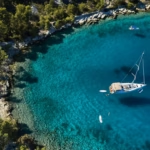
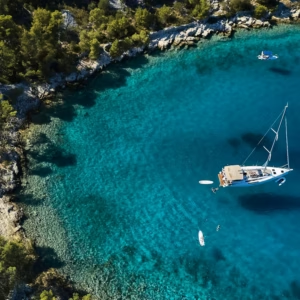
Corfu is Greece’s most popular Ionian island and the main departure point for sailing holidays exploring the Northern Ionian Islands. The island combines a UNESCO World Heritage-listed Old Town with some of the Ionian Sea’s most sheltered anchorages, clear turquoise waters, and lush green landscapes that set it apart from the typical dry, rocky Greek island aesthetic.
Why Corfu?
Corfu has been a favorite destination for travelers for centuries, and it’s easy to see why. The island sits at the crossroads of Italian, Venetian, French, and British influences, giving it a character unlike anywhere else in Greece. Elegant architecture, tree-lined boulevards, and a relaxed Mediterranean pace of life make it feel more like a slice of the Adriatic than a typical Greek island.
For sailors, Corfu is the natural starting point for a very simple reason: geography. The island sits at the top of the Ionian Sea, close to mainland Greece and within easy striking distance of Paxos, Antipaxos, and the mainland coastline around Sivota and Parga. This means charter fleets are well established here, marina infrastructure is reliable, and the sailing routes fan out in almost every direction without requiring long overnight passages.
What makes Corfu different from the Cyclades or the Dodecanese is its landscape. Instead of whitewashed villages on bare, sun-baked hillsides, Corfu is green year-round. Olive groves, cypress trees, and dense forest run right down to the shoreline, and the water along the east coast is famously calm, sheltered by the mainland just across the strait. It’s a gentler, more forgiving cruising ground, which is one reason it attracts both experienced skippers and first-time charterers.
Corfu Old Town
Corfu Town, the island’s capital, is a UNESCO World Heritage Site, and walking through it feels like stepping into a different country entirely. The town was shaped by more than four centuries of Venetian rule, followed by periods of French and British administration, and each left its mark on the architecture, street layout, and local customs.
The Venetian old quarter is a maze of narrow lanes, known locally as kantounia, lined with tall shuttered buildings, hidden courtyards, and laundry strung between balconies. It’s a wonderful place to wander without a fixed plan, since almost every turn reveals a quiet church, a small square, or a view down to the sea.
Dominating the eastern side of town is the Old Fortress, a Venetian-built stronghold set on a rocky promontory that has guarded the town for centuries. Climbing to the top rewards you with sweeping views over the town, the marina, and across the strait to the Albanian coastline. The nearby Spianada, one of the largest squares in the Balkans, is bordered by the arcaded Liston, built in the style of Parisian arcades and lined with cafes.
Speaking of cafes, Corfu Town has a genuine coffee culture. Sitting under the Liston’s arches with a coffee and watching cricket on the Spianada (a leftover tradition from British rule) is one of the town’s small pleasures. For shopping, the streets around Nikiforou Theotoki and the market lanes are packed with everything from local olive oil, kumquat liqueur, and handmade sandals to jewelry, ceramics, and boutique fashion. It’s an easy town to lose an afternoon in before or after a day out on the water.
Best Anchorages & Swimming Spots
Vidos Island Just a short hop from Corfu Town’s harbor, Vidos is a small, forested island that makes an excellent first anchorage or a quiet spot to cool off before heading further afield. It’s sheltered, close enough for a quick overnight stop, and offers calm, clear water for swimming with the skyline of Corfu Town visible in the background.
Paleokastritsa On the island’s west coast, Paleokastritsa is often described as one of the most beautiful bays in Greece. A series of small coves cut into dramatic cliffs, with sea caves to explore by dinghy or kayak and water so clear it looks almost artificial. The bay is more exposed to the meltemi and westerly swell than the sheltered east coast, so it’s best visited in settled conditions, but the scenery makes it worth the detour.
Nissaki On the northeast coast, Nissaki is a peaceful anchorage backed by steep, green hillsides and olive terraces. It’s more sheltered than the west coast spots and popular for its clear water and relaxed taverna scene right on the pebble beach. It’s a good stop for swimming and a slower pace, especially in the early or late season when the anchorage is quieter.
Each of these spots offers something different: Vidos for convenience and calm water close to town, Paleokastritsa for dramatic scenery and adventure, and Nissaki for a laid-back, sheltered stop along the greener northeast coast.
Sailing From Corfu
One of the biggest advantages of joining an Ionian cruise from Corfu is the range of destinations reachable within a short sail.. Heading south along the coast, sailors can reach the mainland town of Sivota, tucked into a well-protected bay on the Greek mainland, known for its lively harborside restaurants and calm anchorage.
Further south again are Paxos and Antipaxos, two of the most photographed islands in the Ionian. Paxos is about 2.5 hours away by boat from Corfu, making it a comfortable day sail or the first overnight stop of a longer itinerary. The island’s main harbor towns, Gaios, Lakka, and Longos, are full of character, with pastel buildings, waterfront tavernas, and sheltered anchorages.
Just south of Paxos, tiny Antipaxos is famous for two beaches, Voutoumi and Vrika, with turquoise water that rivals anywhere in the Caribbean. It has no real town to speak of, just a scattering of seasonal tavernas, which makes it feel wonderfully untouched compared to busier islands.
Together, Corfu, Sivota, Paxos, and Antipaxos form a classic Northern Ionian sailing route: short hops, sheltered water, and a mix of lively harbor towns and quiet, beautiful anchorages.
Corfu is one of the best destinations for island hopping, with easy access to Paxos, Antipaxos, and Sivota.
Corfu Old Port
Corfu’s Old Port sits right at the edge of Corfu Town and is the main departure point for charter yachts, ferries, and cruise ships alike. For sailors starting a charter here, check-in is usually straightforward: most charter companies operate from bases either directly at the Old Port or a short drive away, and briefings typically cover the boat, safety equipment, and local sailing conditions before handover.
Parking near the Old Port is available but can fill up quickly in peak season, so it’s worth arriving with some buffer time, especially if you’re bringing a car full of provisions or luggage. For those flying in, a taxi from Corfu International Airport to the Old Port takes only about 10–15 minutes, making it one of the more convenient charter starting points in Greece, since there’s no need for a long transfer after a flight.
The Old Port is also a major departure point for cruise ships and inter-island ferries, so expect some traffic and activity around the harbor, particularly during the morning and early evening. It’s a working port as much as a charter base, which adds to the atmosphere but also means it pays to keep an eye on larger vessel movements when maneuvering in and out.
Best Restaurants & Bars
Corfu Town has no shortage of good places to eat and drink before or after a day on the water. For a classic taverna experience, head into the old quarter for traditional Corfiot dishes like sofrito, pastitsada, and bourdeto, all specialties that reflect the island’s Venetian-influenced cuisine.
Around the Liston, the cafes are ideal for a relaxed coffee or an evening drink while people-watching on the Spianada. For something closer to the water, the streets near the Old Port and the Old Fortress have several seafood tavernas serving fresh catch with harbor views. In the evening, the old town’s narrow streets come alive with small wine bars and cocktail spots tucked into converted historic buildings, offering a more low-key alternative to the busier tourist strips found elsewhere on the island.
Weather & Best Time
Corfu enjoys a Mediterranean climate with mild winters and warm, dry summers, but sailing conditions vary noticeably by season.
Spring (April-May) brings mild temperatures, green landscapes at their most lush, and generally light and manageable winds, making it a pleasant time to sail before the summer crowds arrive.
Summer (June-August) is peak season, with hot, sunny days and the most reliable winds for sailing, though the west coast can see stronger afternoon breezes. This is also when the island, marinas, and popular anchorages are at their busiest.
Autumn (September-October) offers warm sea temperatures, thinner crowds, and generally settled weather, making it a favorite among experienced sailors looking for a quieter cruising experience.
Overall, the best sailing conditions in the Northern Ionian tend to fall in June, July, September, and early October, when winds are consistent but not extreme, and daytime temperatures are comfortable both on and off the water.
If you’re wondering about the best time to sail Greece, Corfu offers excellent conditions from June to early October.
Practical Information
Fuel stations: Fuel docks are available at the main marinas around Corfu Town and at some larger harbors along the coast, though it’s wise to top up whenever convenient rather than waiting until the tank runs low, since not every anchorage has fuel access.
Grocery stores: Corfu Town has supermarkets and smaller grocery shops within easy walking distance of the Old Port, making it simple to stock up before setting off. Smaller villages along the coast typically have at least a mini-market for basics.
Marinas: Corfu offers several marina options, including facilities at the Old Port area and nearby Gouvia Marina, one of the larger marinas in the region with extensive berthing and services for charter yachts.
Provision shopping: For a proper provisioning run, the markets and supermarkets in Corfu Town are the best option, offering fresh produce, local olive oil, wine, and bakery items. Once underway, smaller harbor towns like Gaios on Paxos or Sivota also have grocery stores for topping up.
FAQs
Is Corfu good for sailing? Yes. Corfu combines sheltered anchorages, a well-developed charter base, and short sailing distances to nearby islands and the mainland, making it one of the most popular and accessible starting points for a Greek sailing holiday.
When is the best time to sail from Corfu? June, July, September, and early October generally offer the best balance of settled weather, comfortable temperatures, and reliable sailing conditions.
How far is Paxos from Corfu? Paxos is about 2.5 hours away by boat from Corfu, making it an easy day sail or the first stop on a longer island-hopping itinerary.
Where do cruises and charters leave from? Corfu’s Old Port, right next to Corfu Town, is the main departure point for charter yachts, ferries, and cruise ships.
Is Corfu suitable for beginners? Yes. The east coast in particular offers sheltered, calm water and short hops between anchorages, making it a forgiving cruising ground for less experienced sailors, while more experienced crews can venture to exposed spots like Paleokastritsa in settled weather.